











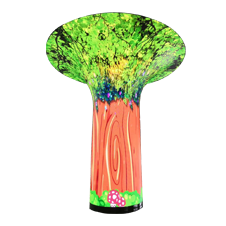



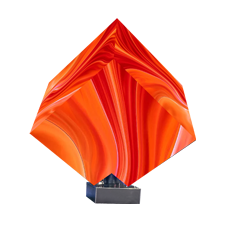
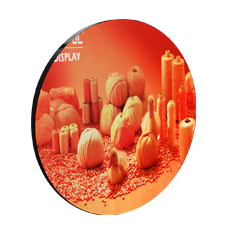
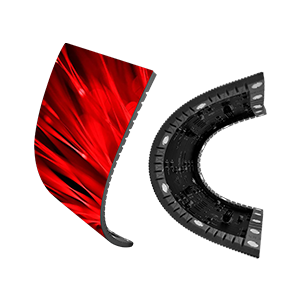
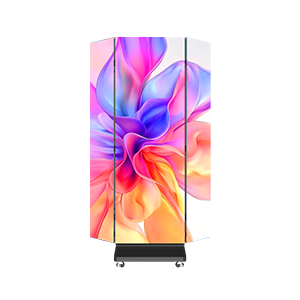
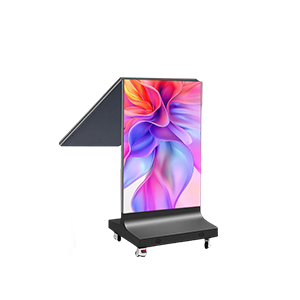


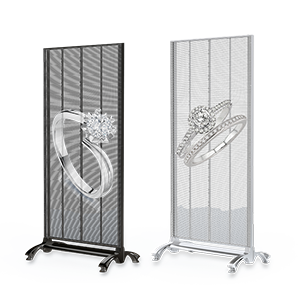





































Iconic landmarks compete for attention from people who may see a façade for only a few seconds while walking, driving, or moving through a crowded urban district. Static signage can communicate information, yet motion, depth, and carefully designed perspective create another layer of visual engagement.
At LEDFUL, we see an outdoor LED display as part of an architectural communication environment, where screen geometry, audience position, content design, and building character all influence how effectively a landmark captures attention.

Why Depth Changes Visual Perception
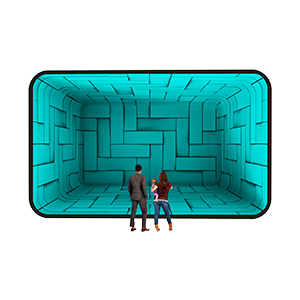
Human vision naturally uses perspective, scale, overlap, and motion to interpret spatial relationships. Content creators can reproduce these cues on a flat display surface, making objects appear to extend outward or recede into the building. The effect does not require physical three-dimensional structures; it depends on how accurately the visual content corresponds with the screen’s geometry.
Perspective becomes particularly important on large façades. Curved corners, irregular edges, and intersecting surfaces can provide useful visual reference points for creative content. Designers may construct scenes that appear to wrap around architectural features, giving pedestrians the impression that objects are moving beyond the conventional boundaries of the screen.
The viewing position matters just as much as the animation itself. A 3D LED screen can produce its intended depth effect from specific sightlines, while viewers standing elsewhere may perceive a flatter image. Mapping common pedestrian routes, traffic lanes, plazas, and nearby buildings helps content teams understand where the strongest visual effect will occur.
Architecture Shapes The Experience
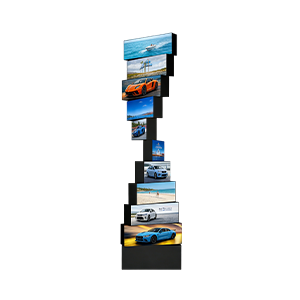
Landmark façades rarely resemble standard rectangular advertising boards. Their dimensions, corners, windows, columns, and surrounding structures influence how digital content should be composed. Screen proportions should correspond with the architectural environment rather than forcing every project into the same visual format.
Brightness also has a direct relationship with outdoor visibility. Strong daylight can reduce perceived contrast, so exterior displays commonly require substantially higher brightness than many indoor screens. Nighttime operation introduces the opposite consideration: excessive luminance can overpower nearby architecture and create an uncomfortable viewing environment.
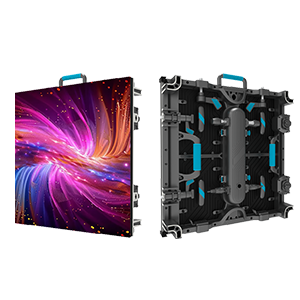
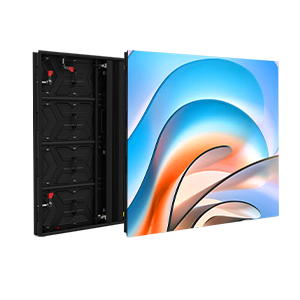
Physical construction deserves similar attention. Wind exposure, rain, dust, temperature changes, and long operating periods place demands on cabinets and supporting structures. Our 3D LED screen planning therefore considers environmental conditions alongside visual objectives, since an impressive façade effect still depends on suitable physical and electrical infrastructure.
Content Design Makes Depth Convincing
Three-dimensional advertising works through visual illusion, which means content production must begin with the actual screen rather than being adapted at the final stage. Designers can use virtual camera positions, depth layers, object scaling, shadows, and movement paths to construct scenes that correspond with the physical display.
Timing can dramatically influence audience perception. A short sequence may begin with an apparently ordinary image before an object crosses the visual boundary, while slower transitions can give viewers enough time to recognize spatial changes. Excessive movement, however, may make complex scenes difficult to understand, particularly for audiences viewing the screen from moving vehicles.
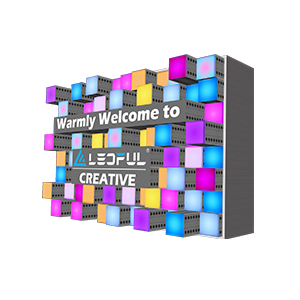
Content variety also helps prevent a landmark display from becoming visually predictable. Advertising campaigns, cultural programming, seasonal graphics, public announcements, and event visuals can share the same infrastructure while serving different communication purposes. The broader LED display solution should accommodate these changing content requirements rather than being planned around one campaign.
Hardware Factors Behind Large-Scale Visuals
Resolution influences how clearly fine details survive at different viewing distances. Pixel pitch describes the spacing between neighboring LED pixels; smaller spacing generally provides greater pixel density, while larger spacing can be appropriate for distant audiences. Screen size and viewing distance should be evaluated together before specifying the display.
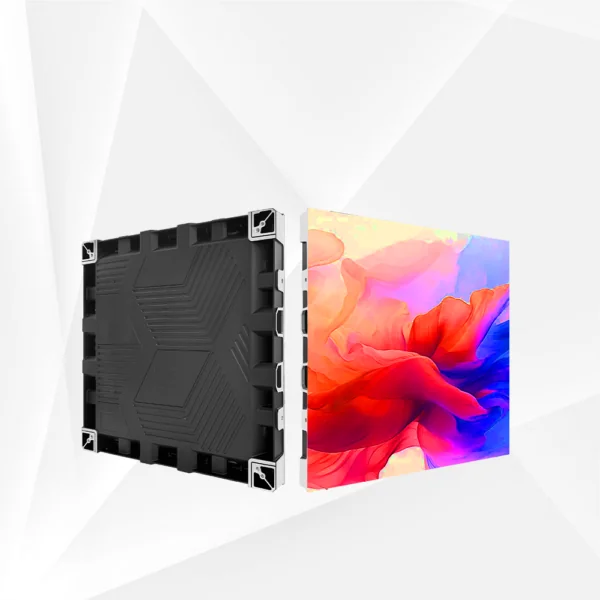
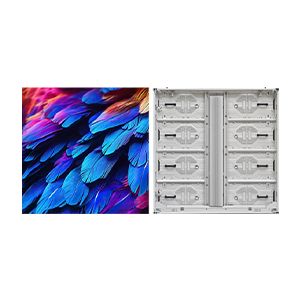
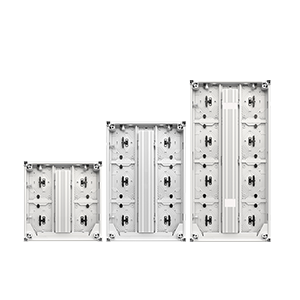
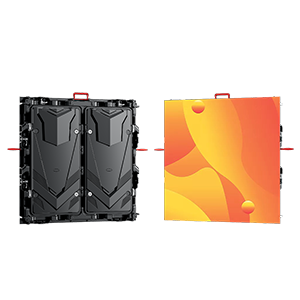
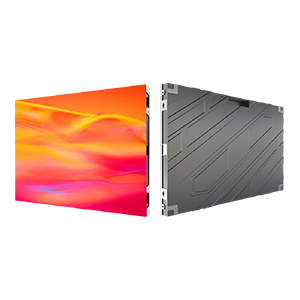
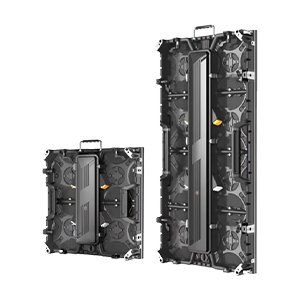
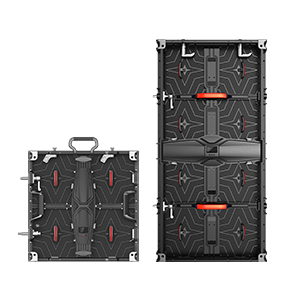
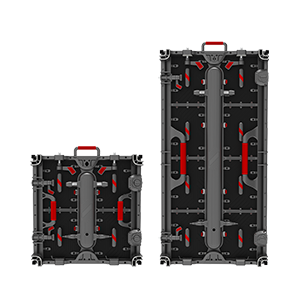
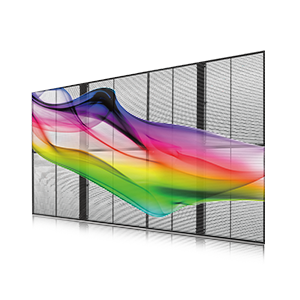
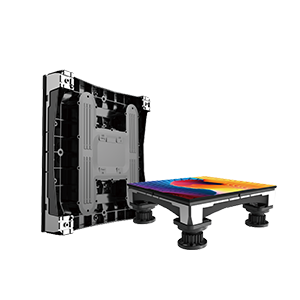
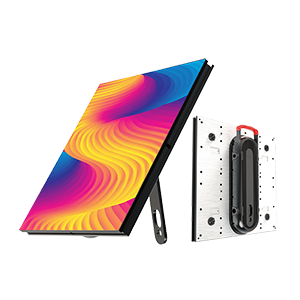
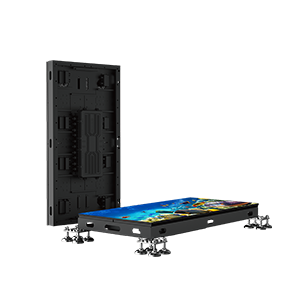
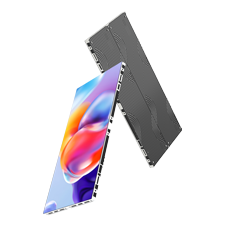
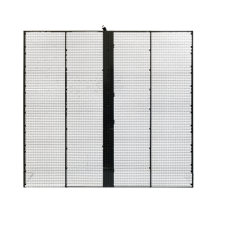
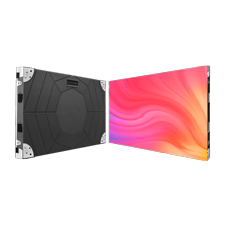
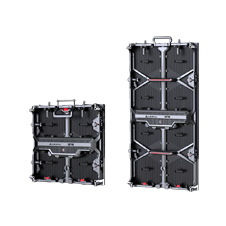
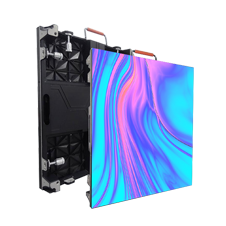
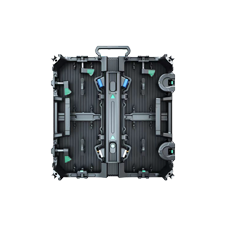
One example from our product range is the FS PRO Series (250×250), which uses a 250×250 mm die-cast aluminum module and cabinet structure. Its aluminum construction supports heat dissipation and structural strength, while the design also incorporates corrosion resistance and a cable-free structure. We use this type of engineering as a reference when discussing how cabinet construction can affect outdoor display operation.
Thermal management becomes increasingly relevant as screen dimensions grow. LEDs, power supplies, and electronic components generate heat during operation, while direct sunlight can raise the surrounding temperature further. A well-planned outdoor LED display should have an appropriate thermal path, service arrangement, and environmental design suited to the installation site.
From Visual Attraction To Urban Communication
Landmark screens can serve more than commercial advertising. Cities and property operators may use them for festivals, cultural programs, public messages, sports events, and special occasions. Such flexibility allows one digital surface to support different communication objectives throughout the year.
Audience behavior should remain part of the planning process. Pedestrians have more time to observe a screen than drivers, while visitors in a public square may view it repeatedly from changing positions. Content duration, text size, animation speed, and viewing angles can be adjusted according to these behavioral differences.
Project planning also benefits from coordination between architects, content teams, structural engineers, electrical specialists, and display technicians. Our team at LEDFUL approaches the LED display solution from this broader perspective, connecting creative ambition with the practical requirements of the landmark itself.
Conclusion
The visual impact of three-dimensional outdoor media comes from several elements working together: perspective-based content, architectural geometry, suitable brightness, sufficient resolution, environmental protection, and carefully defined viewing zones. Depth can make a landmark display more memorable, but the effect becomes meaningful only when creative production and engineering decisions support one another. With that balance in mind, LEDFUL develops each 3D LED screen project around the site’s architecture, audience movement, and communication goals rather than relying on visual effects alone.