












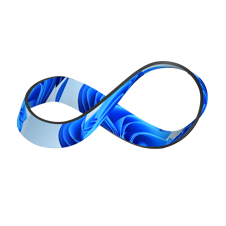
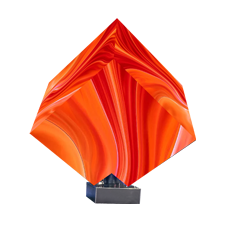
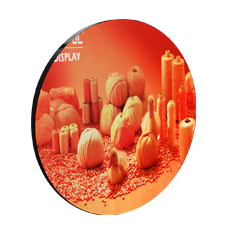
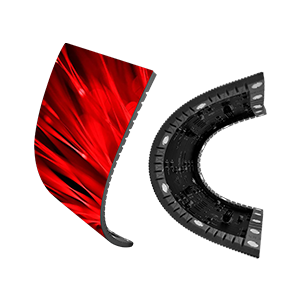














In today’s competitive advertising market, brands need more than a conventional digital billboard to capture attention. They need visual experiences that make people stop, look, interact, and remember.
3D LED screen solutions are helping advertisers transform ordinary building façades, shopping malls, commercial streets, and public spaces into immersive visual destinations. By combining high-quality LED displays with carefully designed anamorphic content, brands can create eye-catching visuals that appear to extend beyond the physical screen.
From large outdoor 3D LED billboards to custom corner displays, a successful project requires more than impressive visuals. Screen geometry, pixel pitch, brightness, structural safety, playback systems, and content production all influence the final result.
As a display manufacturer and solution provider, LEDFUL offers LED display solutions for different commercial applications, helping customers evaluate display configurations according to their project requirements.
In this guide, we explain how naked-eye 3D LED displays work, how to select the right screen, what to consider during content production, and how to plan a reliable immersive advertising project.
What Is a Naked-Eye 3D LED Display?
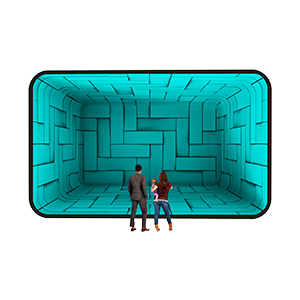
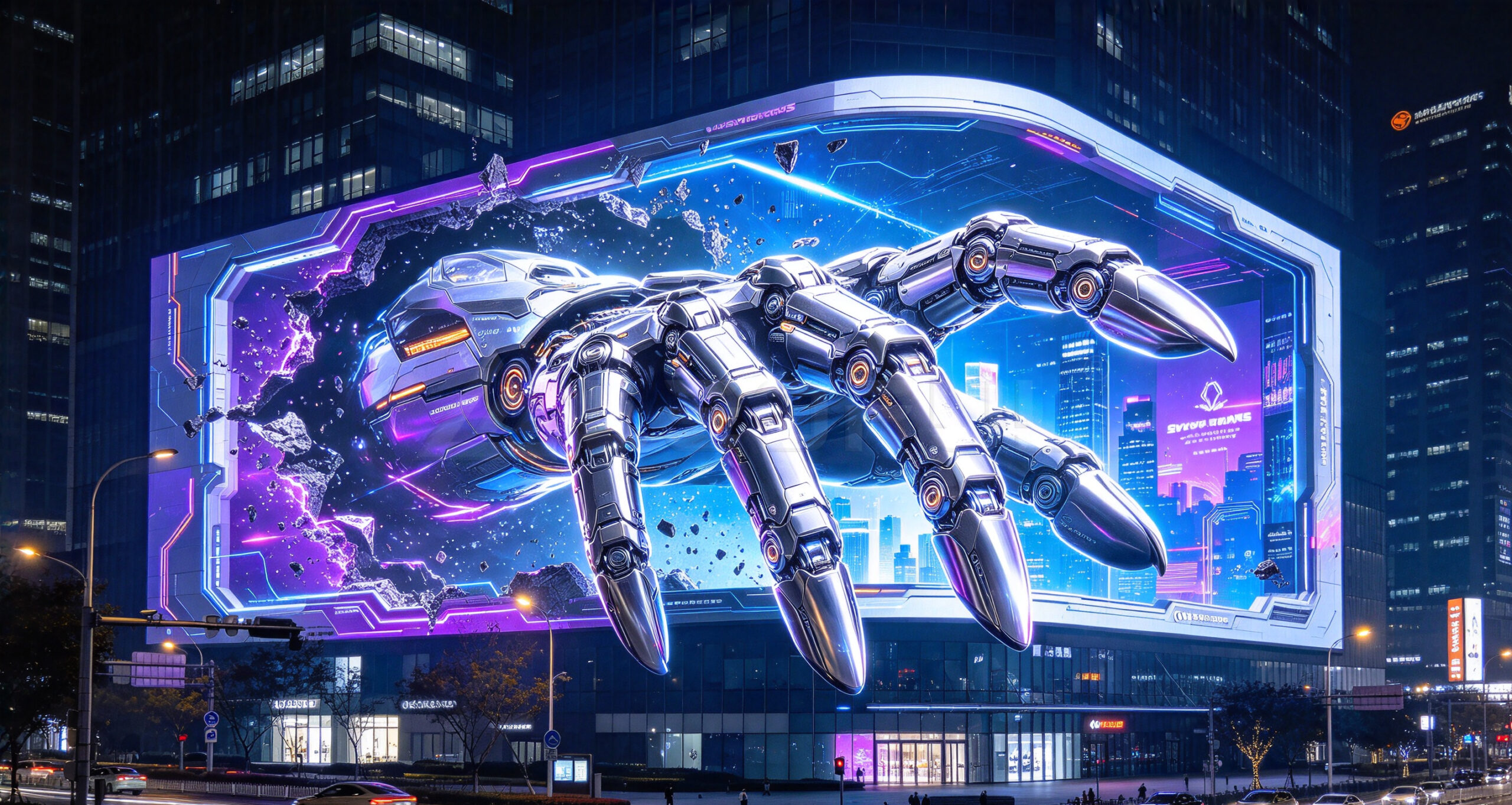
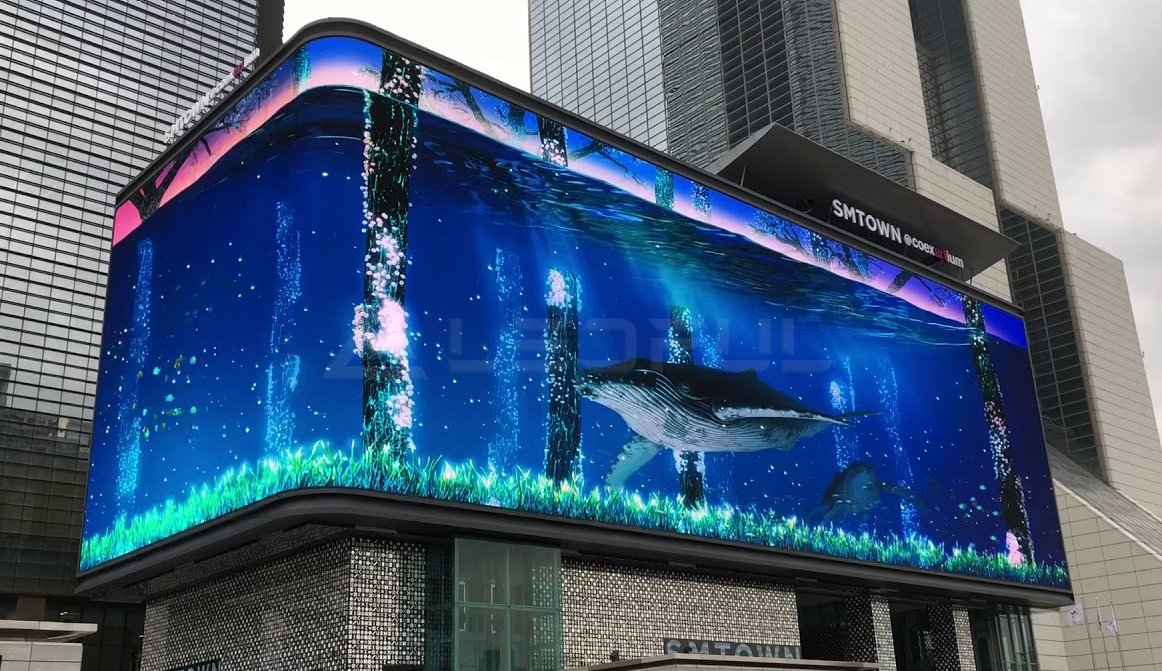
A naked-eye 3D LED display creates the illusion of depth without requiring viewers to wear special glasses.
Unlike traditional 3D systems that rely on dedicated viewing equipment, naked-eye 3D advertising typically uses anamorphic content designed for a specific screen shape and viewing perspective.
The content is carefully mapped to the physical display so that objects, characters, or products appear to move beyond the screen surface when viewed from the intended position.
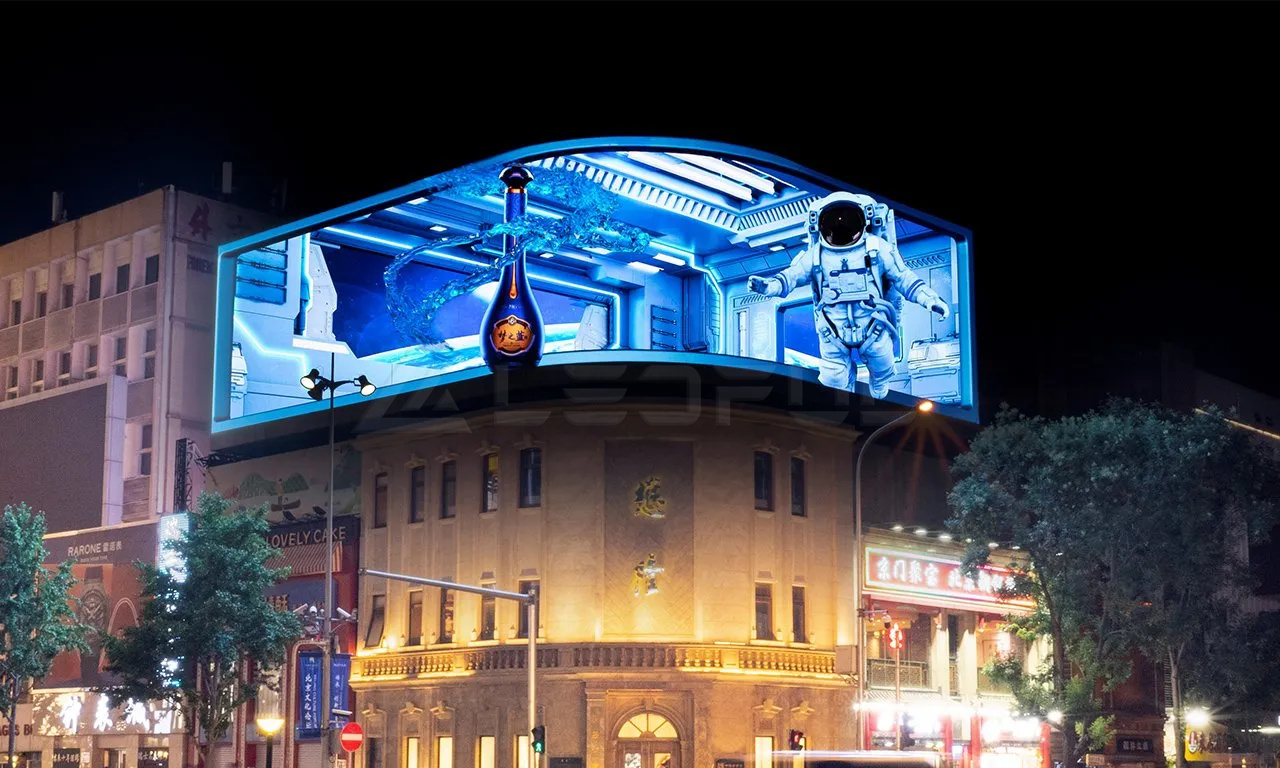
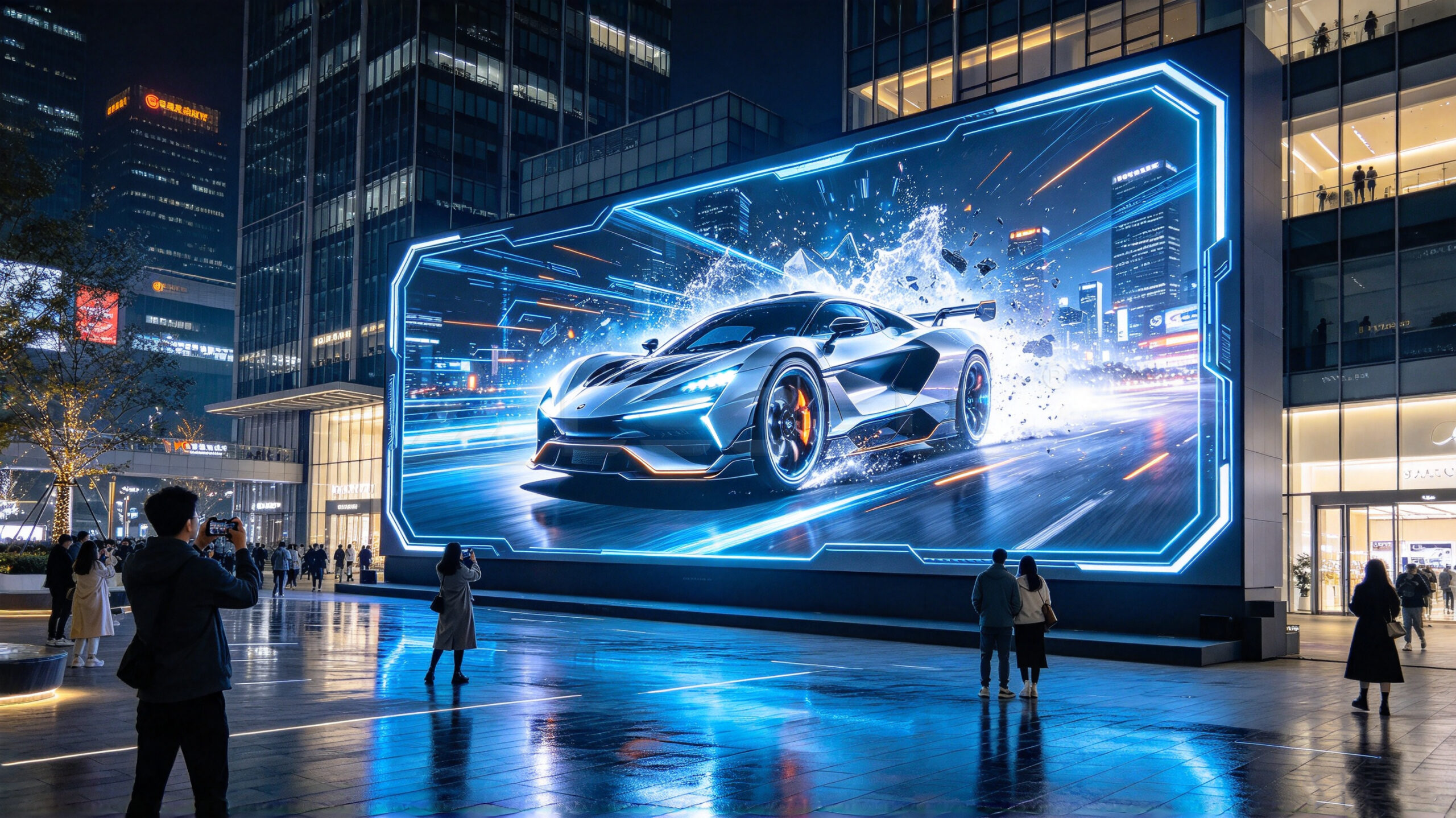
For example, a giant product may appear to emerge from a building corner, a vehicle may seem to move toward the audience, or a virtual character may appear to interact with the surrounding architecture.
These effects are created through a combination of:
- Carefully planned screen geometry.
- Perspective-based 3D animation.
- Accurate content mapping.
- Suitable pixel pitch and image quality.
- Appropriate brightness and contrast.
- A defined primary viewing position.
A conventional LED screen can display ordinary videos, but it will not automatically create a convincing naked-eye 3D effect. The content must be designed and adapted to the actual display configuration.
Why Are 3D LED Screen Solutions Popular for Advertising?
1. Capture Attention in Crowded Commercial Areas
In busy city centers, shopping districts, and transportation hubs, traditional advertising competes with countless visual messages.
A well-designed 3D LED billboard introduces movement, depth, and visual surprise, helping brands create a stronger presence in the surrounding environment.
This makes 3D LED displays suitable for high-visibility advertising locations where attracting attention is a primary objective.
2. Create More Memorable Brand Experiences
Immersive visuals give brands more creative ways to present products and tell stories.
Instead of showing a static product image, an advertising campaign can make a product appear to emerge from a display, reveal its features through animation, or interact with the surrounding environment.
The final impact depends on the creative concept, execution quality, viewing conditions, and relevance to the target audience.
3. Support Social Media and Digital Campaigns
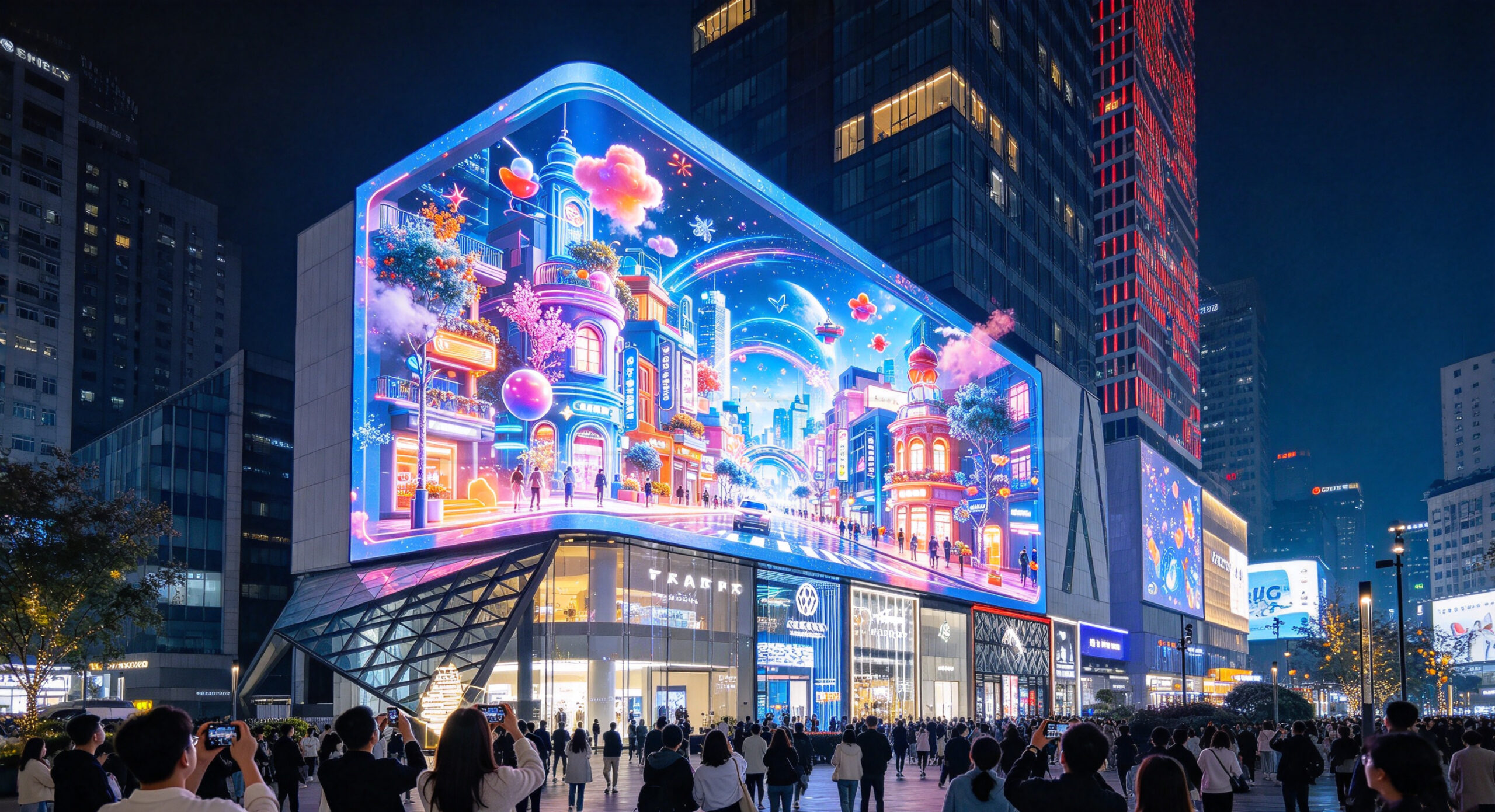
Distinctive 3D LED advertising can encourage passersby to take photos or record videos. When the content is visually compelling and easy to understand, it may also be shared across social media platforms.
For brands and advertising agencies, this creates an opportunity to connect physical outdoor advertising with digital marketing campaigns.
However, social sharing is not guaranteed. Campaign performance should be evaluated using relevant indicators such as audience exposure, engagement, content reach, and business objectives.
4. Strengthen the Value of Commercial Spaces
For shopping malls, commercial property developers, and outdoor advertising operators, a well-positioned 3D LED display can become a recognizable visual feature.
It can support seasonal campaigns, product launches, event promotions, and long-term advertising operations.
The display’s commercial value depends on its location, operating costs, content strategy, audience traffic, and the business model behind the installation.
Where Can 3D LED Displays Be Used?
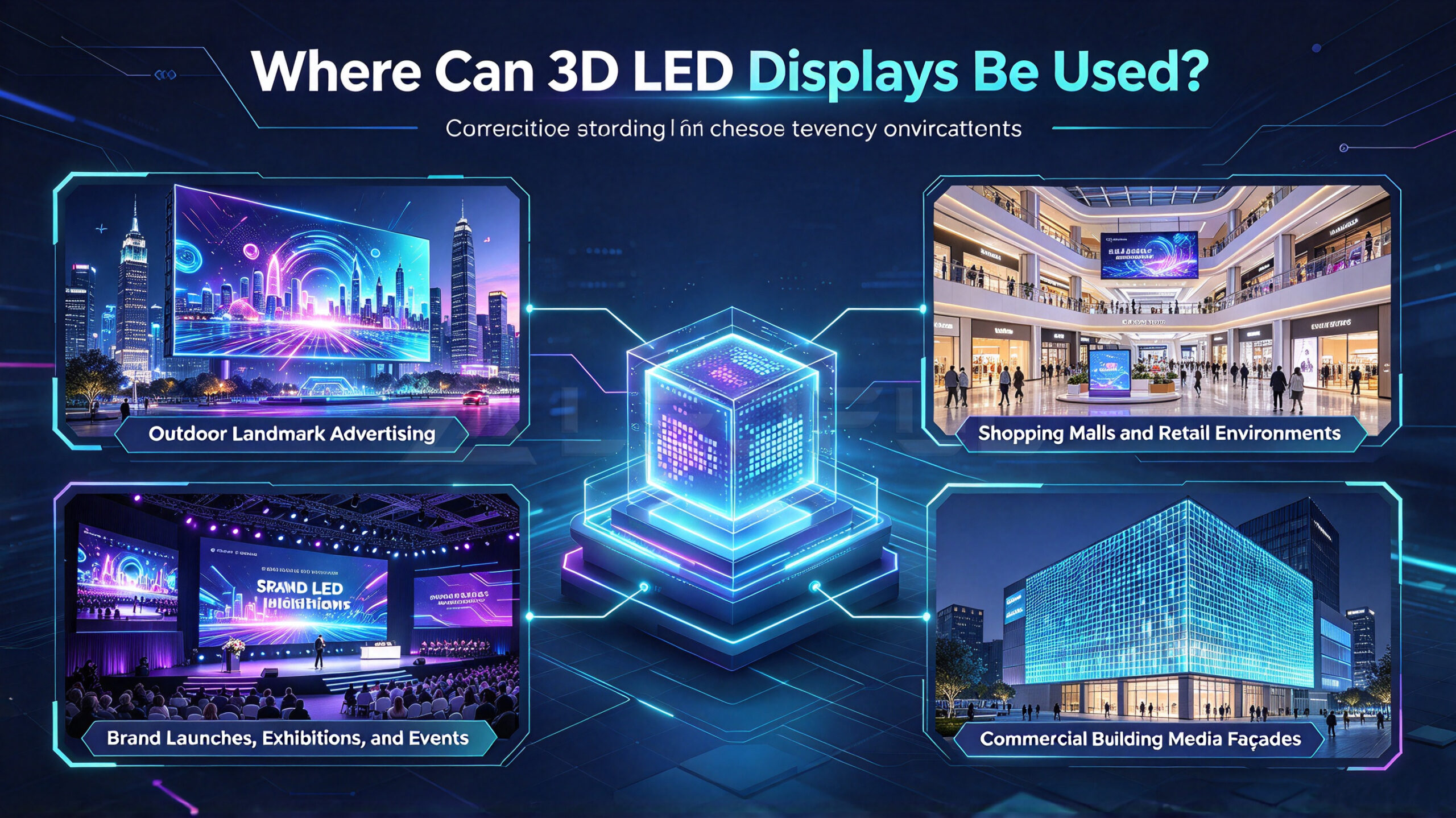
Outdoor Landmark Advertising
Recommended application: large outdoor LED billboards and building-corner displays.
Landmark advertising is one of the most recognizable applications of naked-eye 3D technology.
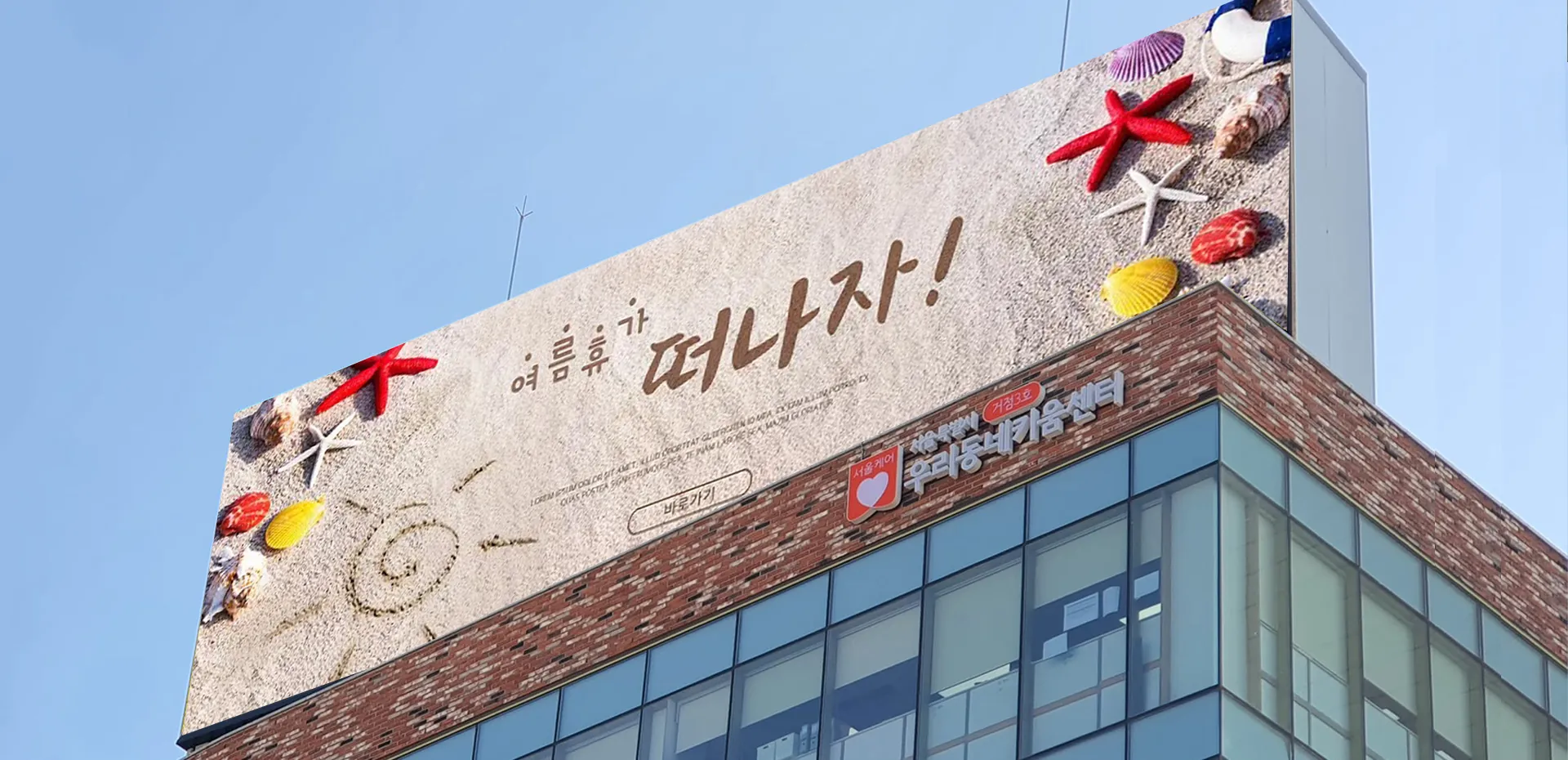
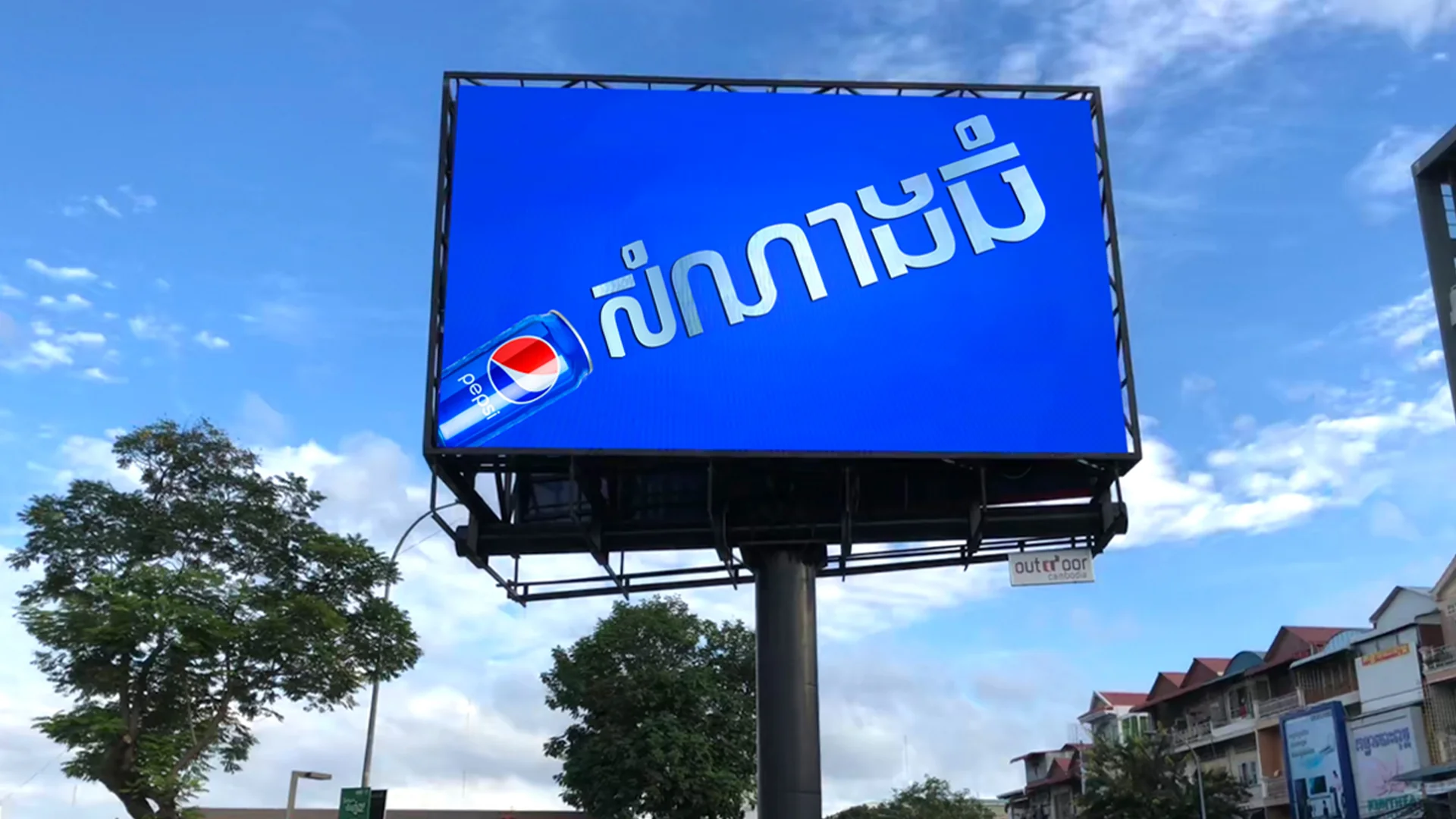
Large LED screens installed on commercial buildings can display anamorphic animations that make products, vehicles, or virtual objects appear to project beyond the screen.
For outdoor installations, buyers should evaluate brightness, weather resistance, structural engineering, viewing distance, and local advertising regulations.
A corner display may be appropriate when the project requires a perspective effect across two adjoining screen surfaces.
Shopping Malls and Retail Environments
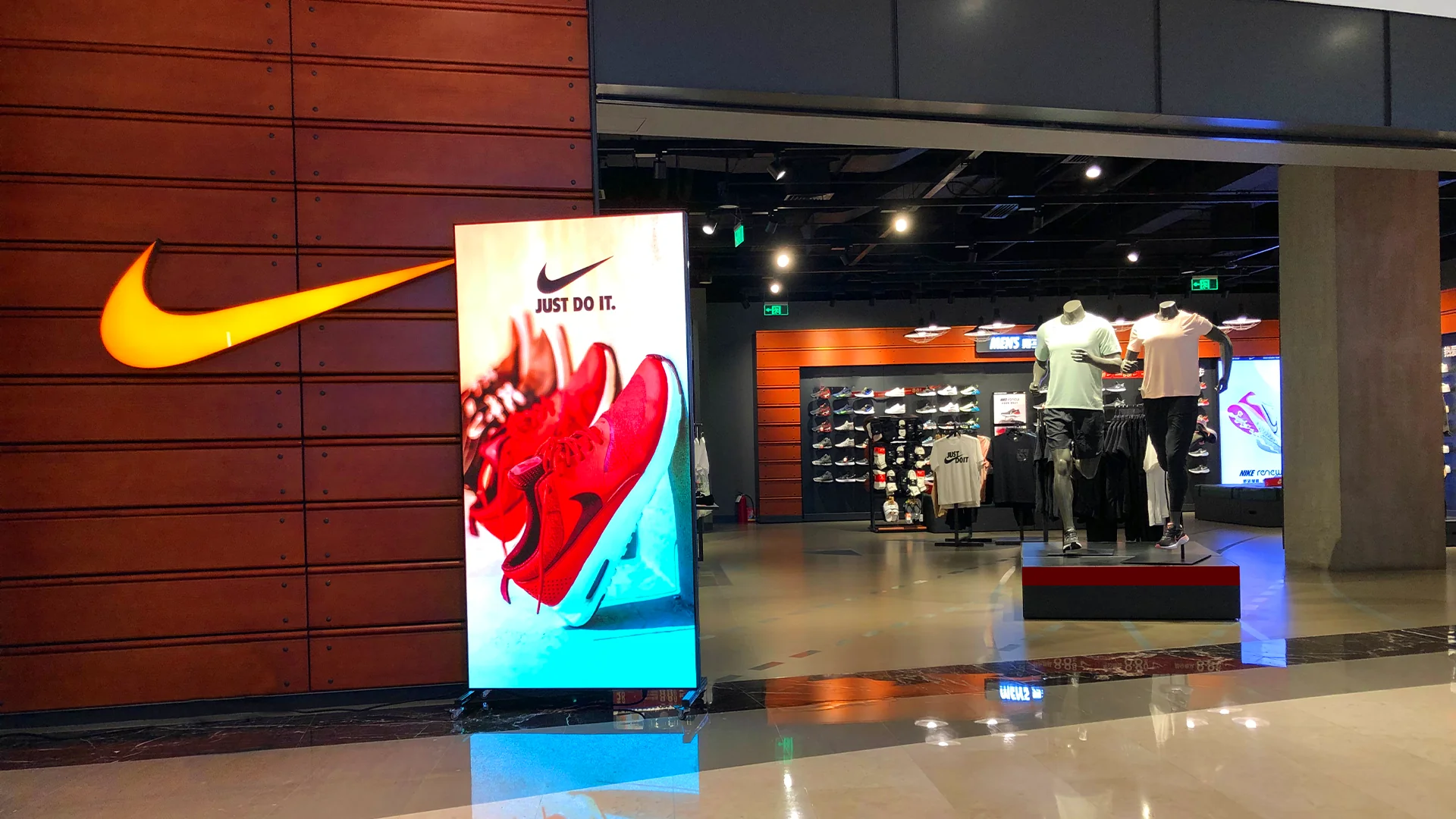
Shopping malls can use 3D LED displays to support product launches, promotional campaigns, seasonal decorations, and brand experiences.
A screen placed near a main entrance, atrium, or high-traffic public area can provide a visual focal point for visitors.
The display configuration should be selected according to the available installation space, viewing distance, ambient lighting, and the type of content planned for the venue.
Brand Launches, Exhibitions, and Events
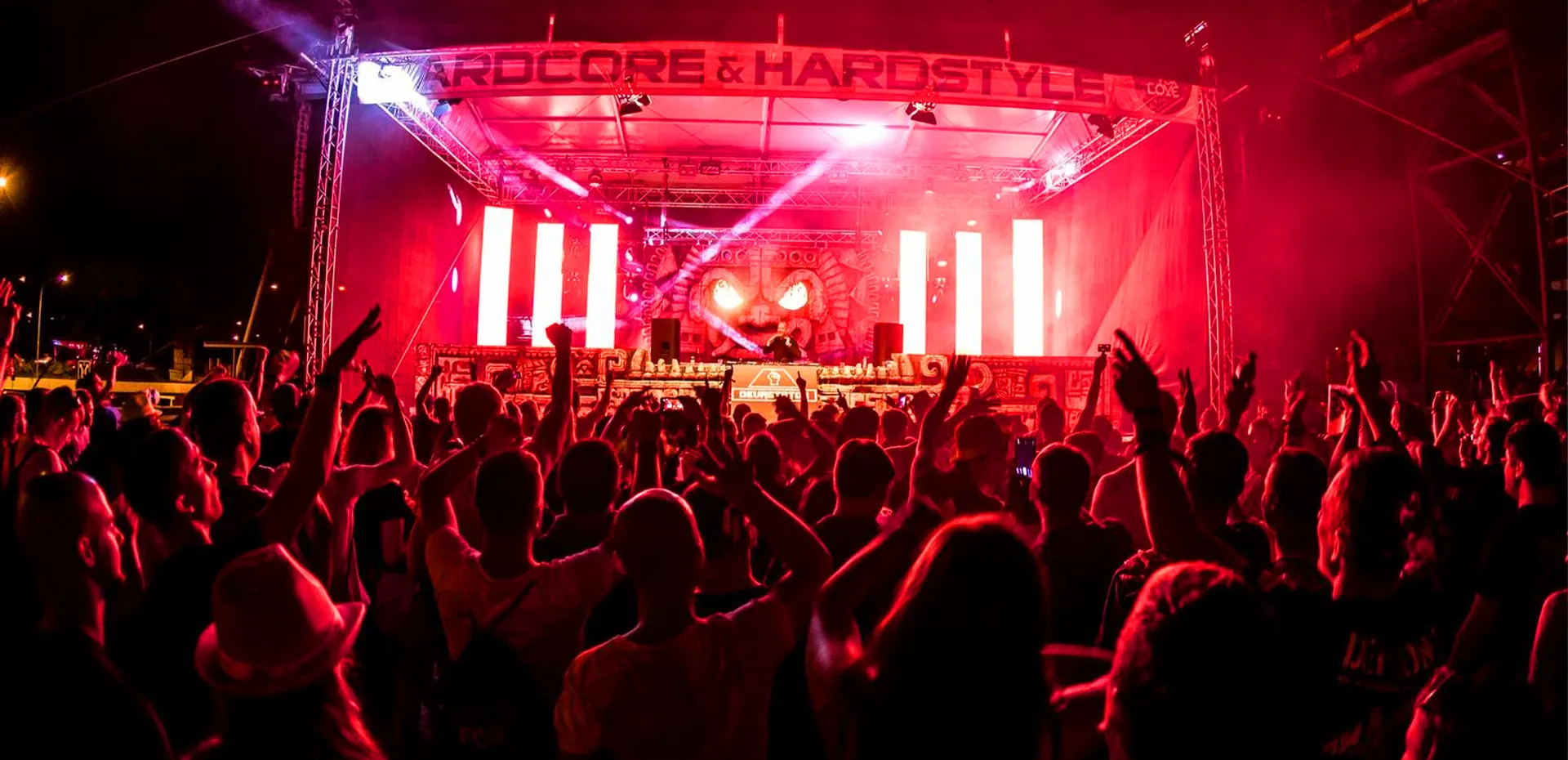
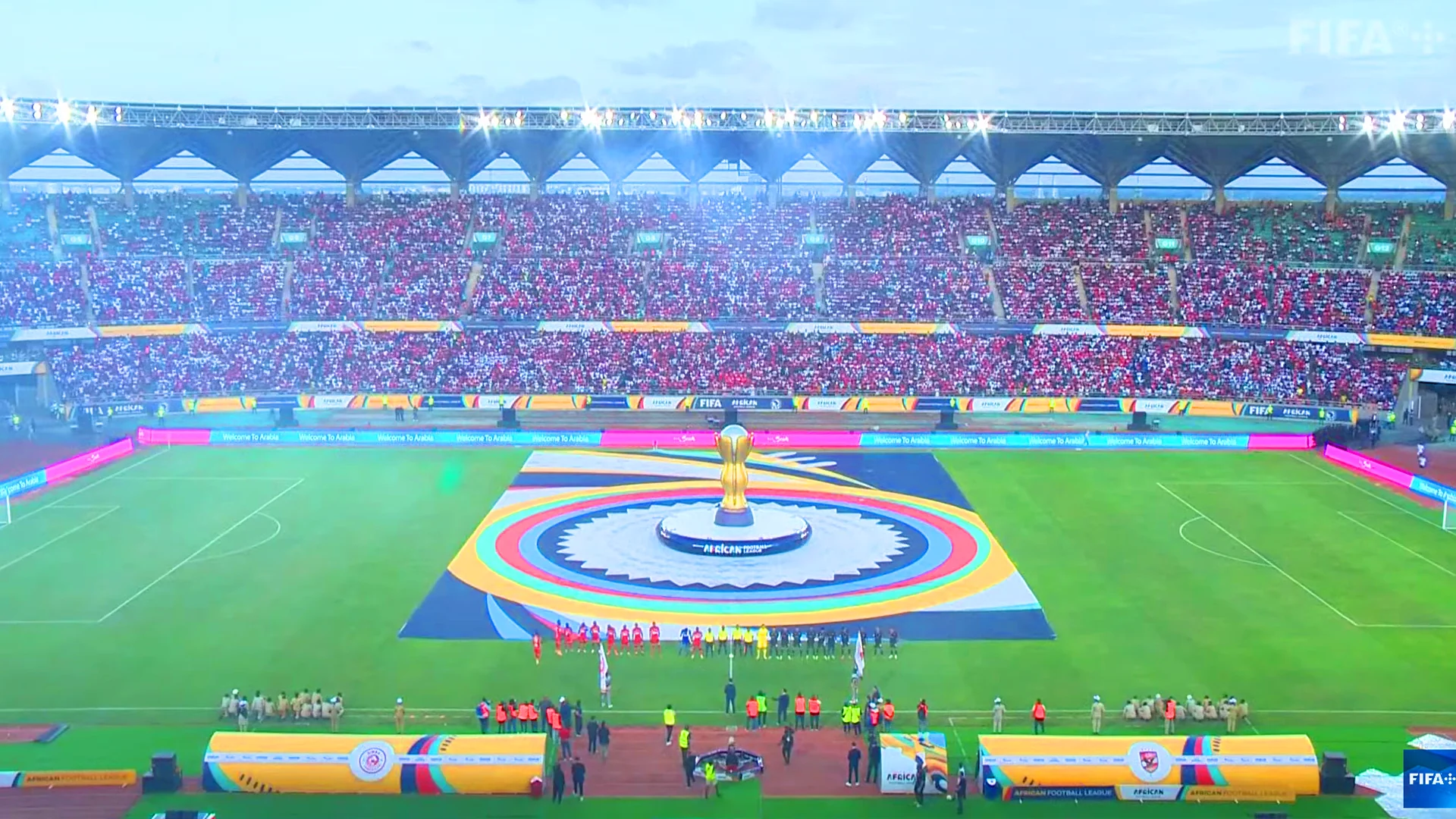
For product launches and exhibitions, 3D LED screens can help create immersive presentations and distinctive stage visuals.
They can be integrated with stage designs, architectural elements, lighting, and other AV equipment to support a consistent visual concept.
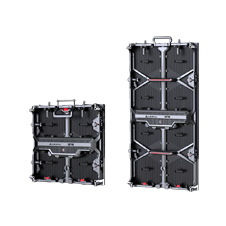
Temporary installations may prioritize fast assembly, modular cabinet design, transport efficiency, and convenient maintenance. Permanent installations may place greater emphasis on structural integration, long-term operating stability, and service access.
Commercial Building Media Façades
Commercial buildings can integrate LED displays into their façades to create digital advertising surfaces and architectural visual features.
For these projects, display selection should account for the building structure, wind load, weather exposure, power and data distribution, maintenance access, and local installation requirements.
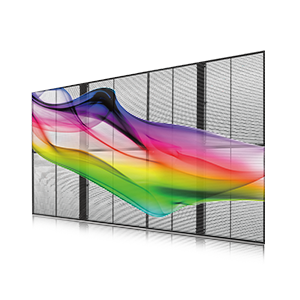
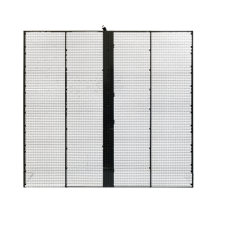
Transparent LED solutions may also be worth evaluating when maintaining natural light and visibility through glass is an important project requirement. The appropriate technology depends on the intended visual effect and the building’s design constraints.
How to Choose the Right 3D LED Screen Solution
A successful 3D LED project begins with the application requirements, not simply the largest screen or the smallest pixel pitch.
1. Choose the Right Screen Shape and Geometry
Screen geometry directly affects the way 3D content is perceived.
A flat LED screen can display perspective-based animation, but a corner configuration can provide additional opportunities for creating the illusion of depth.
Before selecting a cabinet configuration, consider:
- Whether the screen is flat, corner-shaped, curved, or part of a custom structure.
- The angle between adjoining display surfaces.
- The intended viewing position.
- The available installation space.
- The content format and required pixel mapping.
For a corner installation, the cabinet structure and display alignment must support the intended geometry. Content designers also need accurate screen dimensions and mapping information.
A visually impressive design on a computer may not deliver the same effect when viewed from a different position in the real installation environment.
2. Select the Appropriate Pixel Pitch
Pixel pitch refers to the distance between the centers of adjacent LED pixels. A smaller pixel pitch generally provides higher pixel density and can improve image detail at shorter viewing distances.
The right choice depends on screen size, viewing distance, content complexity, budget, and installation conditions.
| Project environment | Key considerations |
| Large outdoor billboard | Viewing distance, brightness, weather protection, and overall image clarity |
| Building-corner 3D display | Viewing perspective, screen geometry, image detail, and cabinet alignment |
| Shopping mall display | Viewing distance, ambient lighting, content detail, and available space |
| Exhibition or event screen | Viewing distance, assembly requirements, transportation, and content format |
There is no single pixel pitch that fits every project. Buyers should evaluate the complete viewing environment rather than selecting a configuration based on pixel pitch alone.
3. Evaluate Brightness and Outdoor Protection
Outdoor LED displays must remain visible under changing daylight conditions.
Brightness requirements depend on the installation location, direct sunlight exposure, viewing direction, and local environment. A high brightness rating can be useful for outdoor advertising, but the actual configuration should be balanced with power consumption, image quality, and operating conditions.
Weather protection is equally important.
For outdoor projects, buyers should verify the display’s ingress protection rating, cabinet construction, connectors, cable routing, heat management, and maintenance requirements.
For example, LEDFUL’s FS PRO Series product page presents an outdoor LED display solution with features including IP66 protection and brightness specifications of up to 10,000 nits, depending on the configuration. Buyers should confirm the exact model and current datasheet before specifying these values in a quotation or project document.
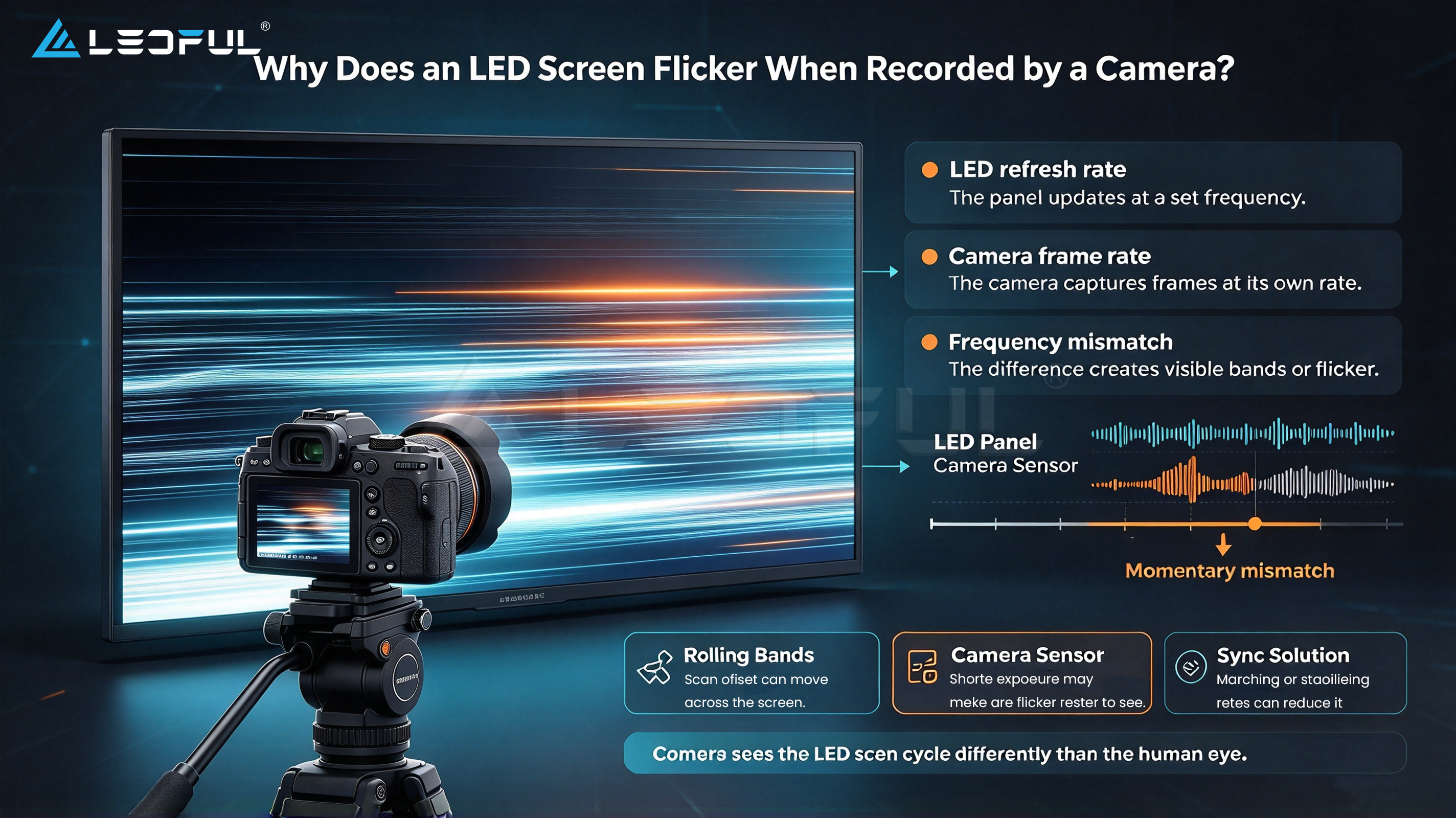
4. Check Refresh Rate, Grayscale, and Color Consistency
A 3D LED display may be recorded by smartphones, professional cameras, and broadcast equipment. Display performance therefore matters both to the live audience and to the people who watch campaign videos online.
When evaluating a display, consider:
- Refresh rate and camera-recording requirements.
- Grayscale performance and smooth transitions.
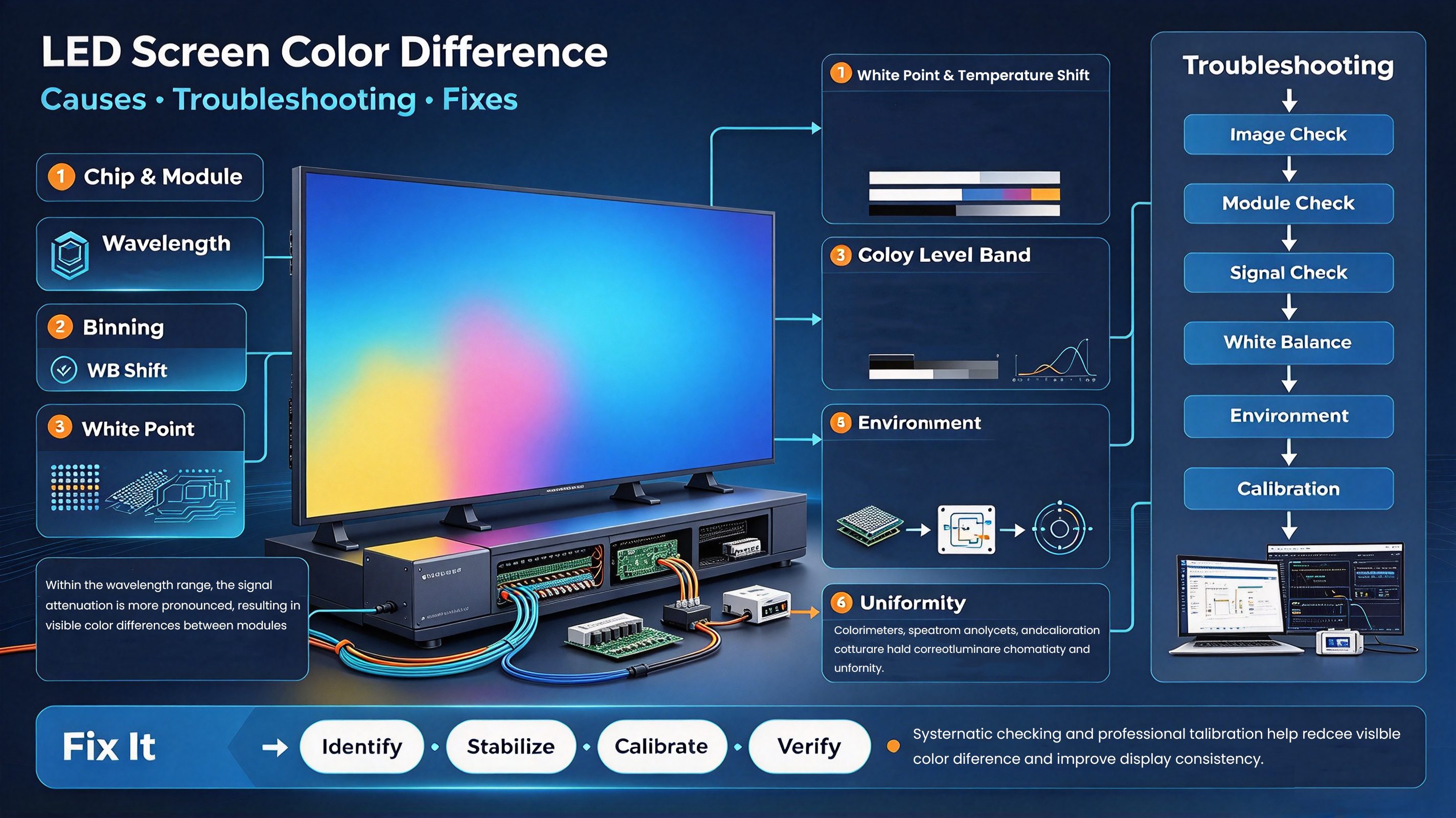
- Color consistency across the screen.
- Image uniformity and calibration.
- Compatibility with the controller and playback system.
These factors help support smooth motion and consistent image quality. Final results also depend on content settings, camera parameters, calibration, and the complete display system.
5. Consider Installation and Maintenance
A large outdoor display is an engineered installation, not just a collection of LED cabinets.
Before confirming the configuration, clarify:
- Installation structure and load-bearing requirements.
- Wind-load calculations and local engineering approvals.
- Power distribution and data connections.
- Access for inspection and maintenance.
- Spare parts and replacement procedures.
- Warranty coverage and technical support.
These details should be addressed before manufacturing and installation begin. Early coordination between the display supplier, structural engineer, installer, and content team can help reduce delays and unexpected costs.
Why Content Production Is Essential for Naked-Eye 3D Advertising
The LED screen provides the visual platform, but the content determines how effectively the 3D illusion is communicated.
A technically capable display cannot compensate for content that uses the wrong perspective, ignores the screen’s geometry, or places key visual elements outside the intended viewing area.
Design Content for the Actual Screen
Anamorphic content should be created for the physical display rather than treated as a generic video that can be uploaded to any screen.
The content team needs accurate information about:
- Screen dimensions and resolution.
- Cabinet layout and pixel mapping.
- Corner angle or curved geometry, where applicable.
- Primary viewing position and audience perspective.
- Playback resolution, frame rate, and format.
- Controller and media-server requirements.
The earlier these details are confirmed, the easier it is to coordinate animation production with display engineering.
Keep the Main Visual Message Clear
Outdoor audiences may see the display for only a few seconds.
A strong 3D advertising concept should communicate its main idea quickly. A recognizable product, a clear visual action, and a simple brand message can be more effective than an animation filled with too many competing elements.
The creative team should also consider the audience’s viewing distance and movement. Details that look impressive on a large production monitor may be difficult to recognize from the street.
Test the Perspective Before Launch
Content should be reviewed against the actual screen geometry and the intended viewing position.
Where possible, test the animation using the display’s pixel map and a suitable preview or simulation workflow before final delivery.
After installation, verify the content on the real screen. Check image alignment, corner transitions, color consistency, playback stability, and the visibility of the key visual effect.
Small adjustments to perspective or mapping can make a significant difference to the final presentation.
Use AI as a Creative Tool, Not a Complete Production Workflow
AI-assisted tools can help advertising teams explore concepts, generate visual references, and develop ideas for hyper-realistic 3D animations.
However, AI-generated visuals may still require professional editing, animation, perspective correction, and adaptation to the display’s exact geometry.
The goal is not simply to generate an attractive image. It is to produce content that works correctly on the target LED display and supports the campaign’s objectives.
LEDFUL FS PRO Series for Outdoor 3D LED Display Projects
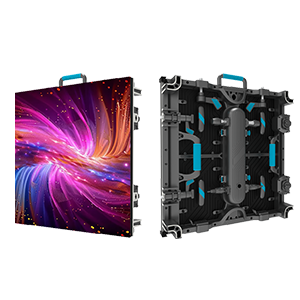
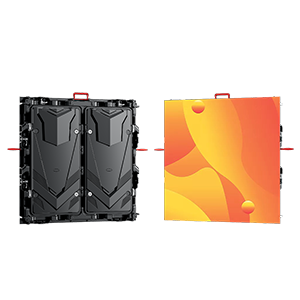
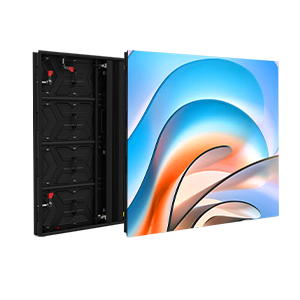
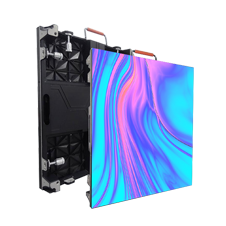
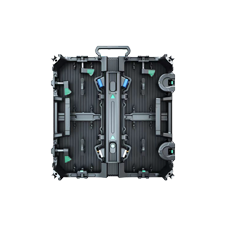
For outdoor advertising projects that require high visibility and creative screen configurations, LEDFUL’s FS PRO Series is one product line worth evaluating.
The series is designed for outdoor LED display applications. Depending on the selected configuration, relevant features include corner-cabinet options, high brightness, weather protection, and display performance suited to commercial advertising environments.
Potential applications include:
- Outdoor commercial advertising.
- Building-corner LED billboards.
- Large-format brand campaigns.
- Custom architectural LED installations.
- Outdoor visual projects requiring carefully planned screen geometry.
The appropriate configuration should be determined by the project’s screen dimensions, viewing distance, installation structure, environmental conditions, and content requirements.
Important: Product specifications can vary by model and configuration. Confirm pixel pitch, cabinet dimensions, brightness, refresh rate, protection rating, power consumption, and other technical details using the current datasheet before making a purchase decision.
Explore the https://www.ledful.com/explore-ledful to review the product solution and discuss your project requirements.
Project Reference: FS6.6-PRO Naked-Eye 3D LED Display in Japan
LEDFUL has published a project reference featuring an FS6.6-PRO naked-eye 3D LED display installed on a rooftop in Japan.
The project demonstrates the application of an outdoor LED display in a building-based advertising environment, where screen placement, viewing perspective, and the relationship between the display and surrounding architecture are important considerations.
For similar projects, buyers should evaluate the following before selecting a solution:
- Available installation area and building structure.
- Intended viewing direction and audience distance.
- Display resolution and content mapping requirements.
- Outdoor protection and environmental conditions.
- Maintenance access and long-term operating arrangements.
A project reference can help buyers understand how a display solution may be applied, but the specifications of one installation should not automatically be assumed to apply to another. https://www.ledful.com/product/if-series
How to Plan a Successful 3D LED Display Project
A structured planning process helps coordinate the display hardware, content, installation, and operating requirements.
Step 1: Define the Advertising Objective
Start by identifying the purpose of the installation.
Is the project intended to attract attention to a landmark location, promote a specific product, support a shopping mall campaign, or create a recognizable feature for a commercial building?
The objective will influence the screen size, content approach, viewing position, operating schedule, and performance indicators.
Step 2: Conduct a Site Assessment
Gather information about the installation location before confirming the display configuration.
Useful information includes site photographs, available dimensions, viewing distance, ambient lighting, building structure, power supply, maintenance access, and applicable local regulations.
For building façades, structural and wind-load requirements should be reviewed by appropriately qualified professionals.
Step 3: Confirm Screen Geometry and Technical Requirements
Determine whether a flat screen, corner display, curved screen, or custom configuration best suits the site.
Then confirm pixel pitch, resolution, brightness, protection rating, controller requirements, cabinet arrangement, and power and data distribution.
These decisions should be coordinated with the content production team to ensure that the planned visual effect is technically achievable.
Step 4: Develop the Creative Concept
The creative concept should connect the brand message with the physical screen.
Confirm the main visual, animation sequence, brand assets, intended viewing perspective, playback duration, and any required language versions.
If the campaign involves AI-assisted production, define the required post-production and technical adaptation work before approving the final budget.
Step 5: Coordinate Engineering and Installation
Review cabinet layouts, support structures, access routes, power distribution, environmental protection, and installation procedures.
Confirm responsibilities between the display supplier, structural engineer, contractor, and AV integrator.
For permanent outdoor installations, engineering compliance and safe maintenance access should be addressed before the installation schedule is finalized.
Step 6: Test the Complete System
Before launch, test the display hardware, controller, playback equipment, content mapping, and operating settings.
Check image uniformity, playback stability, corner alignment, brightness, color consistency, and the intended viewing effect.
A final on-site review helps identify issues that may not be obvious during content development or factory testing.
Step 7: Prepare for Long-Term Operation
After commissioning, establish a plan for content updates, preventive maintenance, spare parts, troubleshooting, and technical support.
For advertising operators, the ability to update campaigns efficiently can be as important as the initial display installation.
A clear operating plan helps the display remain useful beyond its launch campaign.
What Should a 3D LED Screen Quotation Include?
When comparing suppliers, buyers should request a quotation that covers the complete project scope rather than the LED cabinets alone. https://www.ledful.com/category/cases
| Quotation item | What to confirm |
| LED display hardware | Pixel pitch, screen dimensions, cabinet configuration, brightness, protection rating, and model |
| Control and playback system | Controller, receiving cards, media server or player, cables, and compatibility |
| Spare parts | Recommended spare modules and other critical components |
| Structure and engineering | Drawings, installation method, load requirements, and responsibility for approvals |
| Content production | Concept development, animation scope, revision rounds, mapping, file format, and licensing |
| Transportation and installation | Packaging, shipping terms, installation labor, commissioning, and travel expenses where applicable |
| Warranty | Coverage period, exclusions, replacement procedures, and parts or labor coverage |
| Technical support | Remote assistance, on-site service options, response arrangements, and maintenance guidance |
| Future operation | Content updates, spare-part availability, software compatibility, and expected maintenance needs |
A low initial quotation does not necessarily mean a lower total project cost. Missing structural work, content production, installation, or future maintenance may create additional expenses later.
Requesting comparable specifications and clearly defined responsibilities makes supplier evaluation more reliable.
Common Mistakes to Avoid When Buying a 3D LED Display
Choosing the Screen Before Understanding the Viewing Position
The intended 3D effect depends on perspective. A screen designed around one viewing angle may not produce the same illusion from every location.
Better approach: Assess the site and define the primary viewing position before finalizing the geometry and content.
Treating Ordinary Video as Finished 3D Content
A standard promotional video may look attractive but fail to create a convincing anamorphic effect on a corner display.
Better approach: Plan the content specifically for the physical screen, its resolution, and its viewing perspective.
Selecting Pixel Pitch Based Only on Price
A low-cost configuration may not provide the image detail required for the audience’s viewing distance.
On the other hand, a very fine pixel pitch may not be necessary for a large billboard viewed from far away.
Better approach: Balance viewing distance, image requirements, screen dimensions, and total project budget.
Ignoring Structural and Maintenance Requirements
Outdoor installations involve more than the display cabinet. Structural loads, wind conditions, weather protection, electrical safety, and maintenance access must all be considered.
Better approach: Confirm the engineering scope and responsibility allocation before production and installation.
Assuming That Visual Impact Guarantees Business Results
An impressive display can attract attention, but advertising performance also depends on location, creative quality, audience relevance, campaign frequency, and the advertiser’s objectives.
Better approach: Establish measurable campaign goals and evaluate results using appropriate exposure, engagement, lead-generation, or commercial indicators.
Overlooking Content Rights and Future Updates
A campaign may require licensed music, brand assets, animation files, or ongoing content revisions.
Better approach: Confirm content ownership, licensing, source-file delivery, revision terms, and future update costs in advance.
Frequently Asked Questions About 3D LED Screen Solutions
1. Does a naked-eye 3D LED display require special glasses?
No. Naked-eye 3D advertising is designed to create a depth illusion without special glasses. The effect is generally produced through perspective-based content and careful mapping to the display geometry.
2. Does a 3D LED display need a corner screen?
Not always. A flat LED screen can display perspective-based content, but a corner configuration can create additional opportunities for anamorphic visual effects.
The best choice depends on the site, viewing angle, creative concept, and available installation space.
3. Can an ordinary LED screen display naked-eye 3D content?
An LED display may be capable of presenting the required video, but a convincing result depends on suitable screen geometry, accurate content mapping, appropriate image quality, and the intended viewing perspective.
The display hardware and content production process should therefore be planned together.
4. What pixel pitch is best for an outdoor 3D LED billboard?
There is no universal answer. The right pixel pitch depends on viewing distance, screen size, image detail, budget, and environmental requirements.
Share the site dimensions and expected audience distance with the supplier to obtain a more suitable recommendation.
5. How much does a 3D LED screen solution cost?
The total cost depends on display dimensions, pixel pitch, brightness, cabinet configuration, controller and playback equipment, structural engineering, content production, shipping, installation, and after-sales requirements.
For a meaningful quotation, provide the location, screen dimensions, installation photographs, viewing conditions, and project scope.
6. Does LEDFUL provide installation support?
The available support scope depends on the project requirements and agreed service arrangements. When requesting a quotation, confirm whether the proposal includes remote technical guidance, on-site engineering support, commissioning, installation labor, travel expenses, and ongoing maintenance.
7. Can AI be used to create 3D LED advertising content?
Yes. AI-assisted tools can help with concept development and visual generation. However, the output may require professional animation, perspective correction, content mapping, and adaptation to the target screen before it is ready for playback.
Create Your Next Immersive Advertising Experience with LEDFUL
A successful 3D LED advertising project brings together the right display hardware, accurate screen geometry, compelling content, reliable installation, and a clear operating plan.
Whether you are planning an outdoor 3D billboard, a building-corner LED display, a shopping mall installation, or a custom commercial project, the first step is to define your site conditions and advertising objectives.
LEDFUL can help you evaluate suitable LED display configurations according to your project’s technical requirements.
Contact LEDFUL to discuss your 3D LED screen project.
To help us assess your requirements, please share:
- Project location and application.
- Estimated screen dimensions.
- Site photographs or architectural drawings.
- Expected viewing distance and direction.
- Preferred content type and installation schedule.
LEDFUL — Trusted LED Display Solutions Provider.