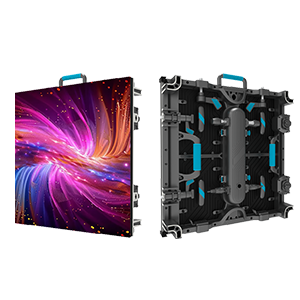
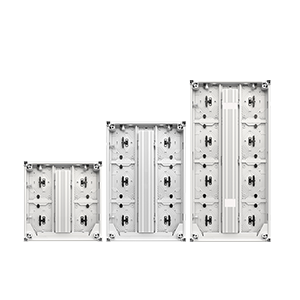

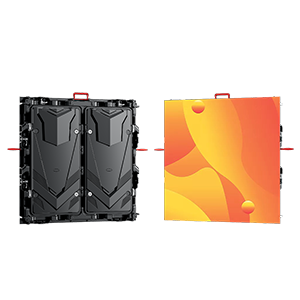
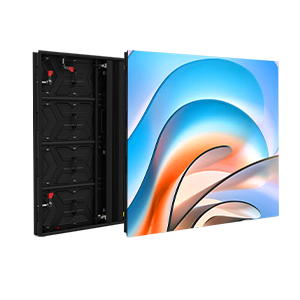

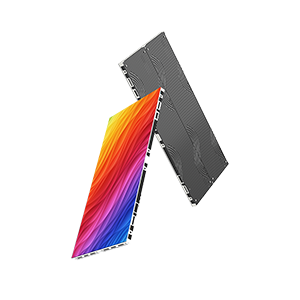

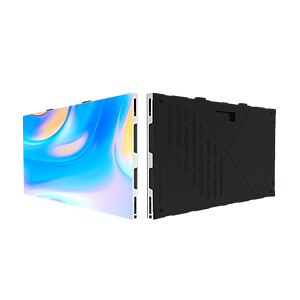
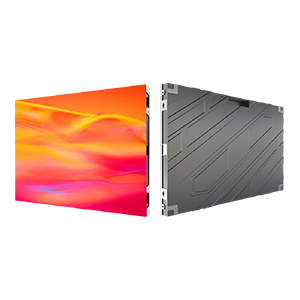

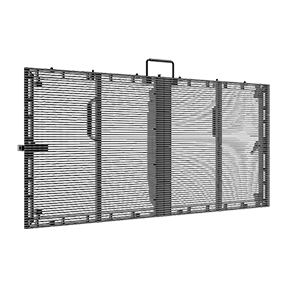



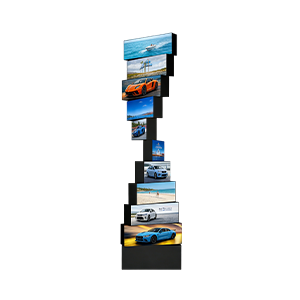
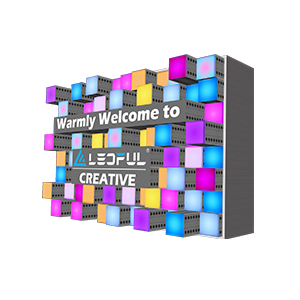
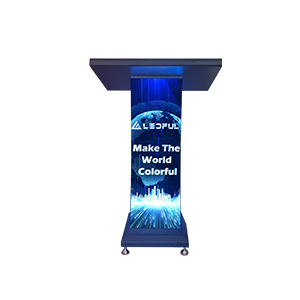

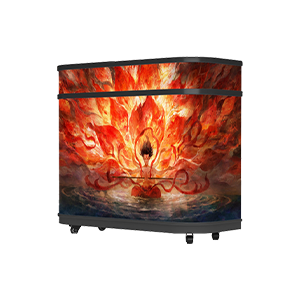







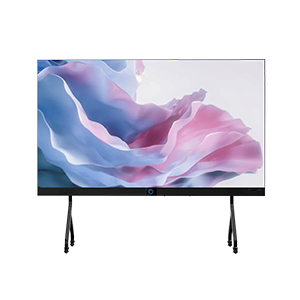


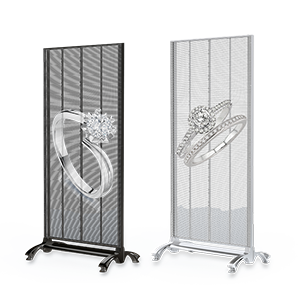
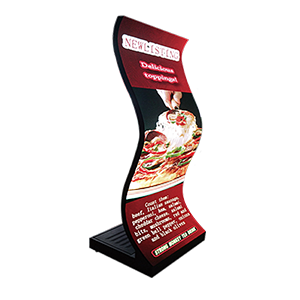


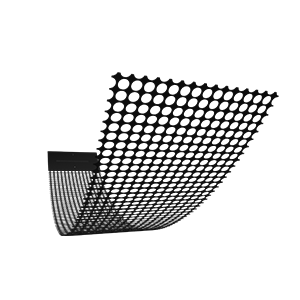





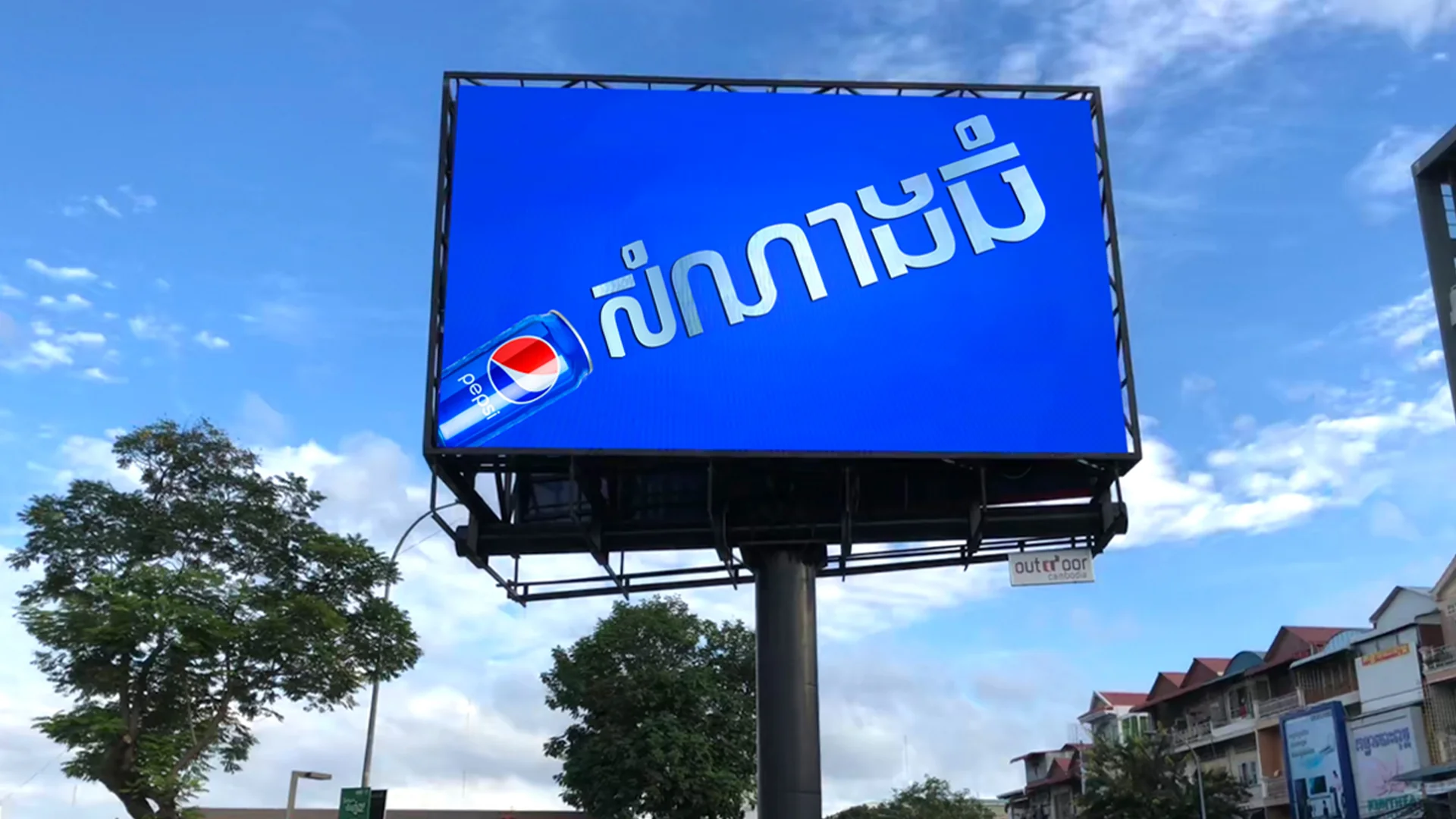
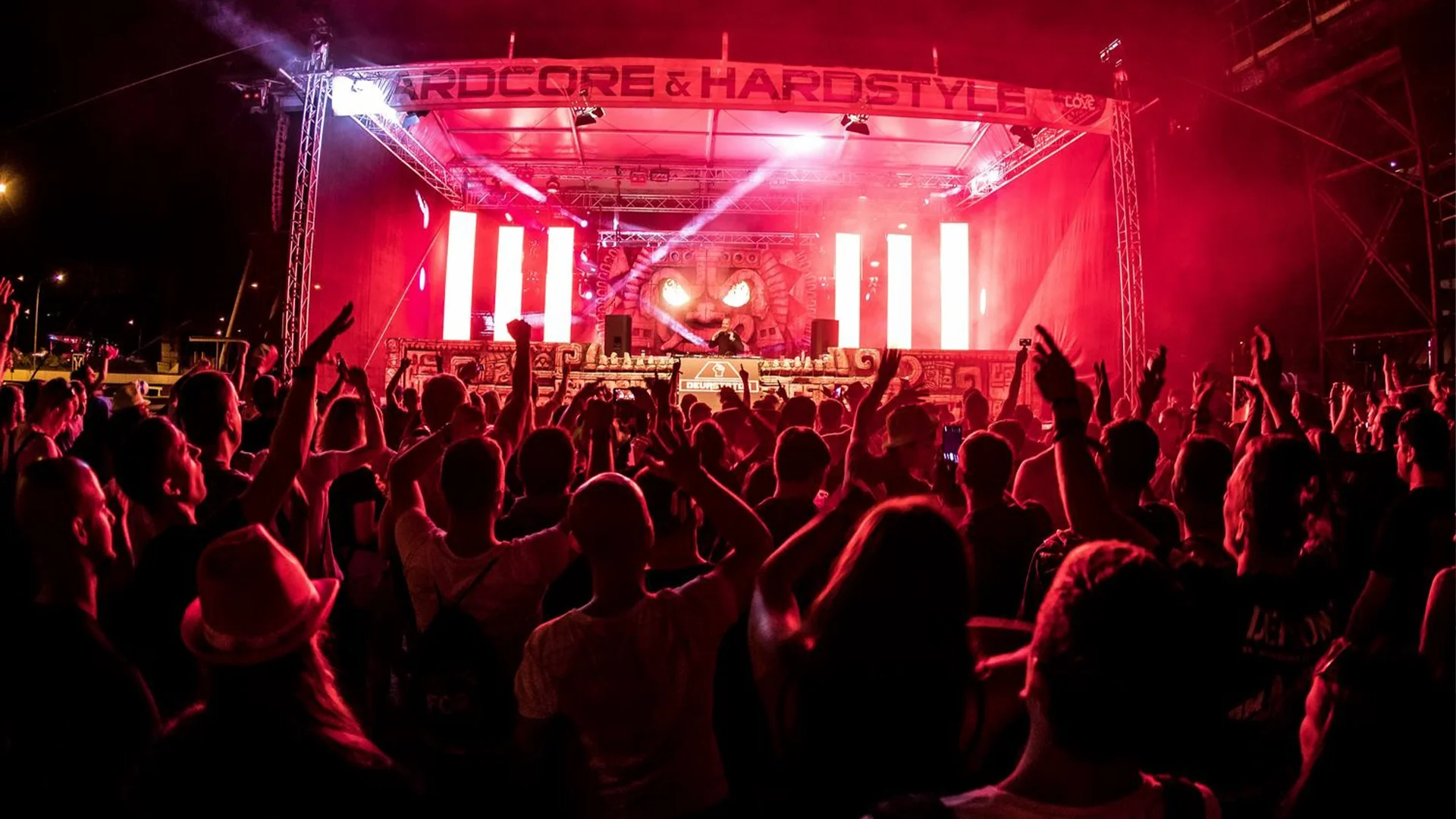
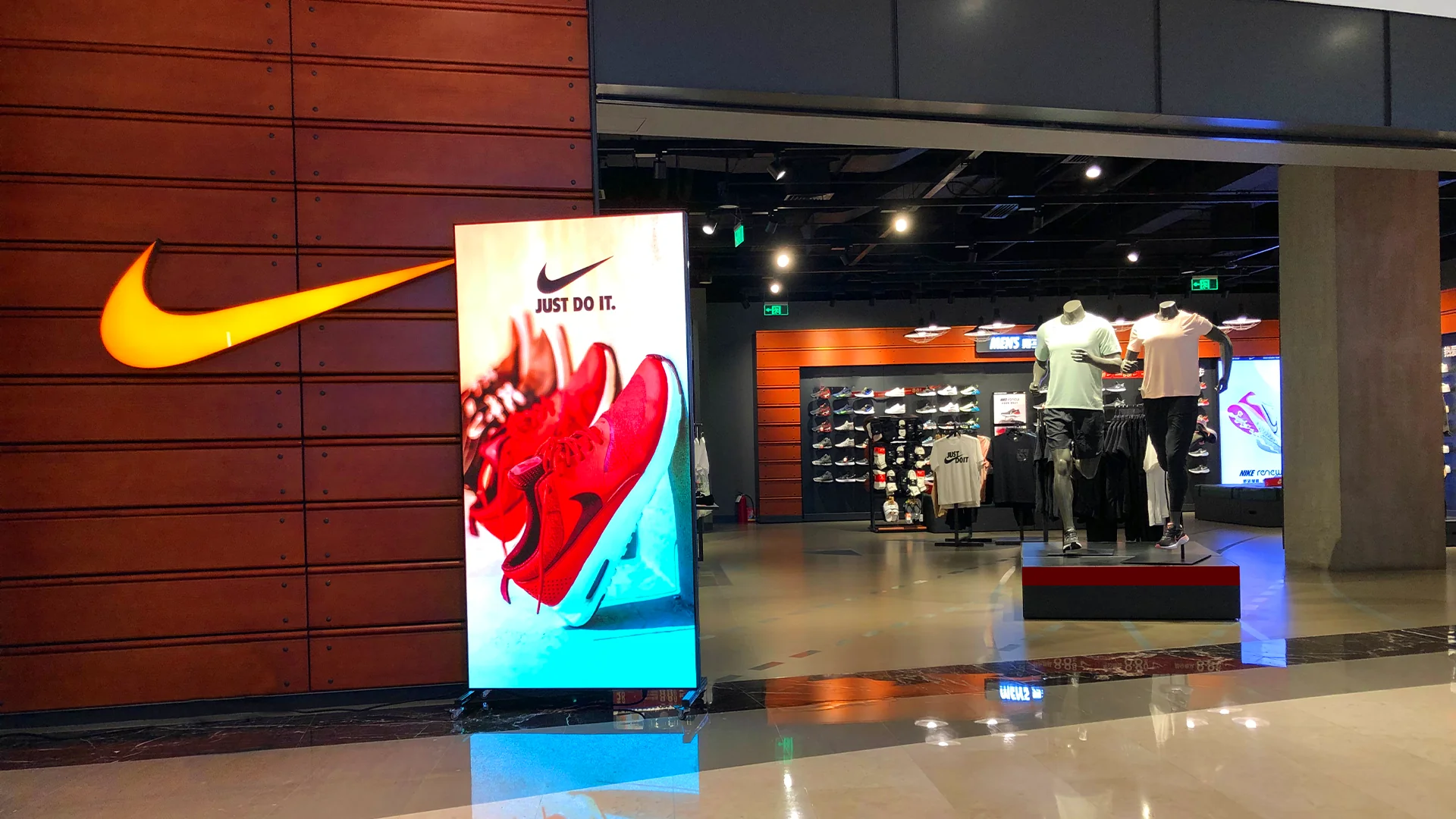
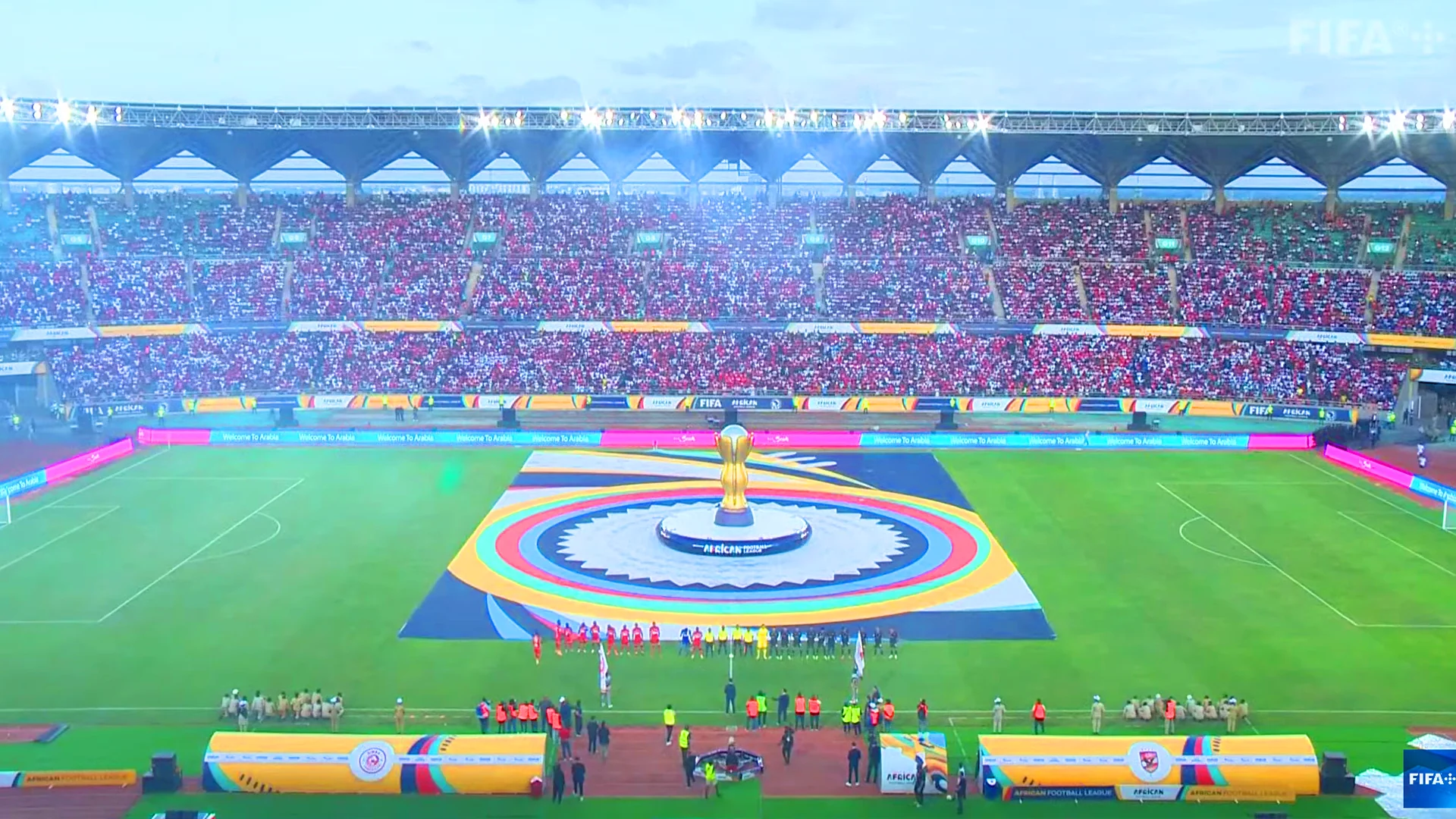





At a busy exhibition, hundreds of brands compete for the same visitors. Even a large booth with high-quality graphics can be overlooked when neighboring exhibitors offer similar visual experiences.
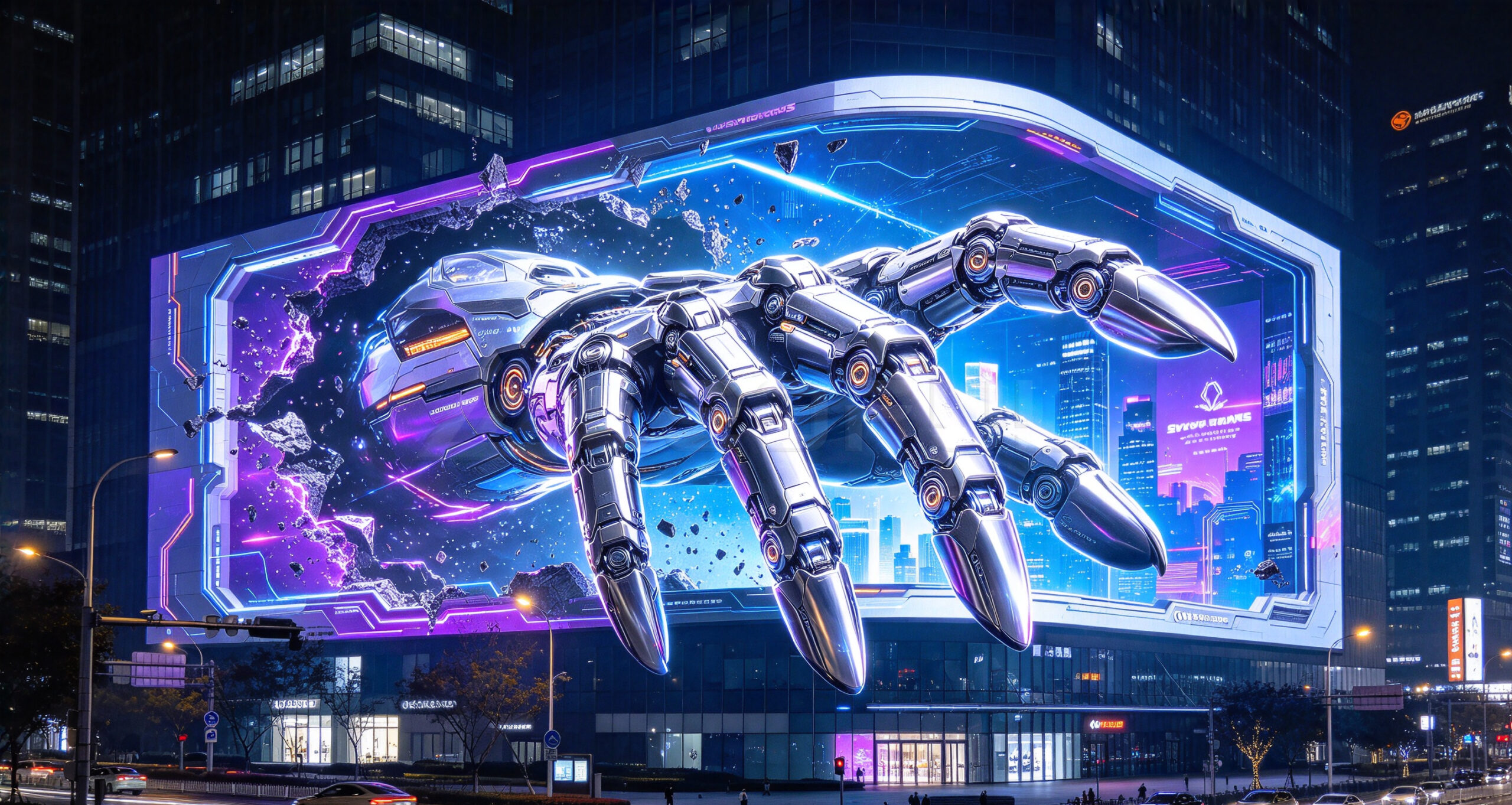
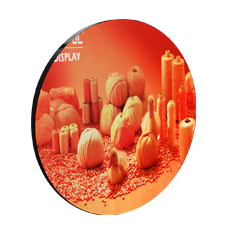
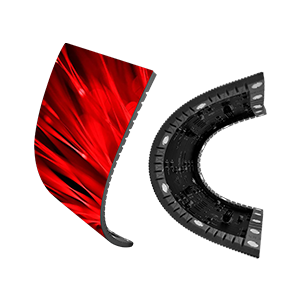
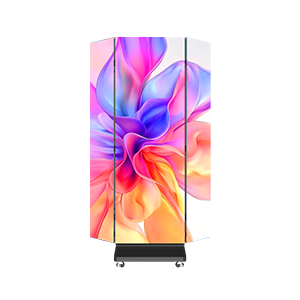
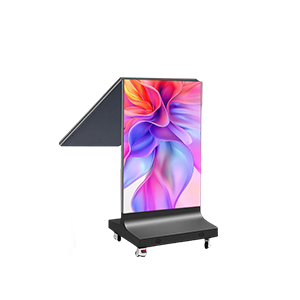
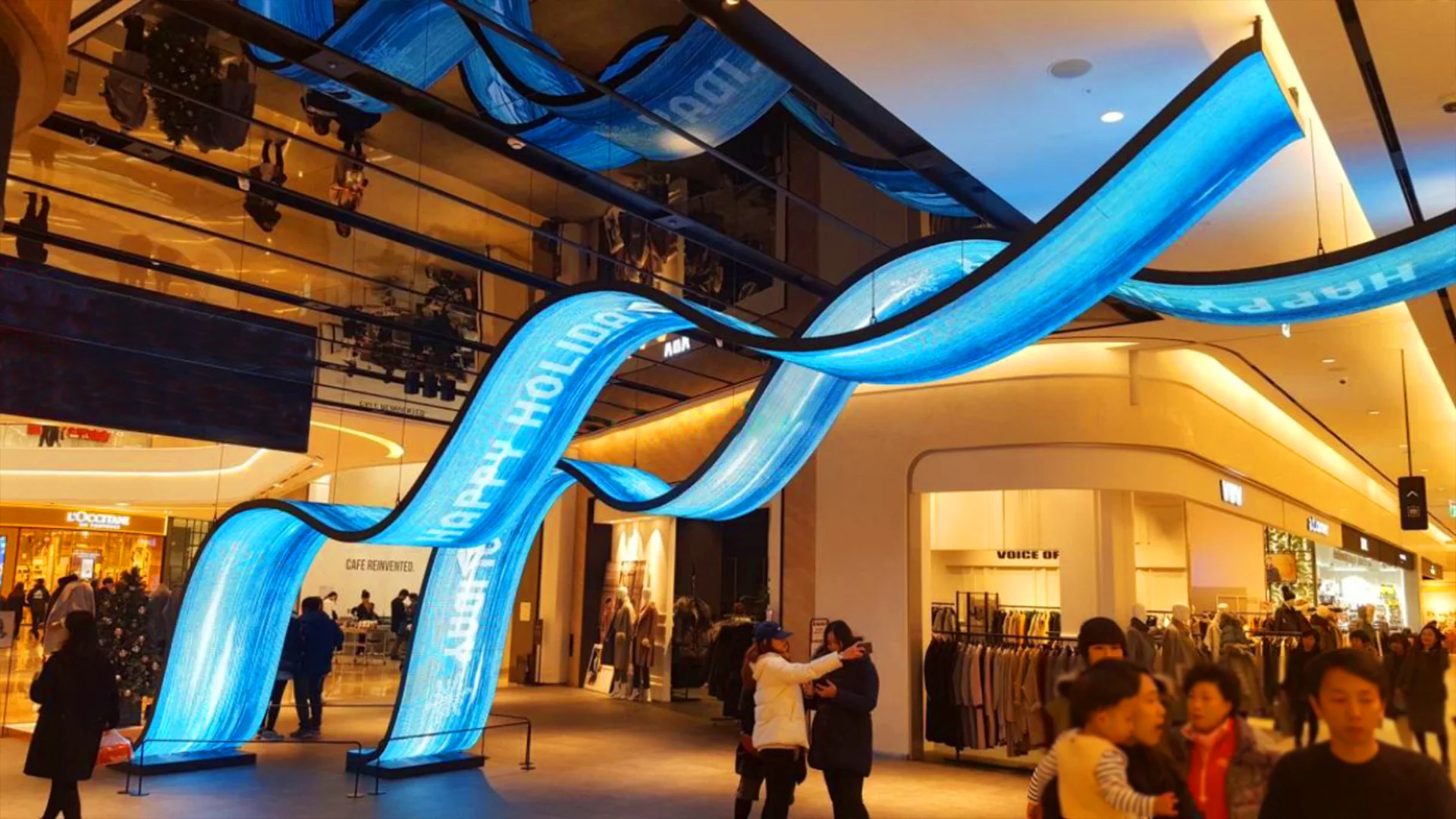
A kinetic LED display for exhibitions introduces a different approach. Instead of presenting content on a completely static screen, a kinetic LED system combines digital visuals with controlled physical movement. Depending on the design, the display may rise, descend, extend, rotate, fold, or transform to create a changing visual experience.
For exhibition organizers, booth designers, event production companies, and brands, the goal is not simply to install a larger screen. It is to create a recognizable focal point that supports the brand message and gives visitors a reason to stop.
This guide explains how kinetic LED displays work, where they can be used, what buyers should consider before ordering, and how to evaluate a supplier for an exhibition project.
What Is a Kinetic LED Display?
A kinetic LED display is an LED display system that integrates controlled mechanical movement with digital visual content.
Unlike a conventional LED wall that remains in a fixed position, a kinetic LED screen can change its physical position or configuration according to a programmed sequence. Movement may be coordinated with video, music, lighting, stage cues, or an event presentation.
Depending on the system design, possible movement formats include:
- Vertical movement:LED panels move up or down to reveal content or change the visual structure.
- Telescopic movement:Display sections extend or retract to create depth and a changing screen shape.
- Rotating movement:LED elements rotate to produce different visual orientations.
- Folding or transforming structures:Display sections open, close, or reconfigure as part of a programmed presentation.
- Synchronized multi-screen movement:Multiple display units move together to create a coordinated visual sequence.
Not every kinetic LED system supports every movement type. The available motion depends on the mechanical structure, motor system, control architecture, installation environment, and project requirements.
Kinetic LED Display vs. Traditional Exhibition LED Screen
A traditional exhibition LED screen is effective for showing product videos, presentations, brand messages, and demonstrations. A kinetic LED display adds physical movement to the visual experience.
| Comparison | Traditional LED Display | Kinetic LED Display |
| Display structure | Usually fixed | Can incorporate programmed physical movement |
| Visual presentation | Content changes on a static surface | Content and physical movement can work together |
| Booth design | Suitable for conventional display layouts | Suitable for motion-led focal points and creative structures |
| Content planning | Video and graphics | Video, graphics, timing, and motion coordination |
| Engineering requirements | Display structure, power, signal, and installation | Display system plus motion mechanism, control, safety, and maintenance planning |
| Project complexity | Depends on screen size and installation | Often requires additional mechanical and system integration work |
A kinetic LED system is not automatically the right choice for every booth. If the primary requirement is to display detailed product information at a controlled budget, a conventional LED wall may be sufficient. Kinetic LED is worth evaluating when physical movement is an important part of the visitor experience.
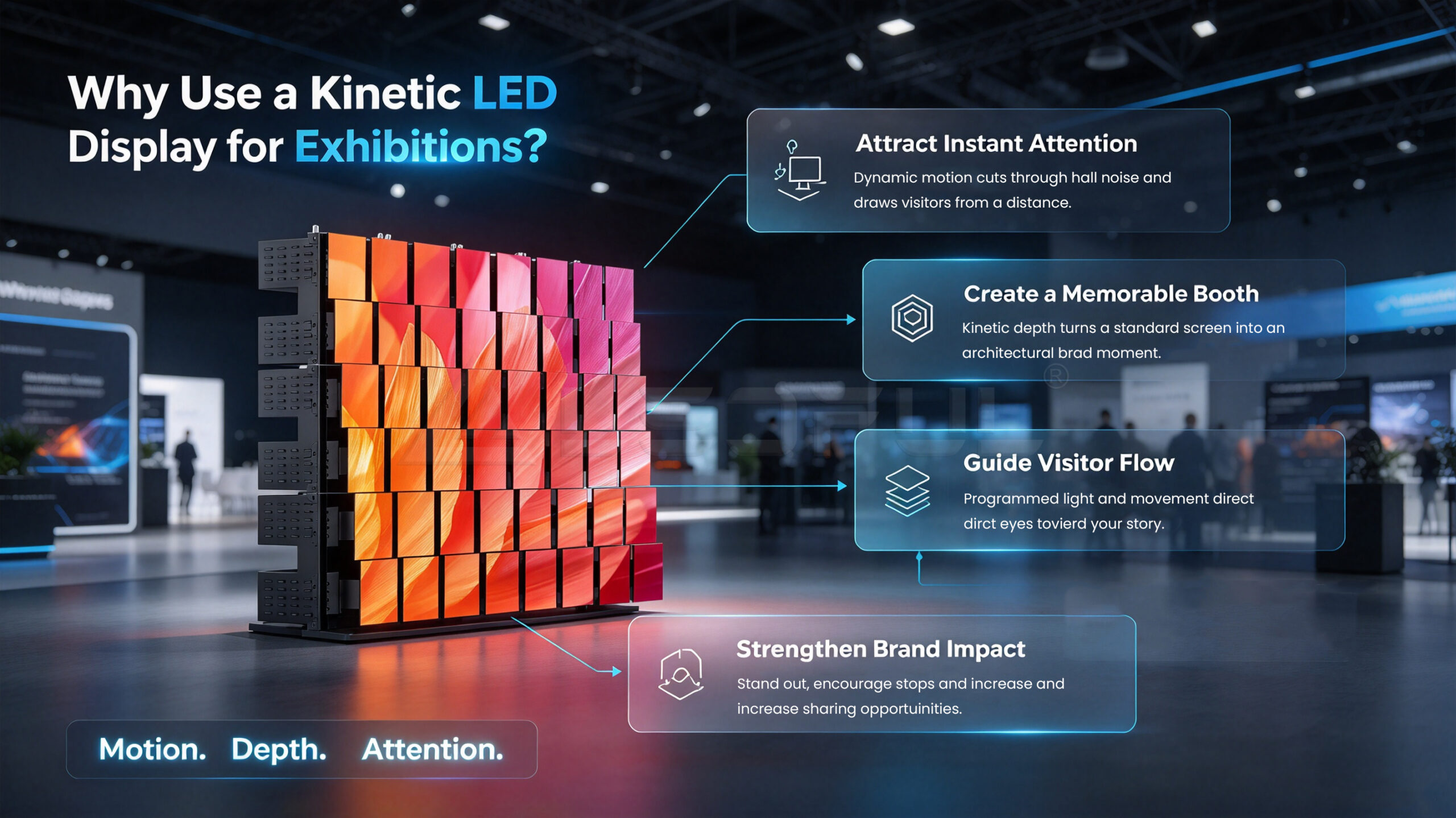
Why Use a Kinetic LED Display for Exhibitions?
1. Create a Stronger Visual Focal Point
Exhibition halls contain competing colors, lighting, product displays, and video screens. A moving visual element can help a booth establish a recognizable focal point.
A programmed movement sequence can introduce a product, reveal a brand message, or transform the display during a scheduled presentation. This gives the booth a visual feature beyond a static video loop.
The effect depends on the booth layout, movement design, surrounding environment, and the quality of the content. Movement should support the message rather than distract visitors from it.
2. Make Product Launches More Memorable
Product launches often follow a sequence: introduction, anticipation, reveal, and demonstration.
A kinetic LED display can support this sequence by moving into position, revealing a product or visual, and synchronizing the motion with the presentation. This can be useful for technology launches, automotive presentations, consumer electronics, luxury products, and brand activations.
Before choosing a motion system, define the intended reveal sequence and confirm that the mechanical design can achieve it safely and reliably.
3. Build an Immersive Brand Experience
A successful exhibition booth combines the display with spatial design, lighting, visitor circulation, and content.
Kinetic LED can help create a more dynamic environment when the display movement is coordinated with the booth’s visual concept. For example, several LED sections may move in sequence as a product story develops, or a central display may change configuration between presentation modes.
Immersion does not necessarily mean covering every surface with screens. A clearly planned visual hierarchy often works better than adding multiple effects without a defined purpose.
4. Support Photo and Video Sharing
A distinctive display can give visitors a reason to photograph or record the booth. The movement itself may provide a recognizable moment for event content, social posts, or post-show marketing.
However, sharing is not guaranteed by installing a kinetic screen. The visual concept, timing, brand identity, camera angles, and visitor experience all matter.
If social sharing is a project objective, plan a clear viewing position and a short, visually understandable sequence that works in both live viewing and recorded video.
5. Differentiate the Booth From Competing Exhibitors
When several exhibitors use similar booth layouts, a kinetic LED installation can help communicate innovation and technical capability.
For B2B brands, this may be particularly relevant when the exhibition objective is to demonstrate advanced technology, attract distributors, present a new product line, or create a premium brand environment.
The display should still serve a business purpose. Define whether the main objective is product demonstration, lead generation, brand awareness, scheduled presentations, or visitor interaction before deciding on the design.
Where Can Kinetic LED Displays Be Used at Exhibitions?
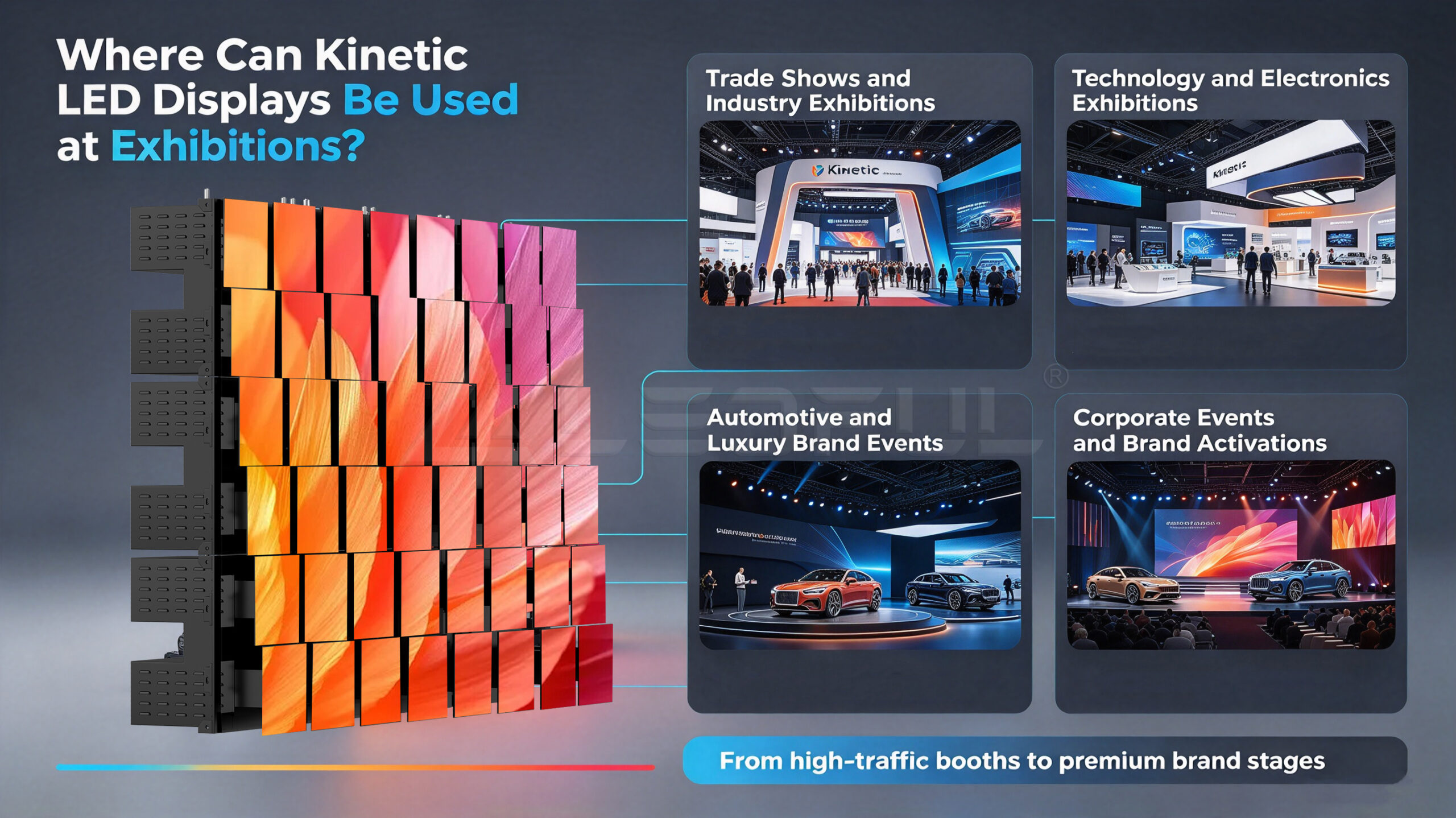
Trade Shows and Industry Exhibitions
At trade shows, kinetic LED can be used as a central booth feature, product presentation backdrop, or moving brand installation.
For industrial and technology exhibitions, the content can highlight product functions, manufacturing capabilities, technical processes, or key product benefits. For consumer-facing brands, the design may focus more on product reveal and brand storytelling.
Technology and Electronics Exhibitions
Technology booths often need to communicate innovation quickly. A kinetic LED installation can demonstrate the relationship between digital content, engineering, and motion.
It can be used for product launches, demonstration zones, interactive presentations, and technology showcases. The display should be integrated with the booth’s actual product message rather than functioning only as decoration.
Automotive and Luxury Brand Events
Automotive, luxury, and premium consumer brands may use motion-based LED structures to support product reveals and visual storytelling.
For these applications, movement timing, surface quality, lighting, viewing distance, and content design should be considered together. The screen structure should not obstruct the product or the audience’s main viewing angle.
Corporate Events and Brand Activations
Kinetic LED systems can also be considered for corporate presentations, press events, promotional campaigns, and temporary brand experiences.
For recurring events, buyers should evaluate whether the system can be transported, installed, maintained, and reconfigured for future use. A design that looks impressive in a rendering may still be impractical if its installation time or structural requirements do not fit the event schedule.
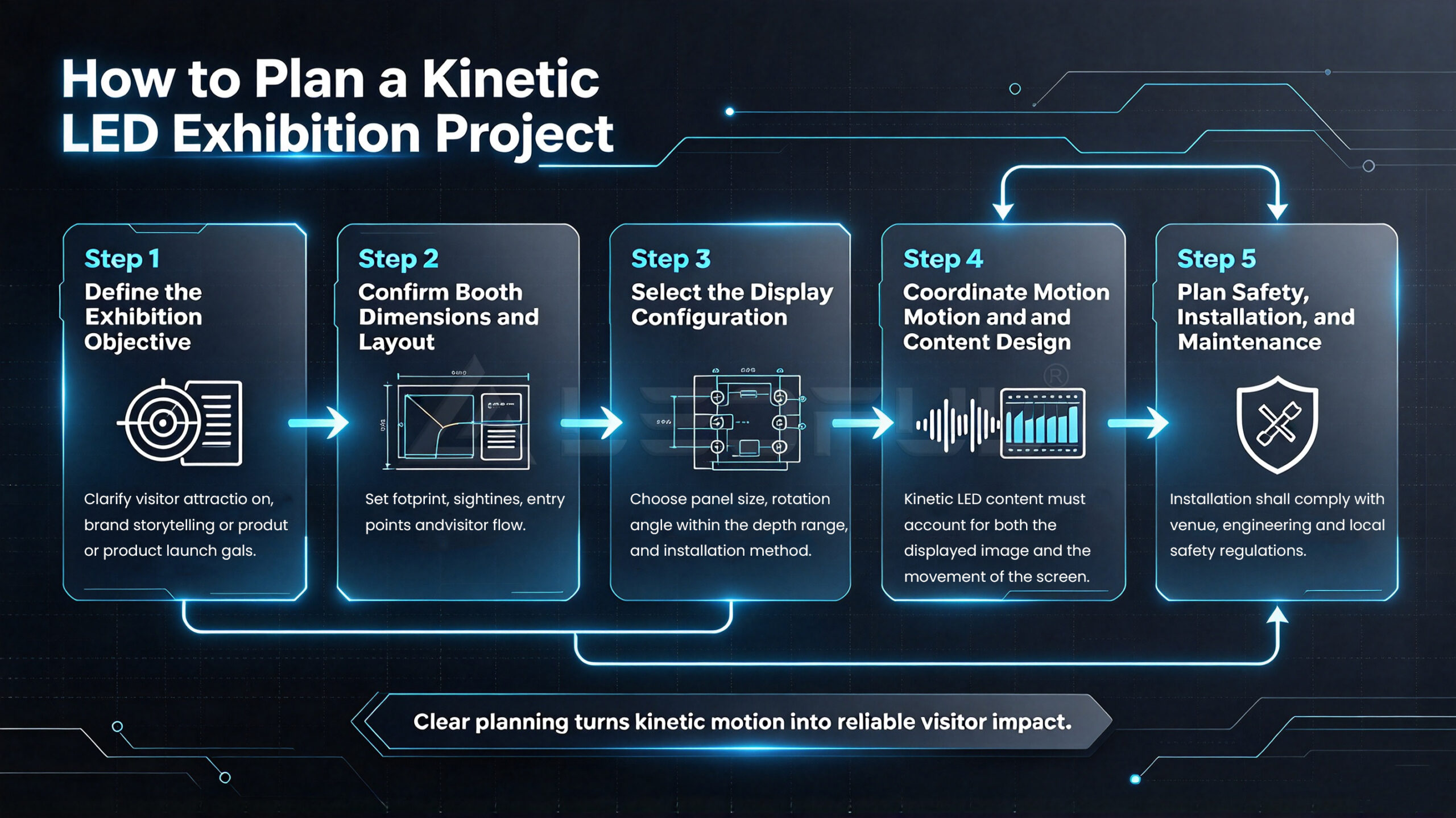
How to Plan a Kinetic LED Exhibition Project
A kinetic LED project requires more planning than selecting a screen size and pixel pitch. The display, movement system, content, structure, and site conditions must work together.
Step 1: Define the Exhibition Objective
Start with the result the booth needs to achieve.
Ask:
- Is the priority to attract visitors from a distance?
- Will the display introduce a new product?
- Does it need to support scheduled presentations?
- Will visitors interact with the installation?
- Is the display intended for one event or repeated use?
Clear objectives help the project team decide whether kinetic LED is necessary and which movement format is appropriate.
Step 2: Confirm Booth Dimensions and Layout
Provide the booth plan, available height, installation area, audience viewing directions, and surrounding structures.
The supplier and booth contractor should review movement clearance, structural loading, access for installation, cable routing, power availability, and any venue restrictions.
For moving structures, the space required during operation may differ from the footprint shown in the static booth design.
Step 3: Select the Display Configuration
The right LED configuration depends on viewing distance, content detail, screen size, brightness requirements, and the installation environment.
Important considerations include:
- Pixel pitch and expected viewing distance.
- Indoor brightness requirements and ambient lighting.
- Cabinet or module dimensions.
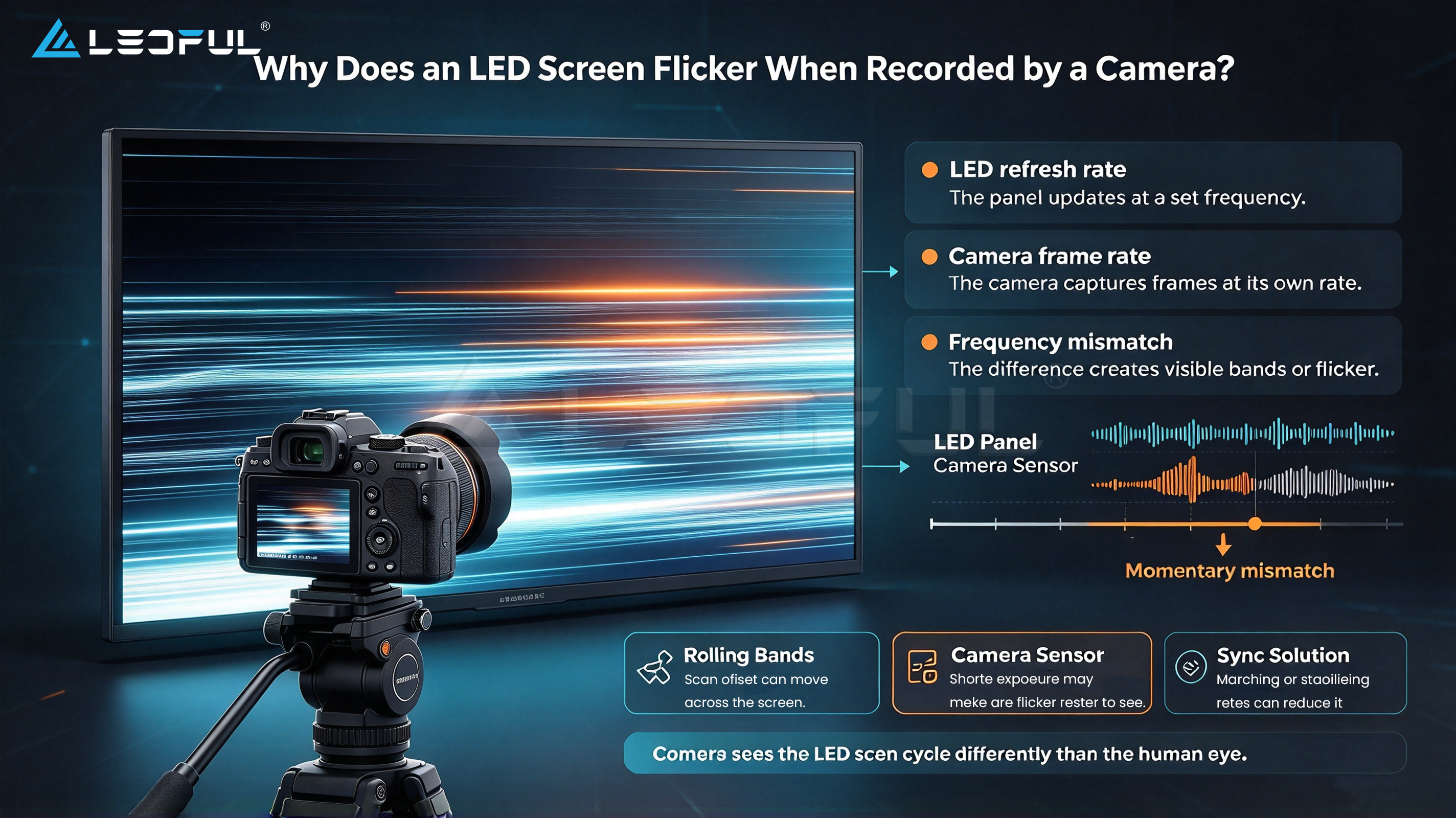
- Refresh rate and camera-recording requirements, if the display will be filmed.
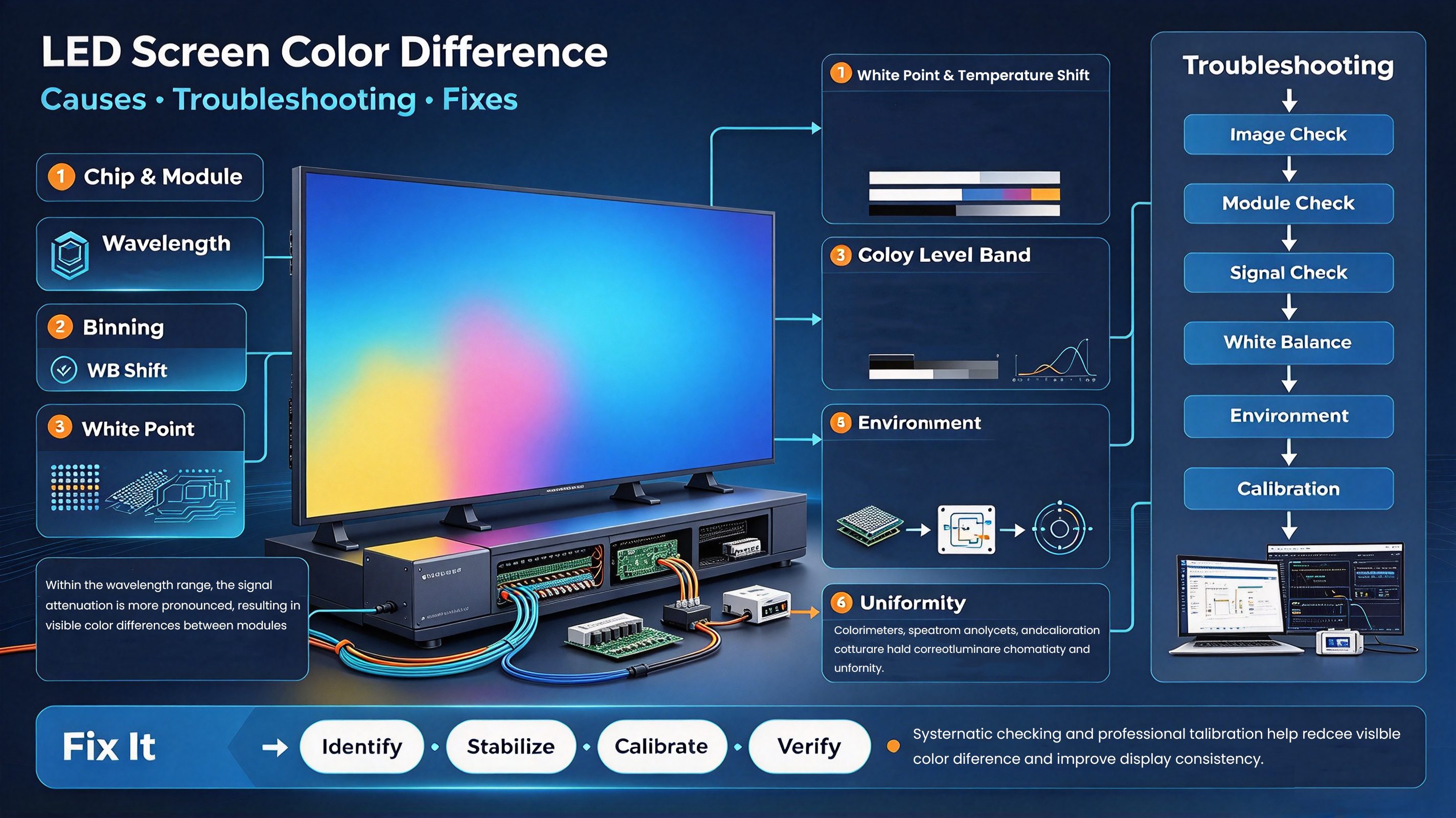
- Color consistency across the complete screen.
- Front or rear maintenance access.
- Compatibility with the planned motion structure.
Avoid choosing pixel pitch or brightness based on a single specification without reviewing the actual viewing conditions.
Step 4: Coordinate Motion and Content Design
Kinetic LED content must account for both the displayed image and the movement of the screen.
The content team should know the display geometry, movement sequence, timing, viewing positions, and control method before finalizing the animation.
For complex installations, test the motion and video sequence together before the event. This can help identify timing problems, visual misalignment, and transitions that are difficult to understand from the audience’s perspective.
Step 5: Plan Safety, Installation, and Maintenance
A moving display introduces mechanical and operational requirements in addition to ordinary LED installation.
Confirm the following before production:
- Structural calculations and approved mounting methods.
- Motor and motion-control specifications.
- Operating limits and emergency-stop arrangements where applicable.
- Cable routing throughout the movement range.
- Access for inspection and maintenance.
- Transportation, lifting, and installation procedures.
- Responsibility for commissioning and operator training.
- Spare parts and technical support arrangements.
The installation must comply with the applicable venue rules, engineering requirements, and local safety regulations. Do not treat safety planning as an optional addition to the visual design.
How to Choose the Right Kinetic LED Display Supplier
The supplier should be evaluated on more than the appearance of its product videos.
| Evaluation Item | What Buyers Should Confirm |
| Product capability | Which movement types and configurations are supported by the proposed model? |
| Display performance | What are the pixel pitch, brightness, refresh rate, and color specifications? |
| Motion control | How are movement sequences programmed and synchronized? |
| Structural integration | Who is responsible for structural design, mounting, and site coordination? |
| Content coordination | Can the supplier provide technical parameters for content production and testing? |
| Safety planning | What documentation and operating procedures are provided? |
| Installation support | Is on-site or remote technical support available for the project? |
| Maintenance | How are moving parts and LED modules inspected and serviced? |
| Delivery schedule | Can manufacturing, testing, shipping, and installation meet the exhibition deadline? |
| Project evidence | Can the supplier show relevant completed projects and explain its role in them? |
For international exhibitions, clarify who will handle local installation, venue coordination, commissioning, and after-sales support. These responsibilities should be agreed upon before the order is confirmed.
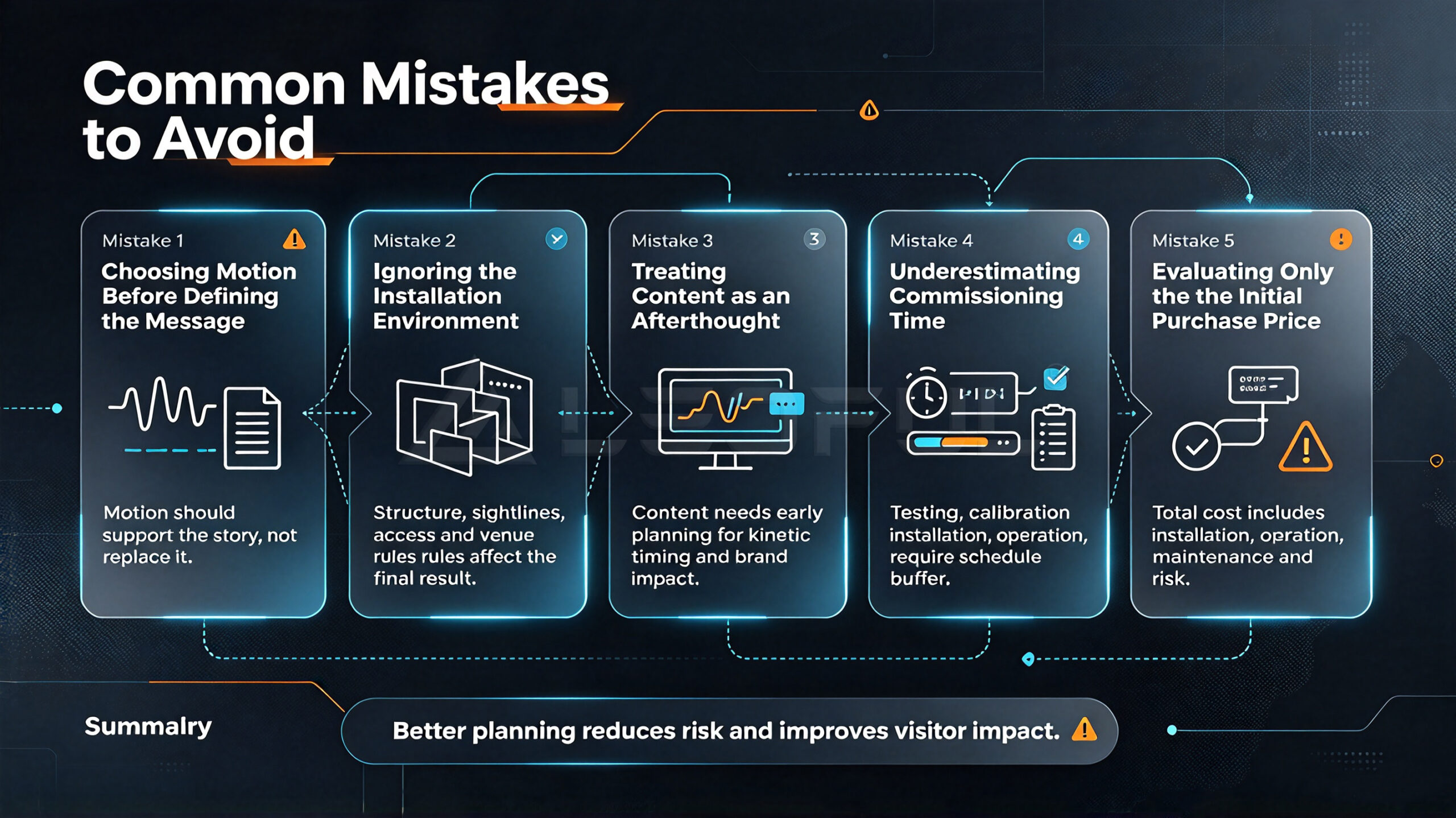
Common Mistakes to Avoid
Choosing Motion Before Defining the Message
Complex movement can look impressive, but it may not help visitors understand the product. Start with the brand story and desired visitor action, then select the motion format.
Ignoring the Installation Environment
A design must fit the booth dimensions, venue restrictions, structural conditions, and installation schedule. Confirm these details before finalizing the screen structure.
Treating Content as an Afterthought
A kinetic display needs content designed for its geometry and movement. Standard video may not use the physical transformation effectively.
Underestimating Commissioning Time
Motion systems, display controls, and video playback need to be tested together. Leave sufficient time for installation, calibration, safety checks, and rehearsal before the exhibition opens.
Evaluating Only the Initial Purchase Price
Compare the complete project scope, including mechanical structure, control system, content coordination, installation, maintenance, spare parts, and technical support.
How LEDFUL Supports Exhibition LED Display Projects
LEDFUL provides LED display solutions for a range of applications, including rental events, commercial installations, and customized display projects.
For an exhibition project, the appropriate solution depends on the booth dimensions, viewing distance, required visual effect, installation environment, and event schedule. Buyers should confirm whether the proposed LED display and any required motion mechanism are supported by the specific project configuration.
When evaluating a kinetic LED project, discuss the display specifications, structural integration, control requirements, content workflow, installation responsibilities, and maintenance plan with the relevant project teams.
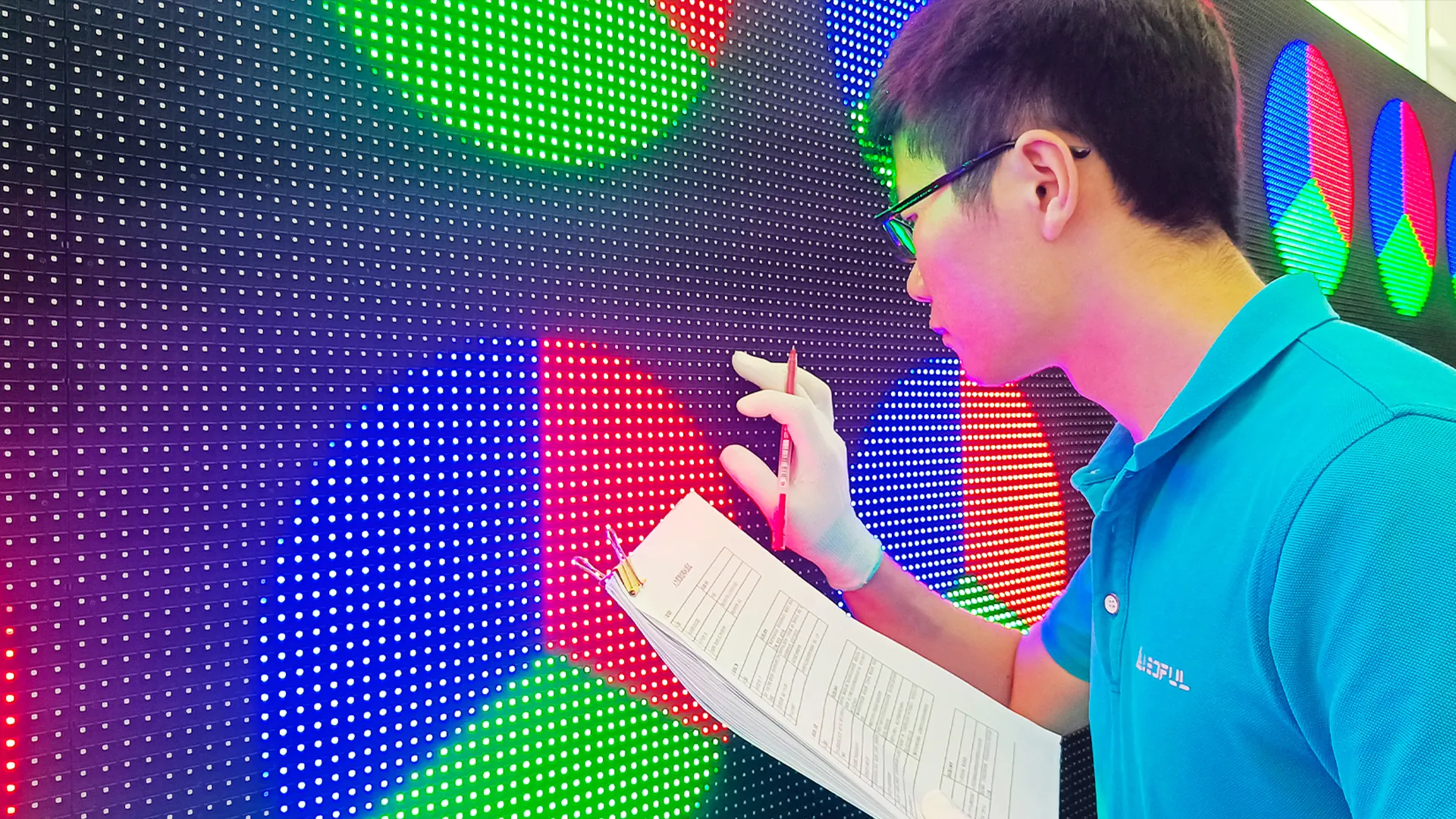
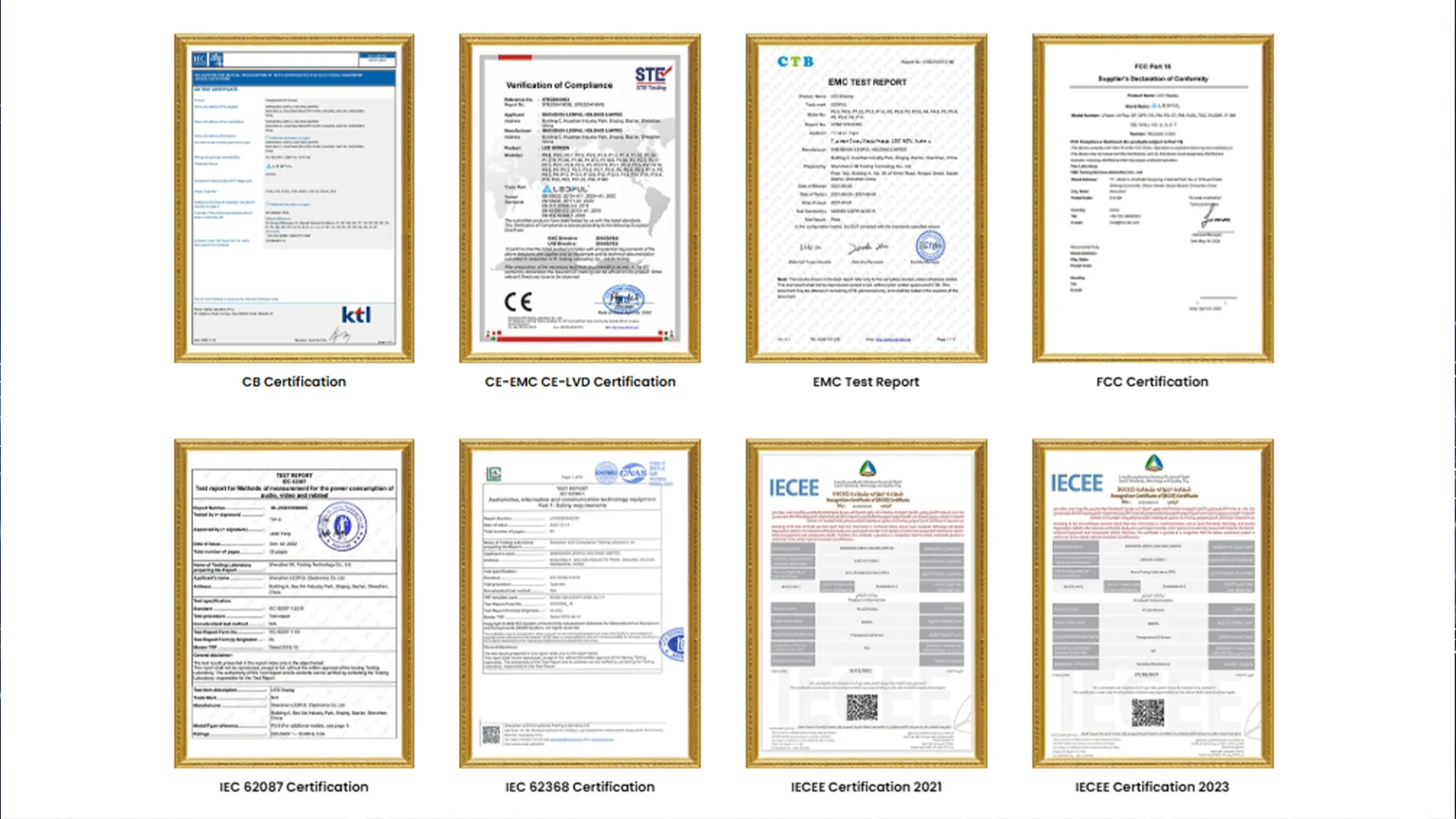
LEDFUL’s manufacturing and quality-control processes include 72-hour aging tests, 16 standard operating procedures, 23 QA checks, and approximately 1,500 test items across its testing processes. These processes support product quality, but project-specific mechanical safety and system integration must also be verified for the proposed installation.
FAQ About Kinetic LED Displays for Exhibitions
1. What is a kinetic LED display?
A kinetic LED display combines LED visuals with controlled physical movement. Depending on its design, the screen may rise, extend, rotate, fold, or change configuration during a presentation.
2. How is a kinetic LED screen different from a traditional exhibition LED wall?
A traditional LED wall displays content from a fixed structure. A kinetic LED system adds programmed physical movement, allowing the screen’s position or shape to become part of the presentation.
3. Are kinetic LED displays suitable for trade shows?
They can be suitable for trade shows where a brand wants a distinctive focal point, product reveal, or motion-based presentation. Suitability depends on booth size, budget, installation conditions, and the event’s objectives.
4. Does a kinetic LED display require special video content?
Usually, the content should be planned around the display geometry and motion sequence. The content team needs technical information about screen dimensions, viewing angles, movement timing, and playback controls.
5. What should I consider before installing a kinetic LED screen?
Review booth dimensions, viewing distance, screen specifications, movement clearance, structural design, power and signal routing, safety procedures, installation time, and maintenance access.
6. Can a kinetic LED display be reused at different exhibitions?
Some systems may be suitable for repeated use, but this depends on their design, transportation requirements, modularity, installation method, and the conditions at each venue. Confirm reuse requirements before selecting a configuration.
7. How much does a kinetic LED display for an exhibition cost?
There is no single price for all projects. Cost depends on screen size, pixel pitch, movement type, mechanical structure, control system, content production, installation, shipping, and technical support. A project-specific quotation is more reliable than a generic price estimate.
8. How do I choose a kinetic LED display manufacturer?
Review relevant project experience, product specifications, engineering coordination, safety documentation, testing procedures, delivery capability, installation support, spare parts, and warranty terms.
Planning an Exhibition LED Display Project?
A successful exhibition display should do more than play attractive content. It should fit the booth, communicate the brand message, support the visitor experience, and operate reliably throughout the event.
If you are planning an exhibition booth, trade show, product launch, or customized LED installation, share your booth dimensions, application, viewing distance, visual concept, and project timeline with LEDFUL.
Contact LEDFUL
- Website: https://www.ledful.com/products
Discuss your project requirements with LEDFUL to evaluate a suitable LED display configuration, technical specifications, and project support needs.