

























LED display resolution affects how sharp, readable, and comfortable a screen looks. A higher pixel count can make images, text, videos, and data easier to view, but the “best” resolution is not always the highest one. It depends on screen size, pixel pitch, viewing distance, content type, and budget. This guide helps buyers, marketers, and technical teams choose wisely.
What Is LED Display Resolution?
LED display resolution refers to the total number of pixels arranged across the width and height of an LED screen. For example, a resolution of 1920 × 1080 means the screen has 1920 pixels horizontally and 1080 pixels vertically.
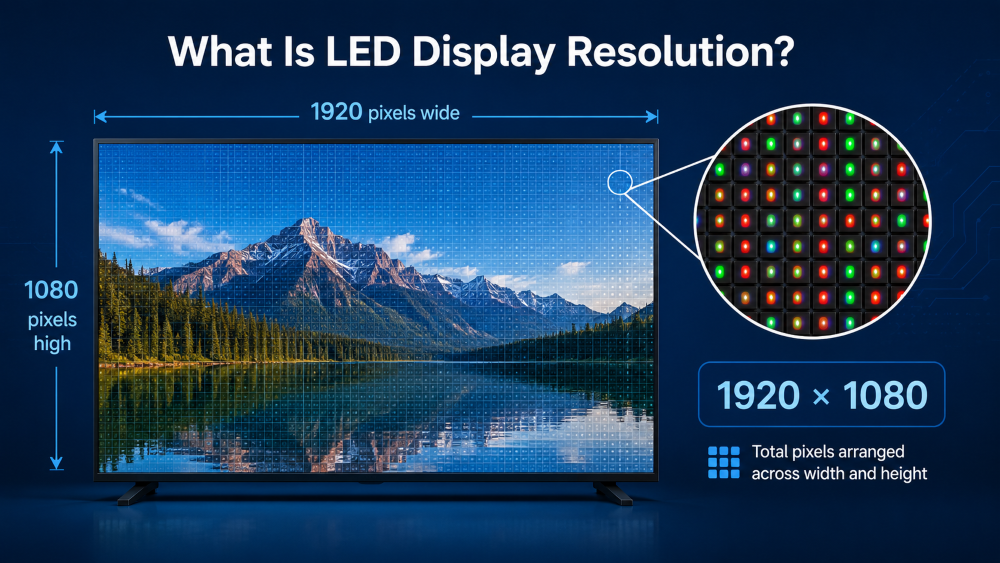
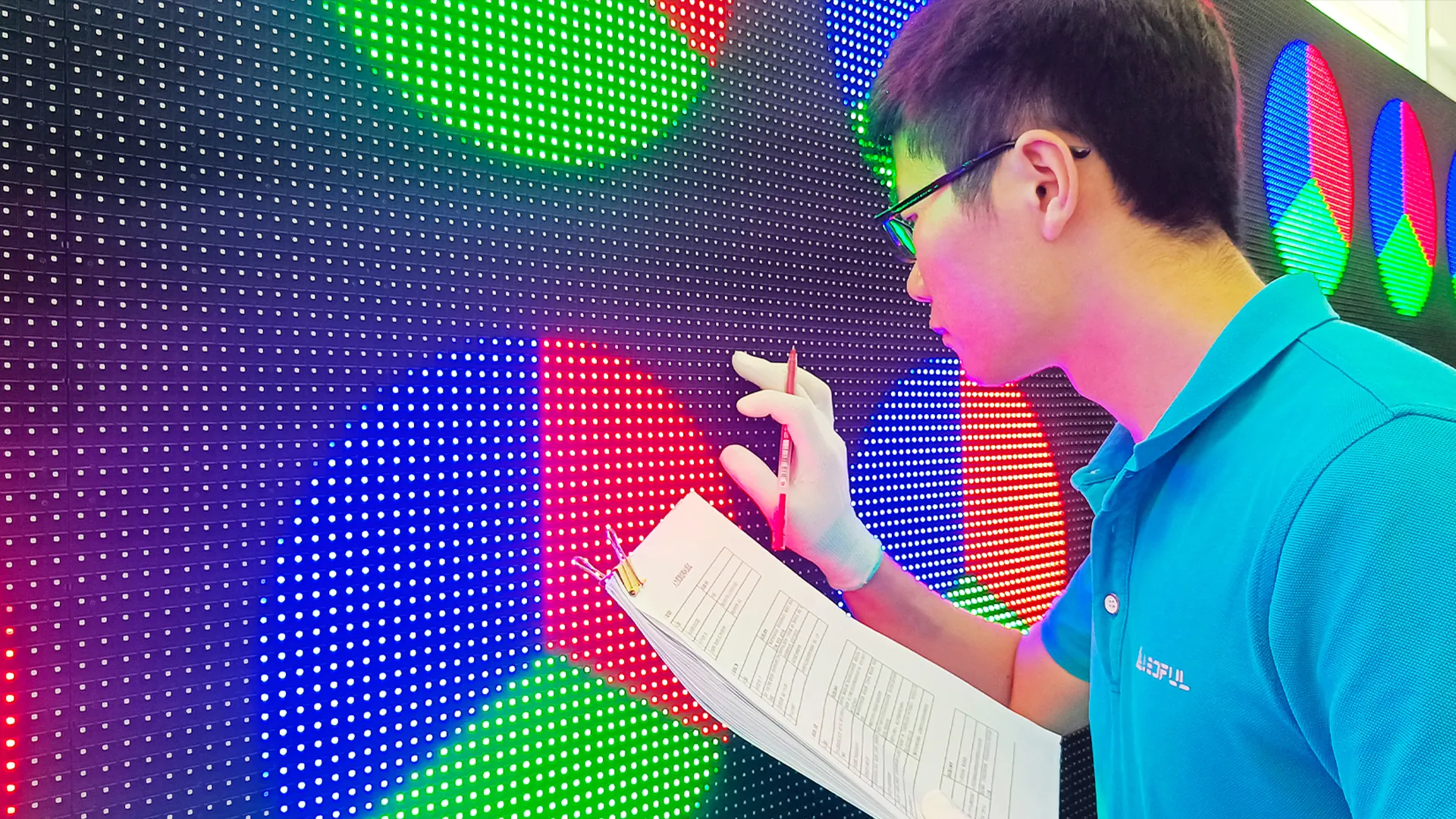
Each pixel is the smallest visible light-emitting unit on the display. In an LED screen, pixels are formed by LED chips or LED lamp beads. When thousands or millions of pixels work together, they create images, videos, text, graphics, and motion effects.
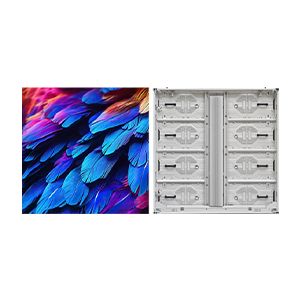
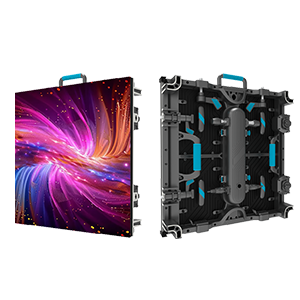
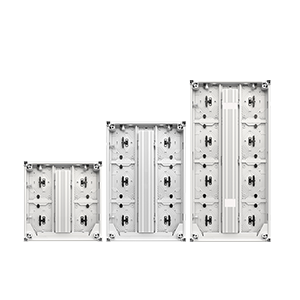
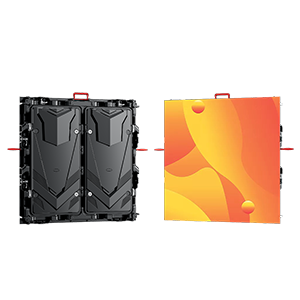
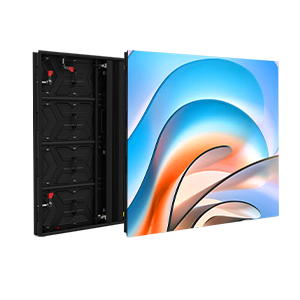
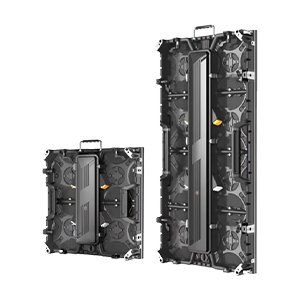
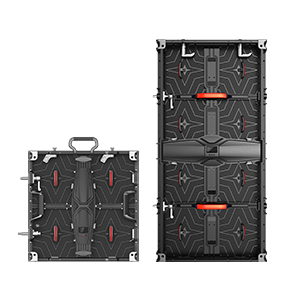
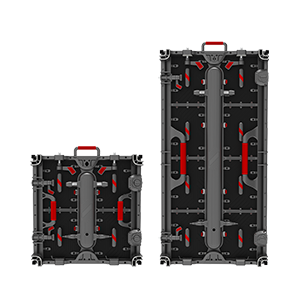
Unlike a traditional LCD monitor or TV, an LED display is usually built from modules and cabinets. This means the final LED screen resolution is not always fixed at the factory. It is calculated based on the selected cabinet layout, screen size, and pixel pitch.
Relationship between LED Display Resolution, Pixel Pitch, and Size
Pixel pitch is the center-to-center distance between two adjacent pixels, usually measured in millimeters. A smaller pixel pitch means the pixels are closer together, which creates higher pixel density and a clearer image at a closer viewing distance. A larger pixel pitch works better for longer viewing distances.
The basic mathematical relationship is simple:
- Horizontal pixels = screen width ÷ pixel pitch
- Vertical pixels = screen height ÷ pixel pitch
- Total resolution = horizontal pixels × vertical pixels
For example, if a 4K UHD LED display needs 3840 × 2160 pixels, the physical size required depends on the pixel pitch. With P2.5, the screen width needs to be about 9.6 meters. With P1.0, the screen width only needs to be about 3.84 meters.
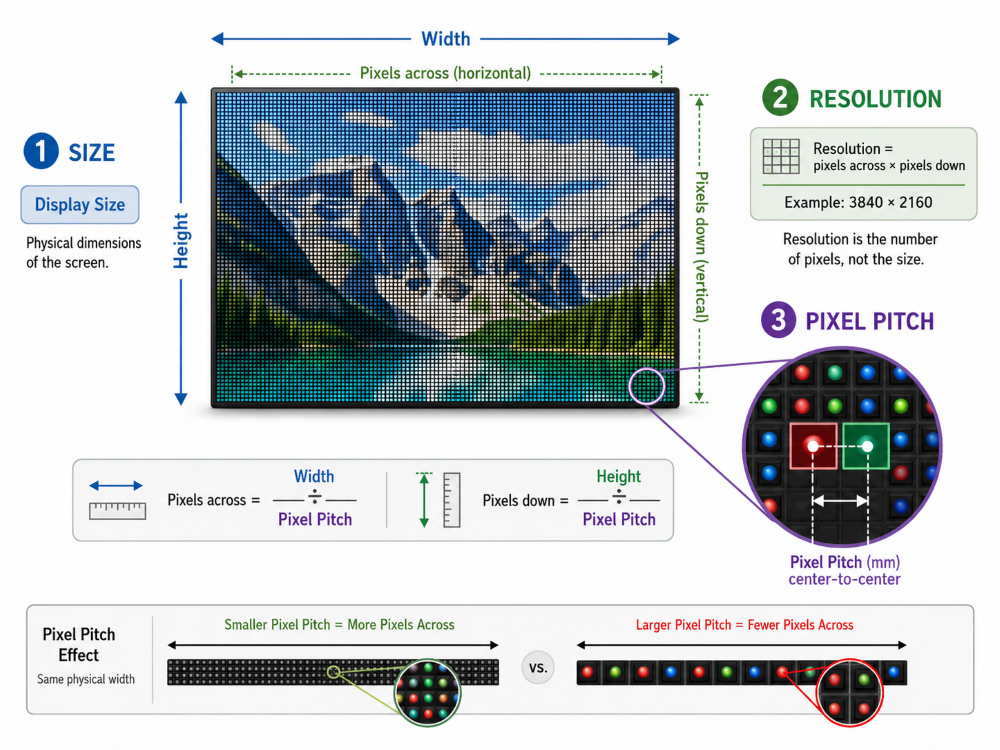
Note: The above explains the mathematical relationship between LED display resolution, pixel pitch, and screen size. In real projects, the selection usually starts with the viewing distance. Once the suitable LED display pixel pitch and screen size are confirmed, the final LED display resolution can then be calculated.
Common LED Display Resolution Types
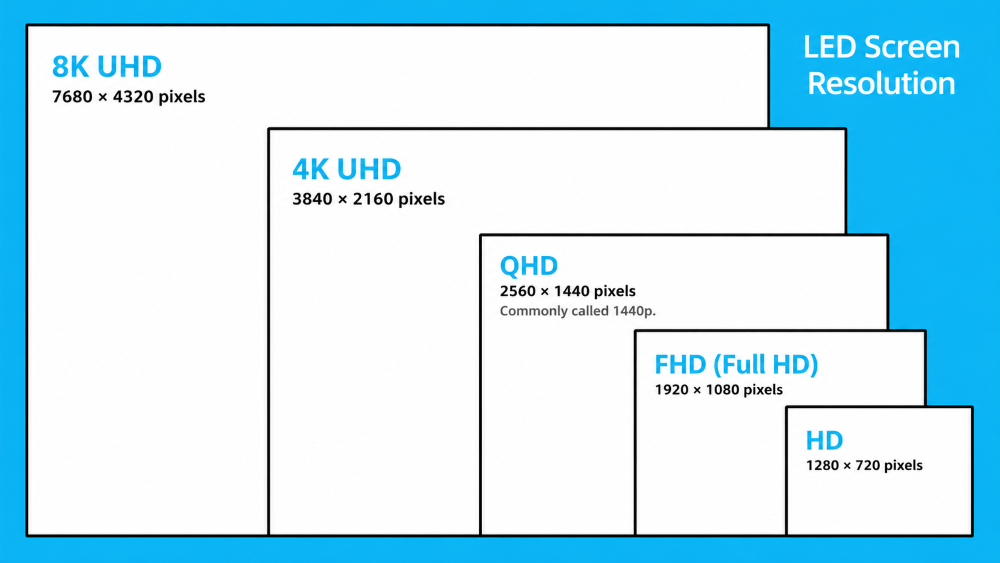
Many LED displays can match standard video formats such as HD, FHD, QHD, 4K UHD, and 8K UHD. These standards are useful when planning content production, video processors, and signal input.
However, many LED displays also use custom pixel dimensions because they are assembled from modular cabinets. A project may not be exactly 1920 × 1080 or 3840 × 2160. It may be 3240 × 1620, 5120 × 1440, or another custom size depending on the wall, stage, façade, or cabinet layout.
1. HD LED Screen Resolution
HD usually means 1280 × 720 pixels. It is an entry-level high-definition format.
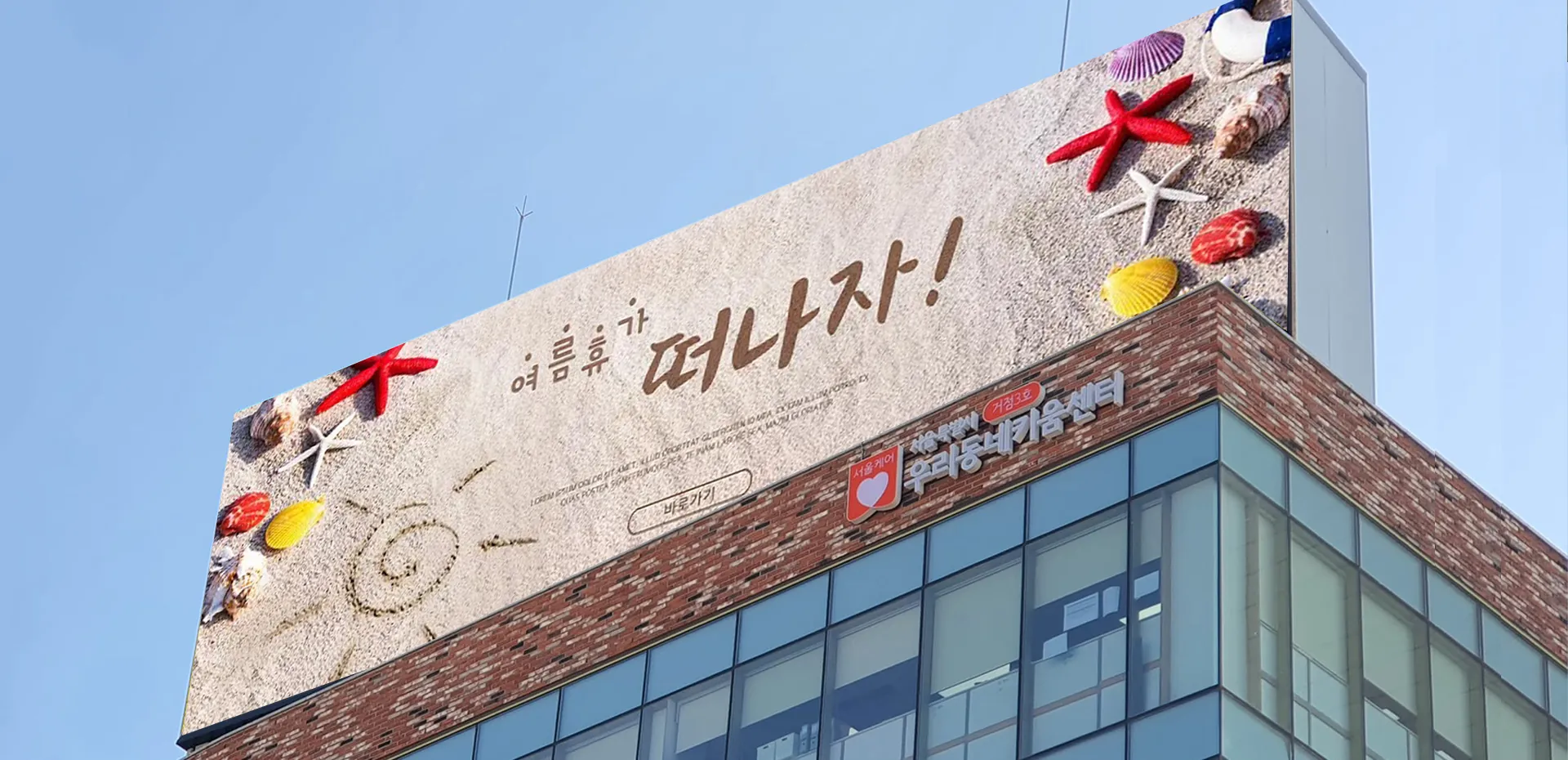
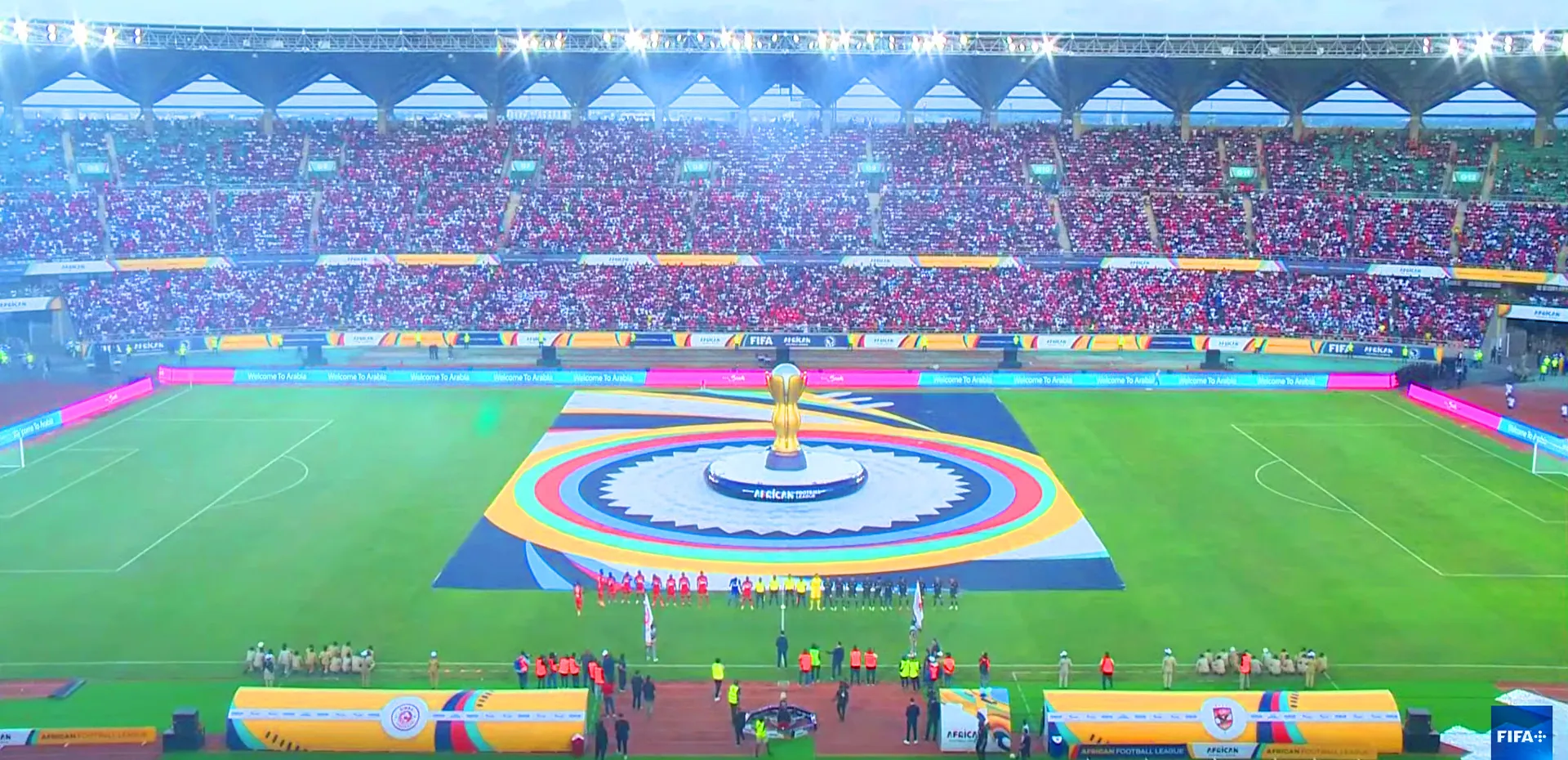
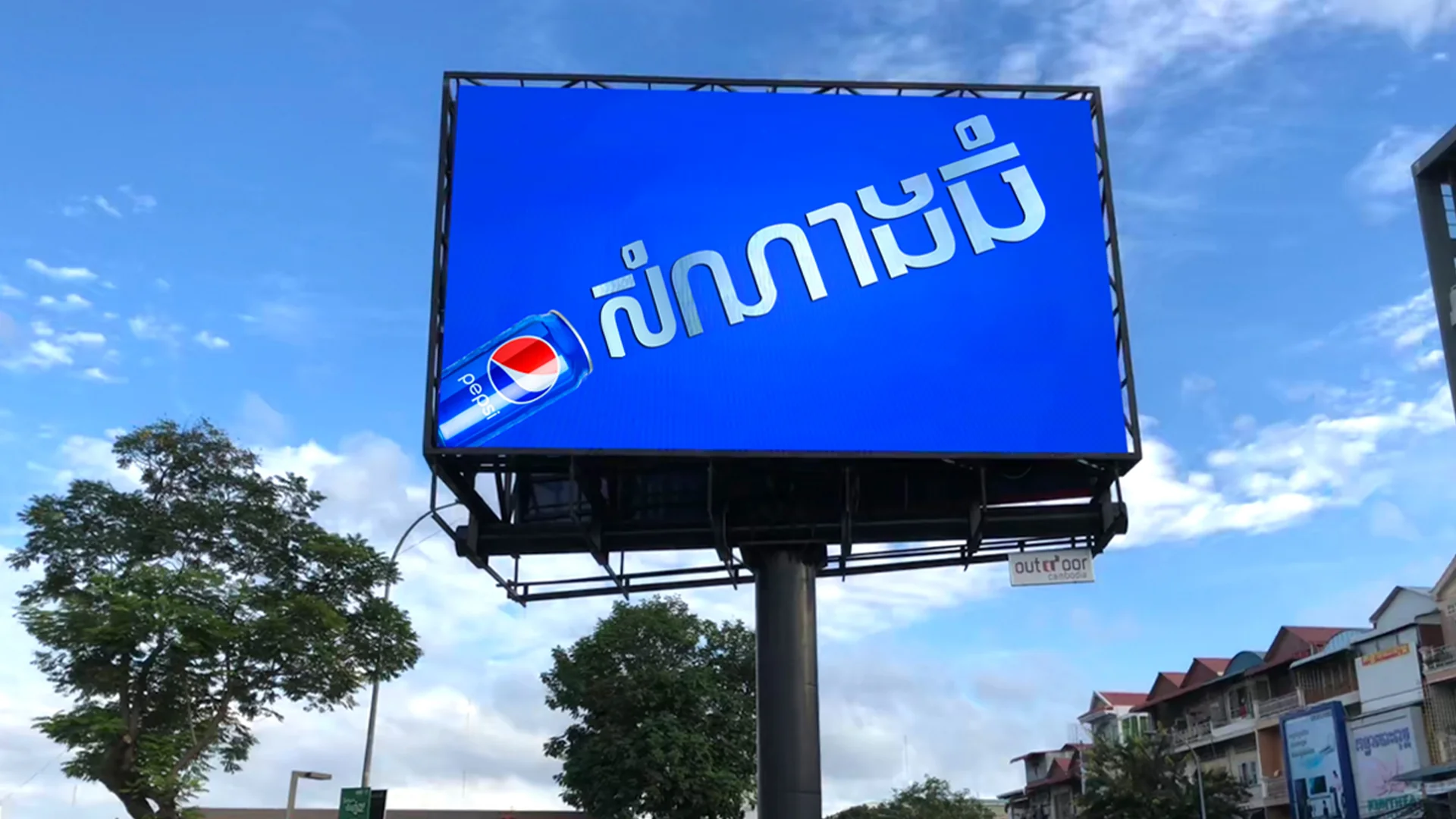
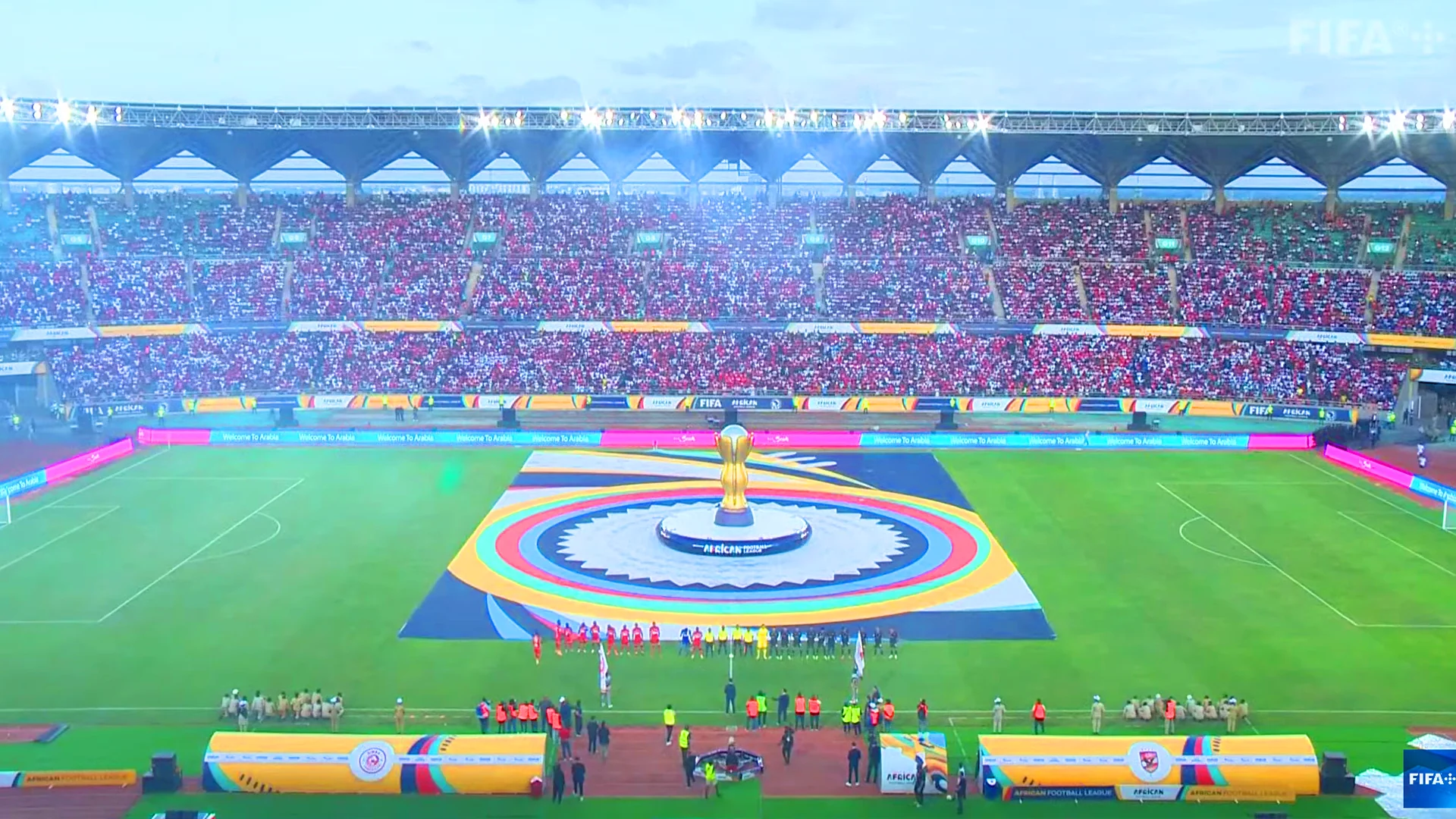
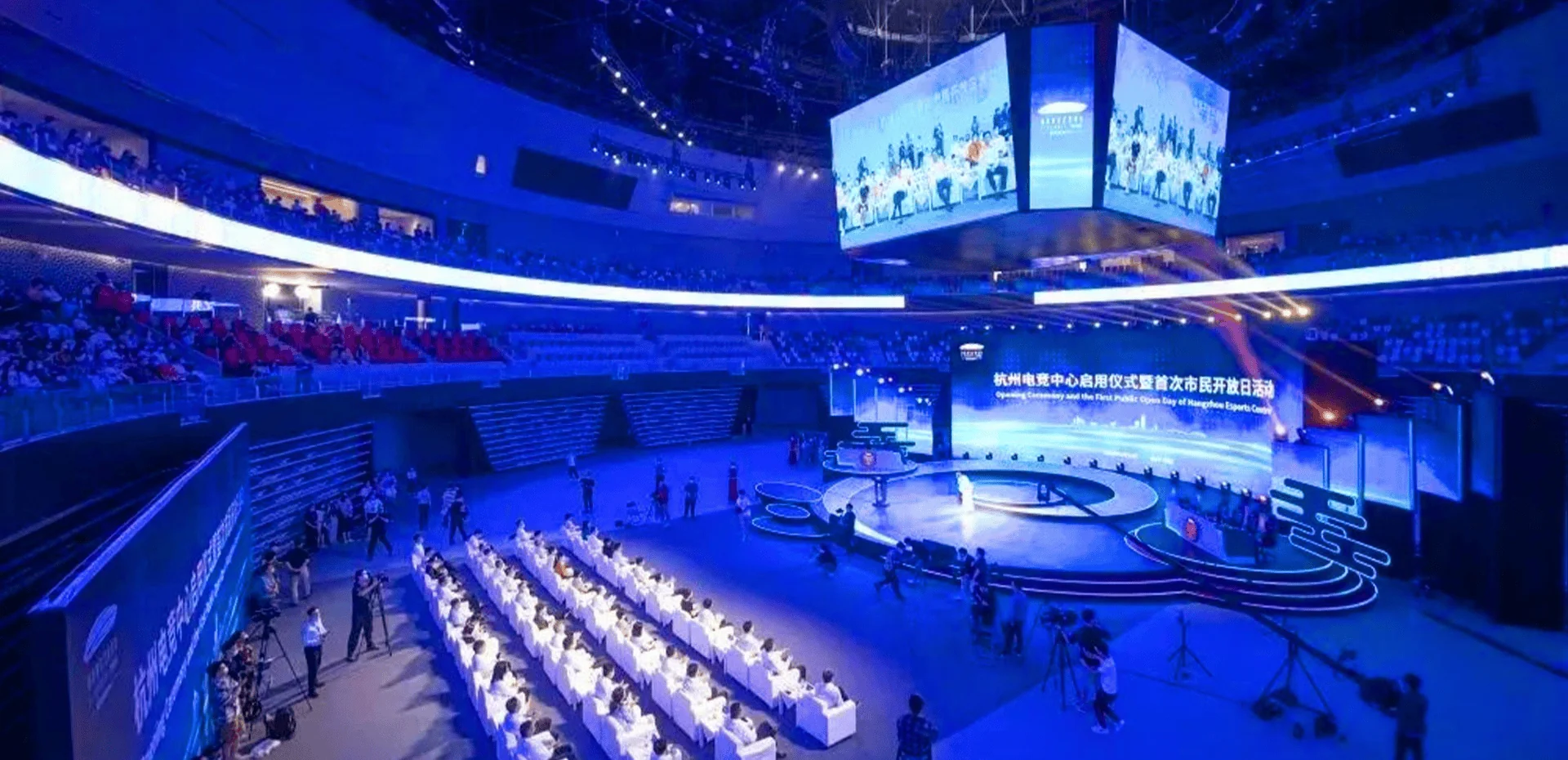
HD can work well for budget-sensitive projects, smaller screens, or large outdoor screens viewed from a long distance. For example, a roadside billboard or stadium screen may not need extremely fine detail because viewers are far away.
HD is not ideal for close viewing or text-heavy content. If the audience stands near the display, individual pixels may become visible.
2. FHD LED Screen Resolution
FHD, or Full HD, usually means 1920 × 1080 pixels. It is one of the most common and practical choices for LED video walls.
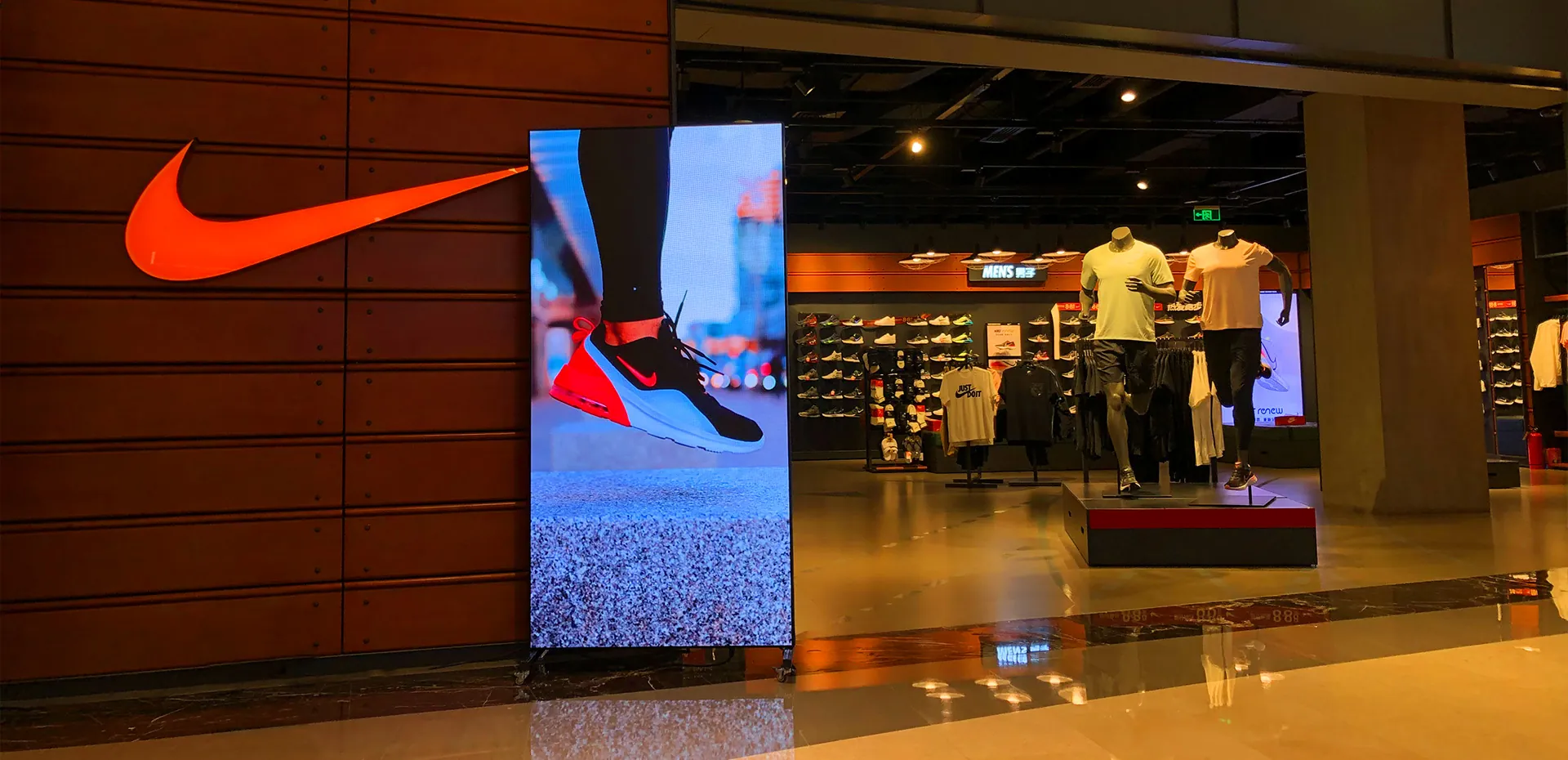
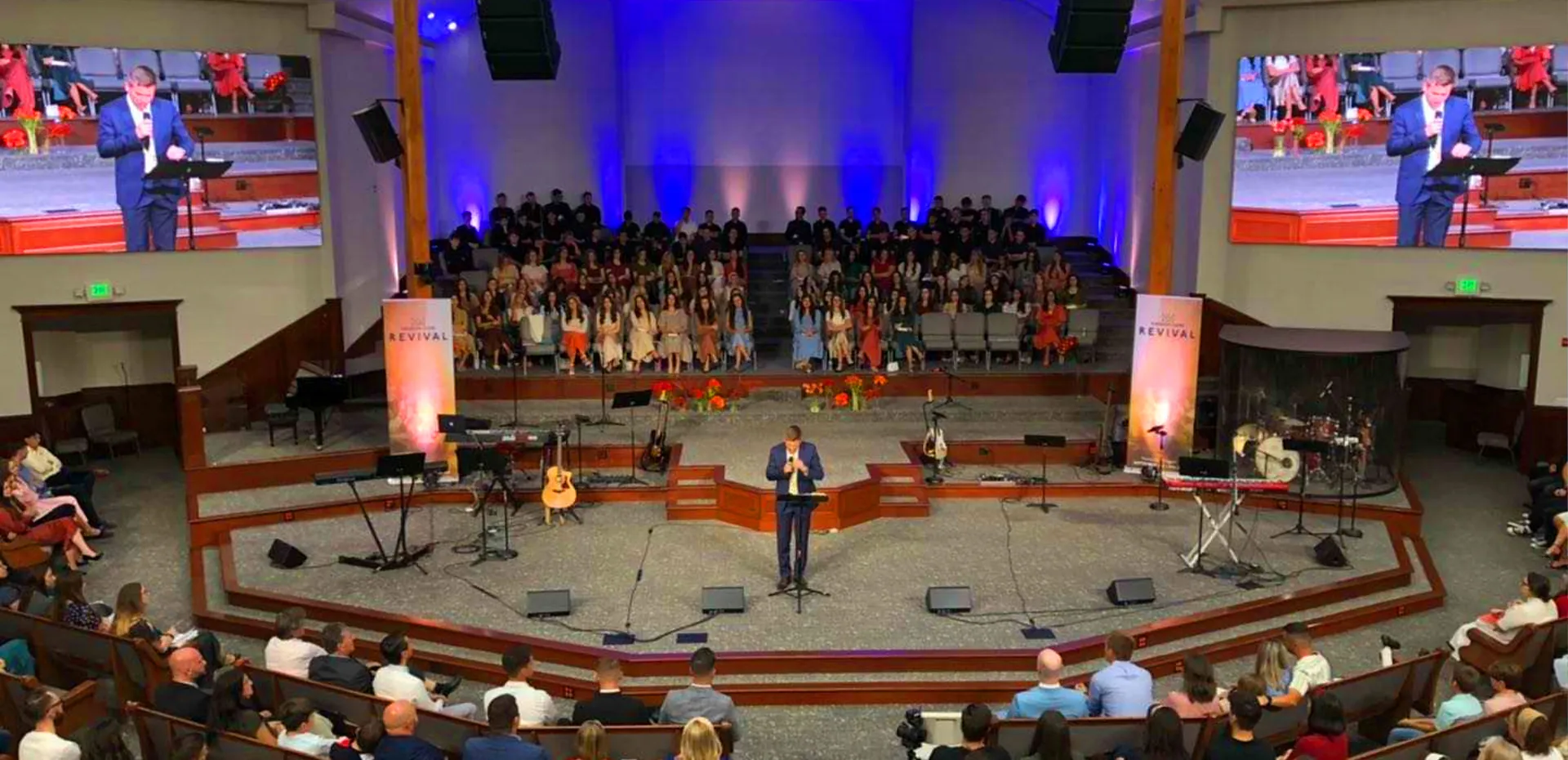
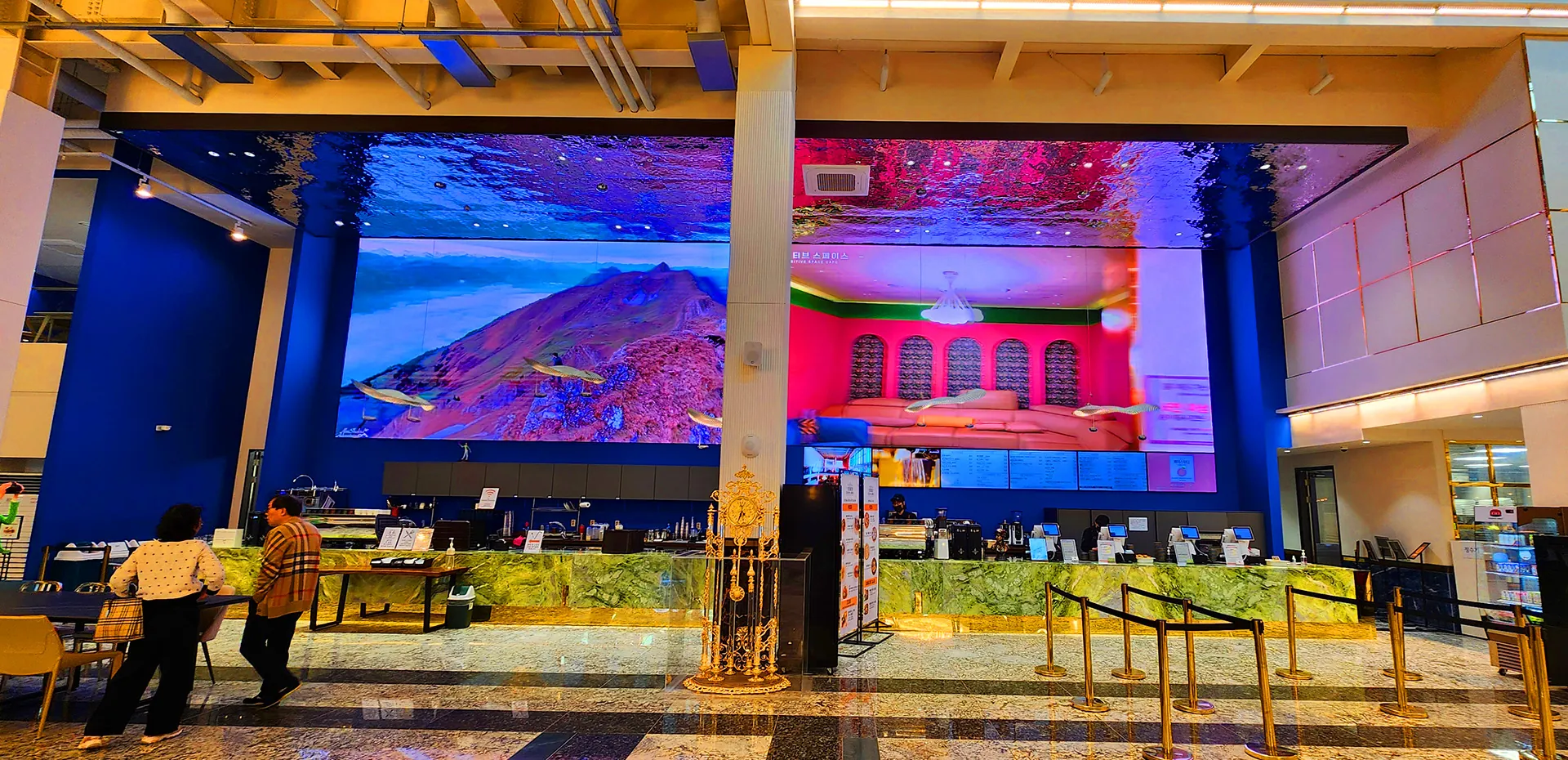
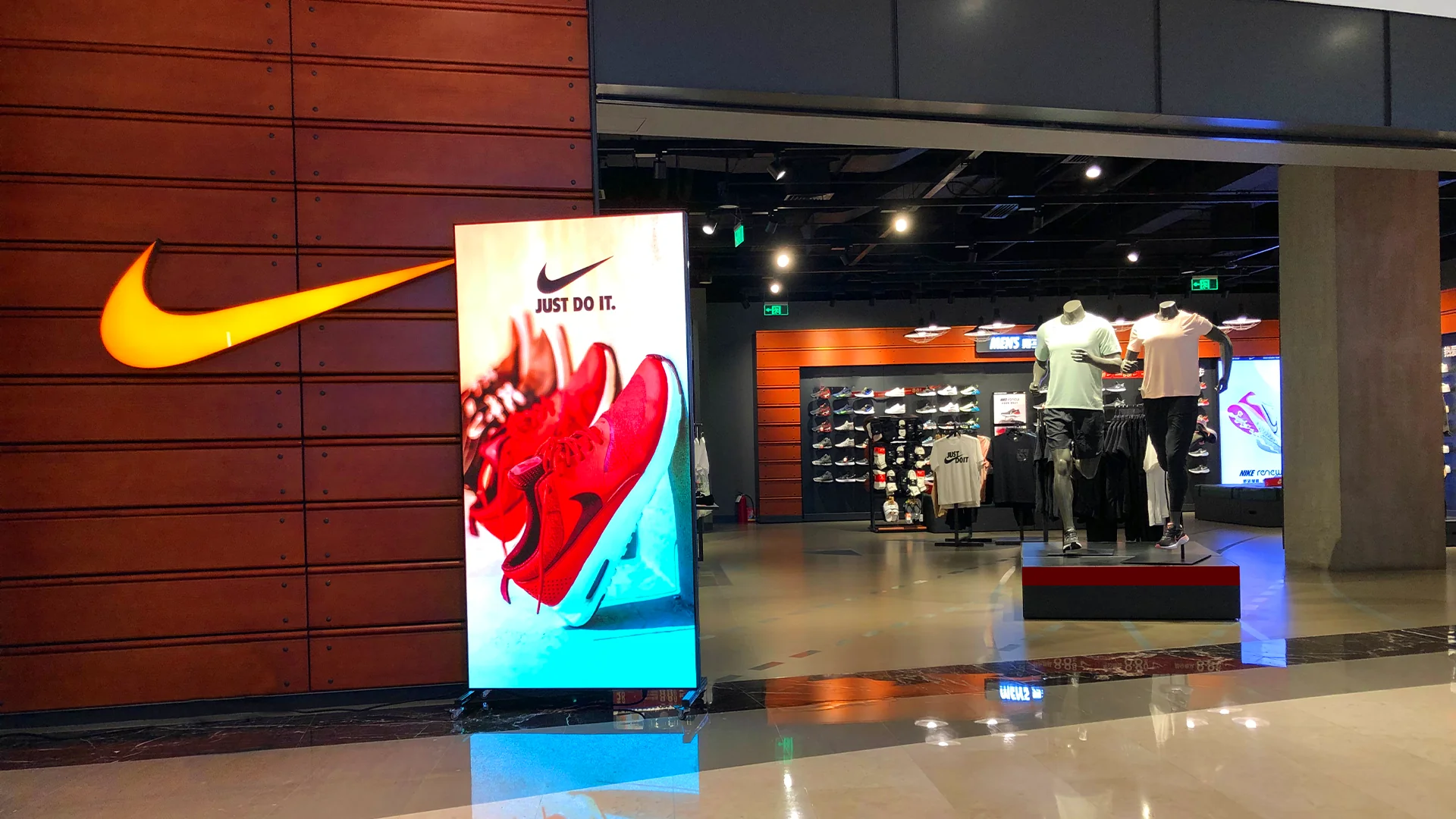
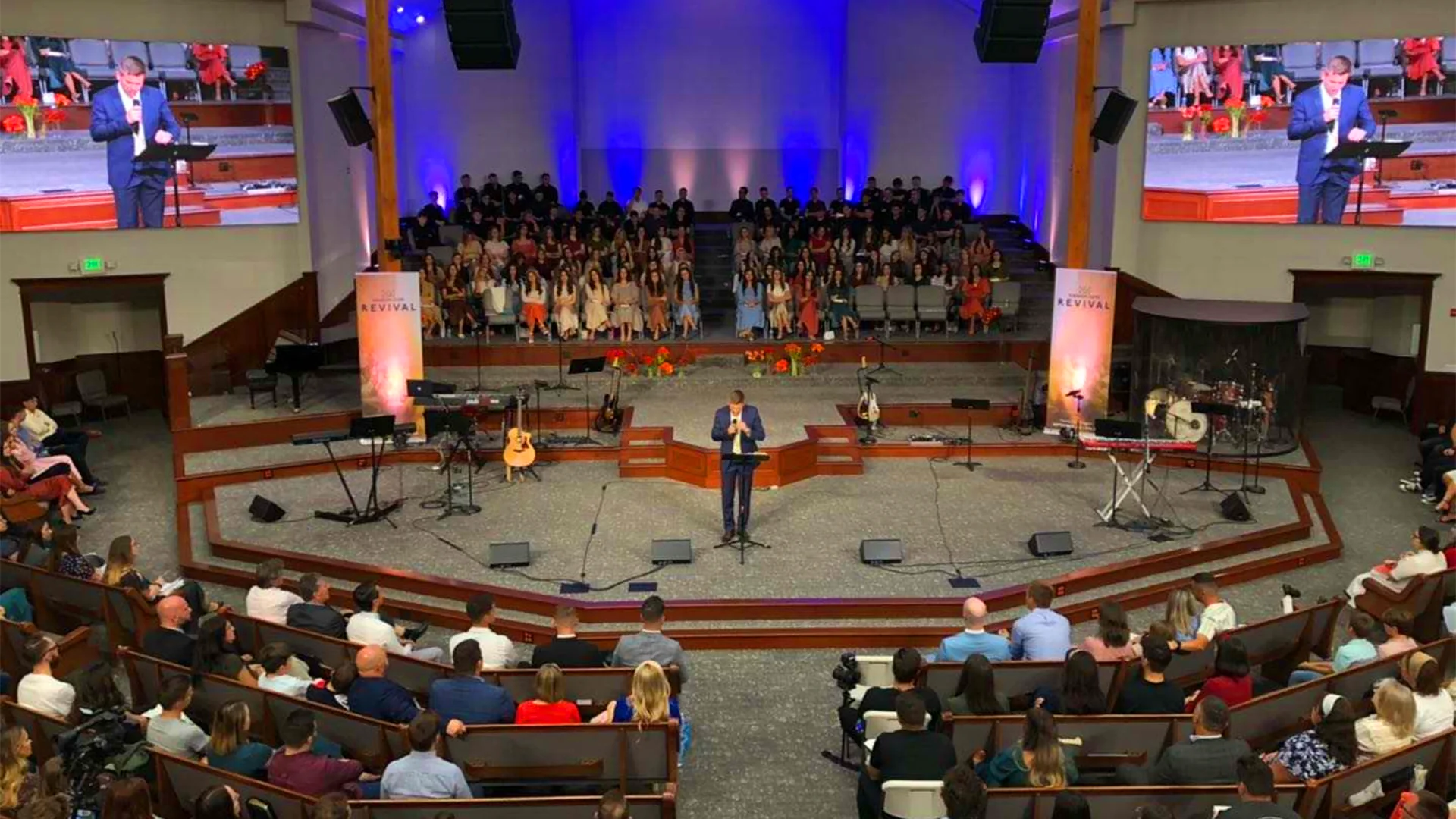
FHD gives a good balance between image quality and cost. It is often suitable for retail stores, corporate lobbies, churches, event venues, conference rooms, stage backdrops, and general digital signage.
For many indoor and mid-distance projects, FHD offers enough clarity without pushing the hardware cost too high.
3. QHD LED Screen Resolution
QHD usually means 2560 × 1440 pixels. It is also commonly called 1440p.
QHD provides more detail than FHD but requires less processing power and hardware investment than 4K UHD. It can be useful for medium-sized LED displays that need sharper visuals, such as premium retail displays, data presentation walls, exhibition booths, and creative stage designs.
For buyers who want a high resolution LED display but do not need full 4K, QHD can be a practical middle option.
4. 4K UHD LED Display Resolution
4K UHD usually means 3840 × 2160 pixels. It contains four times as many pixels as Full HD.
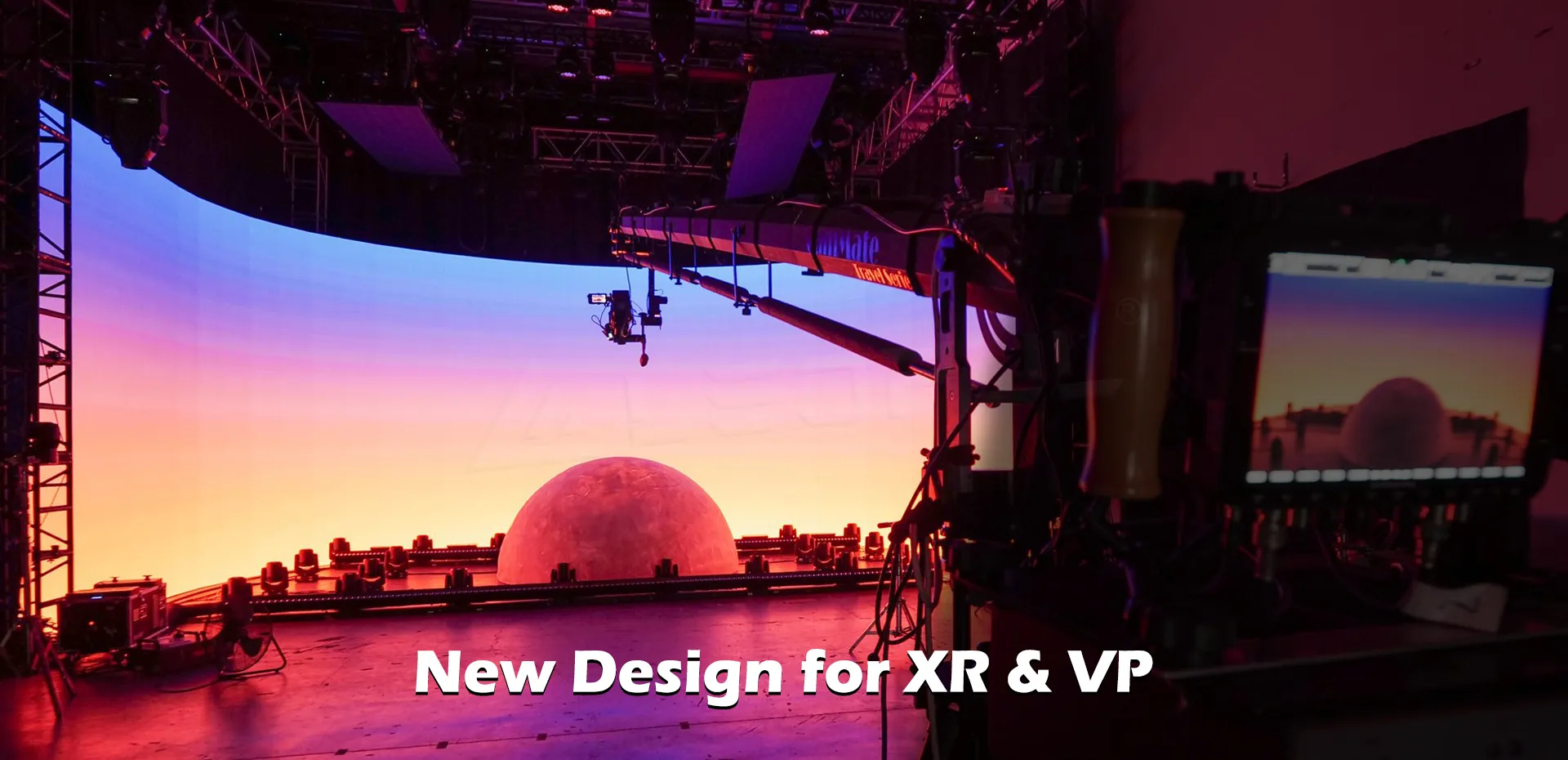
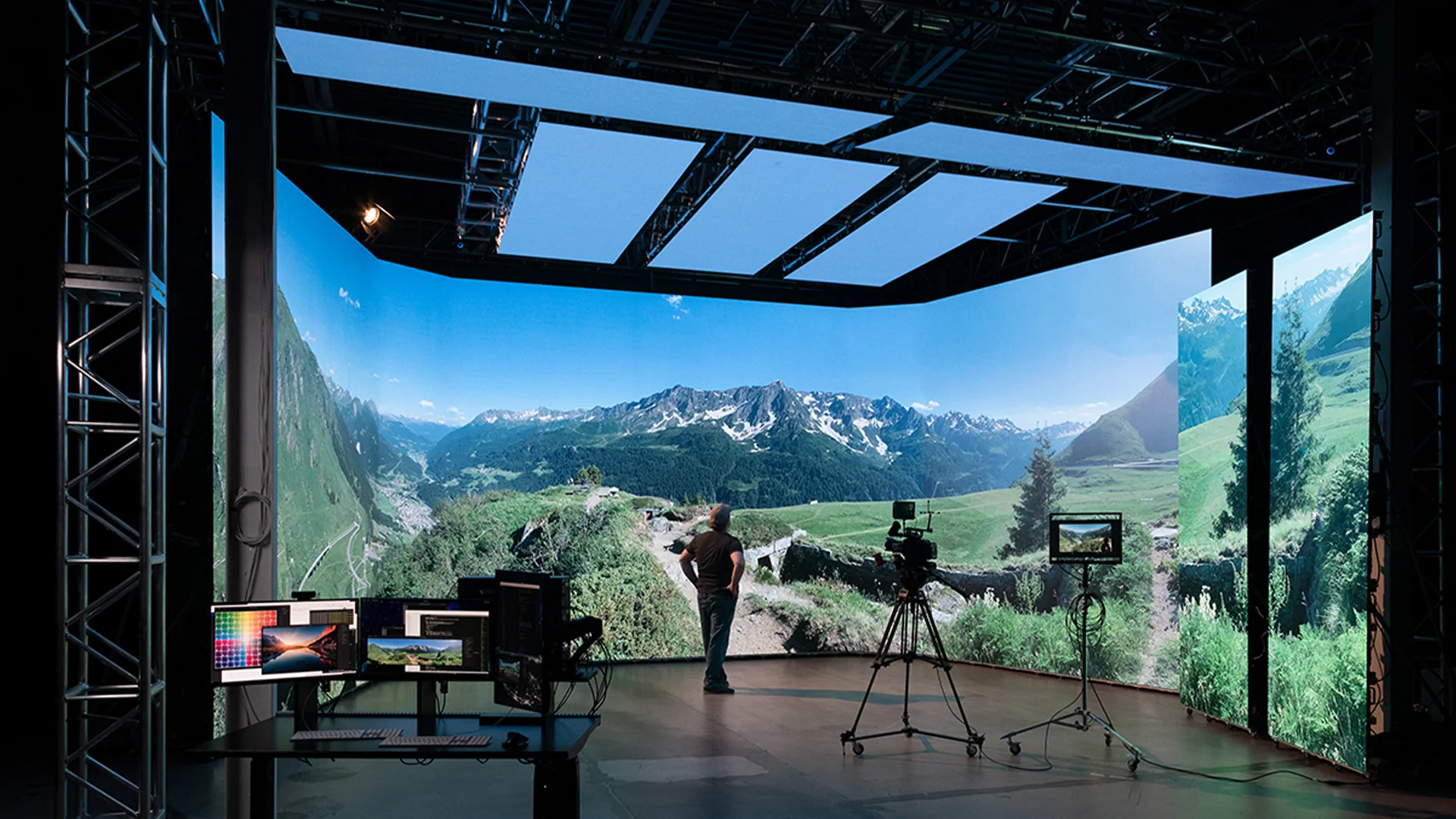
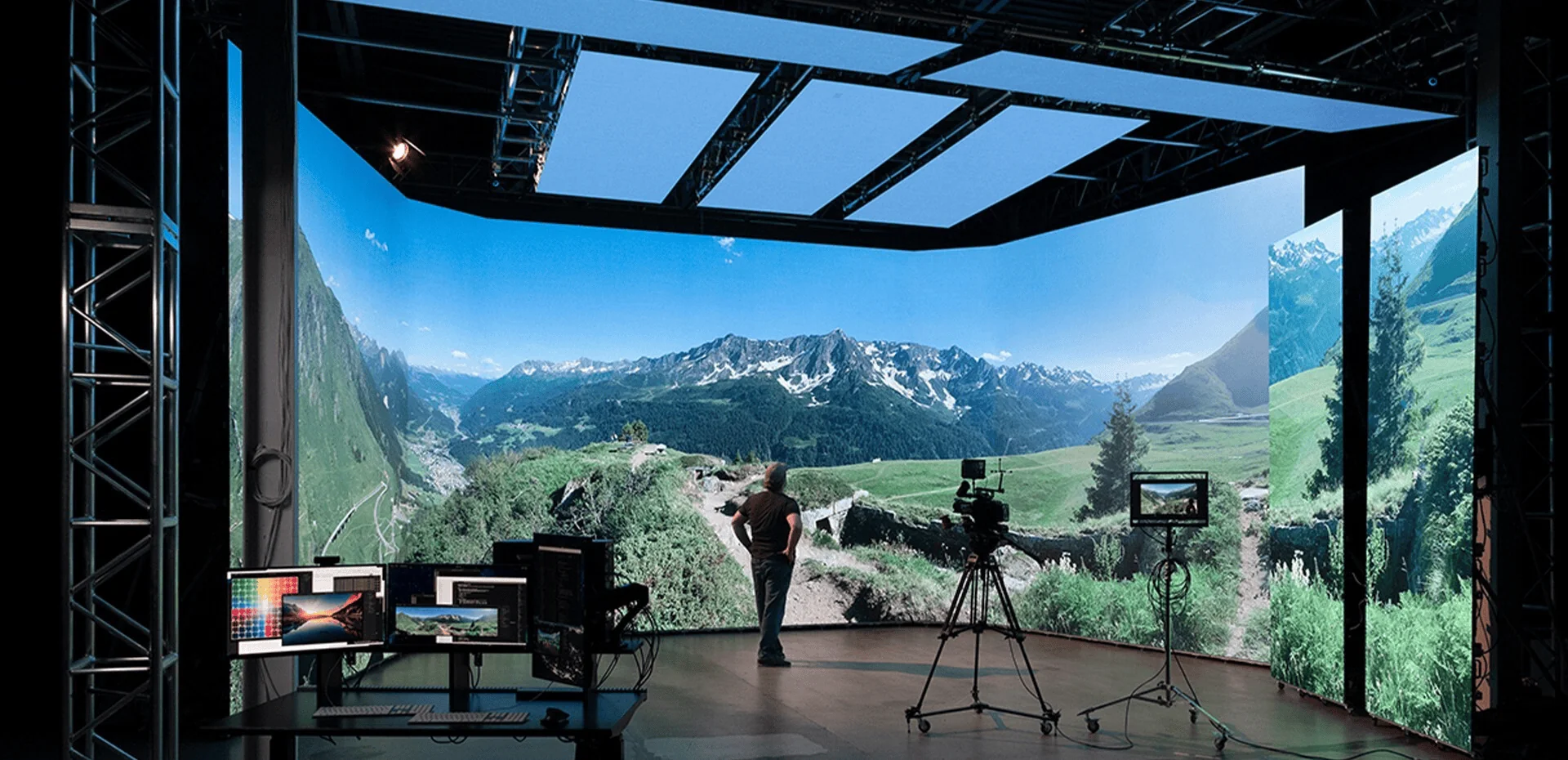
A 4K LED display is suitable for projects where sharp detail matters. Typical applications include control rooms, broadcast studios, XR stages, luxury retail environments, product launch spaces, command centers, high-end meeting rooms, and immersive experience areas.
However, true 4K requires enough physical pixels. If the LED wall is too small and the pixel pitch is too large, it cannot reach real 4K resolution. This is why screen size and pixel pitch must be calculated before confirming the design.
5. 8K UHD LED Display Resolution
8K UHD usually means 7680 × 4320 pixels. It contains more than 33 million pixels.
8K is used for very high-end and large-scale projects. It can support ultra-detailed visuals, immersive environments, flagship retail displays, advanced simulation rooms, and premium creative installations.
But 8K is not necessary for every project. It requires higher hardware cost, more powerful video processing, stronger signal transmission, and 8K-ready content. For many commercial projects, 4K or FHD may already be the better investment.
How to Choose the Right Resolution
The right LED display resolution should match how people actually view and use the screen. A display that looks excellent from 20 meters away may look pixelated from 2 meters away. A screen built for simple motion advertising may not be suitable for small text or detailed data.
1. Match Resolution With Viewing Distance
Viewing distance is the first factor to check. The closer the audience is, the smaller the pixel pitch should be.
A simple rule of thumb is:
- P1.5: better for close indoor viewing
- P2.5: suitable for many indoor commercial spaces
- P3 to P4: useful for medium-distance viewing
- P6 to P10 or larger: often suitable for outdoor or long-distance viewing
Smaller pixel pitch allows a closer viewing distance, while higher pixel density may lose its value when viewers are far away and only increases cost.
This is important for buyers. A high resolution LED display is valuable only when the audience can see the added detail. If people view the display from far away, a lower resolution with a larger screen size may deliver better value.
2. Consider Content Type
Different content needs different resolution levels.
If the screen shows small text, product details, financial data, maps, dashboards, CAD drawings, or medical-style images, it needs higher pixel density. Fine details must stay readable and sharp.
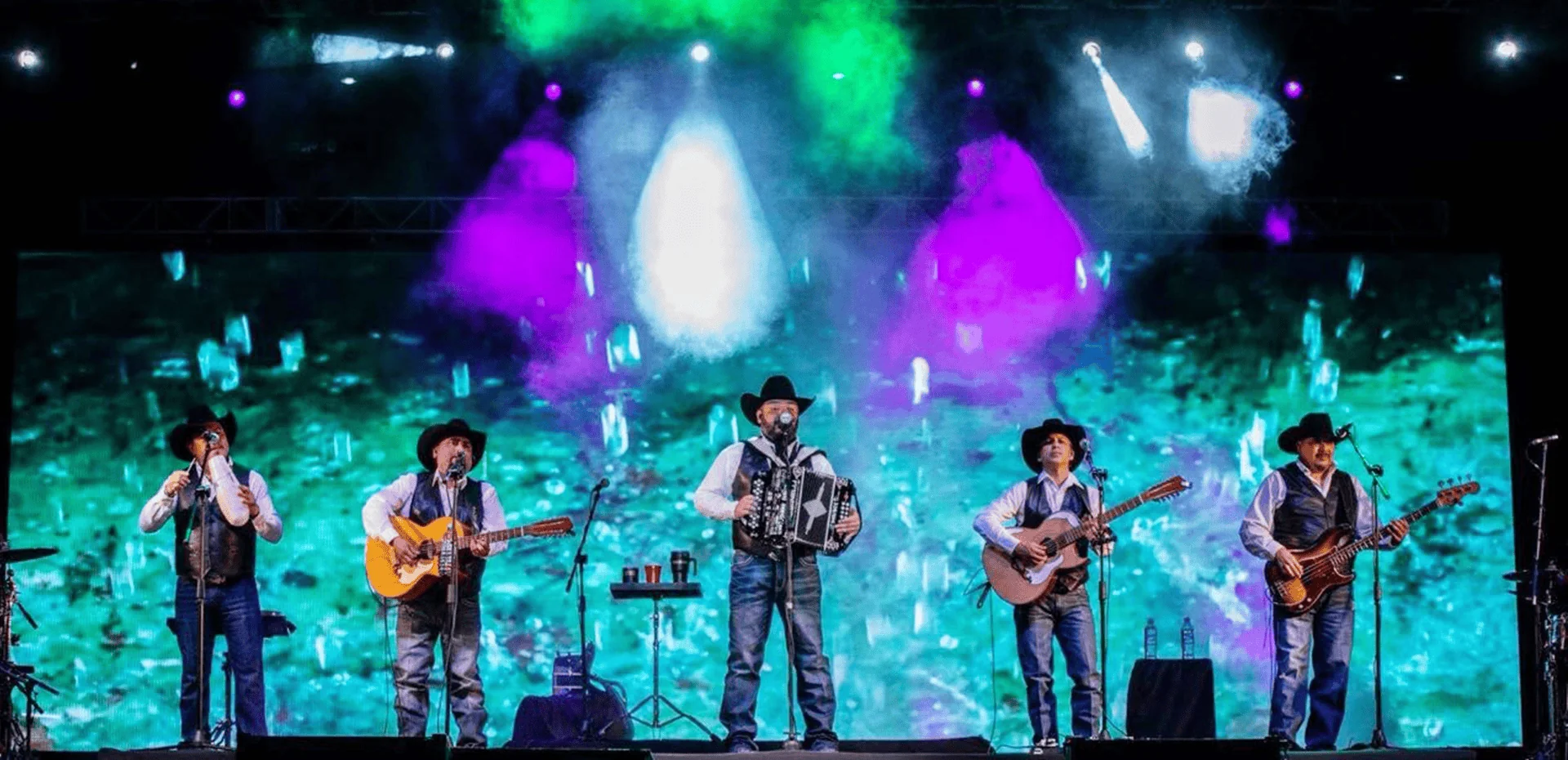
If the screen mainly shows large logos, simple advertising videos, sports replays, stage visuals, or colorful motion graphics, the resolution requirement may be lower. Motion content is often more forgiving than static text.
For churches, event organizers, and corporate users, mixed content is common. The screen may show lyrics, slides, videos, speaker close-ups, and branding. In this case, readability should be tested before finalizing the LED screen resolution.
3. Consider Screen Size
A larger LED screen does not automatically mean a sharper image. Sharpness depends on how many pixels are packed into the display area.
If pixel pitch stays the same, increasing screen size increases total resolution. But if a large screen uses a very large pixel pitch, the image may still look rough at close range.
For example, a 10-meter-wide screen with P2.5 can reach about 4000 horizontal pixels, which is close to 4K width. A 4-meter-wide screen with the same P2.5 pitch only reaches about 1600 horizontal pixels.
This is why contractors, engineers, and designers should calculate physical size and pixel pitch early in the project.
4. Consider Budget
Higher resolution usually costs more. Smaller pixel pitch requires more LED pixels per square meter, more precise manufacturing, more receiving cards, more data processing, and often higher control system requirements.
Budget should not be spent only on resolution. A good LED display project also needs suitable brightness, refresh rate, gray scale, cabinet quality, maintenance access, waterproof rating, installation structure, and after-sales support.
For outdoor displays, brightness and weather resistance may matter more than extreme resolution. For indoor close-view applications, fine pixel pitch and smooth image quality may be more important.
The best choice is not “highest resolution at any cost.” The best choice is the resolution that fits the viewing distance, screen size, content, environment, and business goal.
Plan Your Large-Format LED Display With LEDFUL
For large-format LED display projects, visibility should be planned together with resolution, pixel pitch, brightness, and viewing distance. A screen may have a high pixel count, but it still needs the right brightness, structure, and installation design to perform well in real environments.
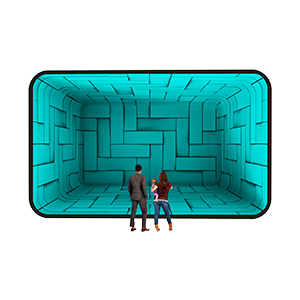
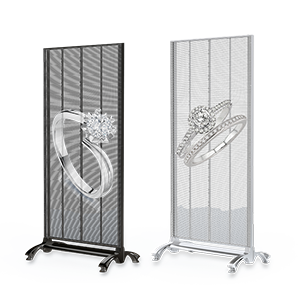
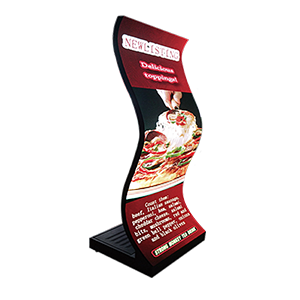
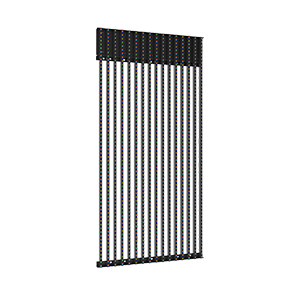
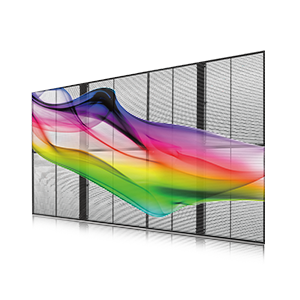
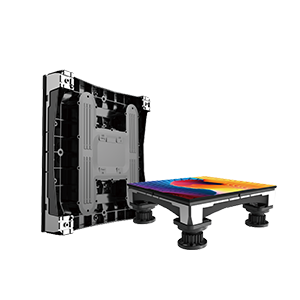
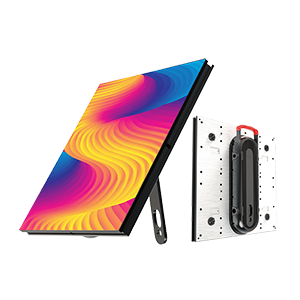
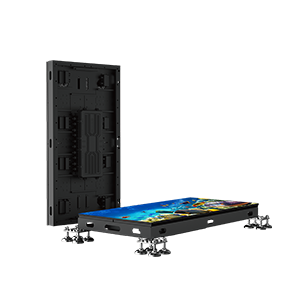
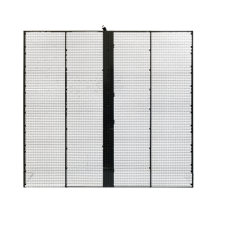
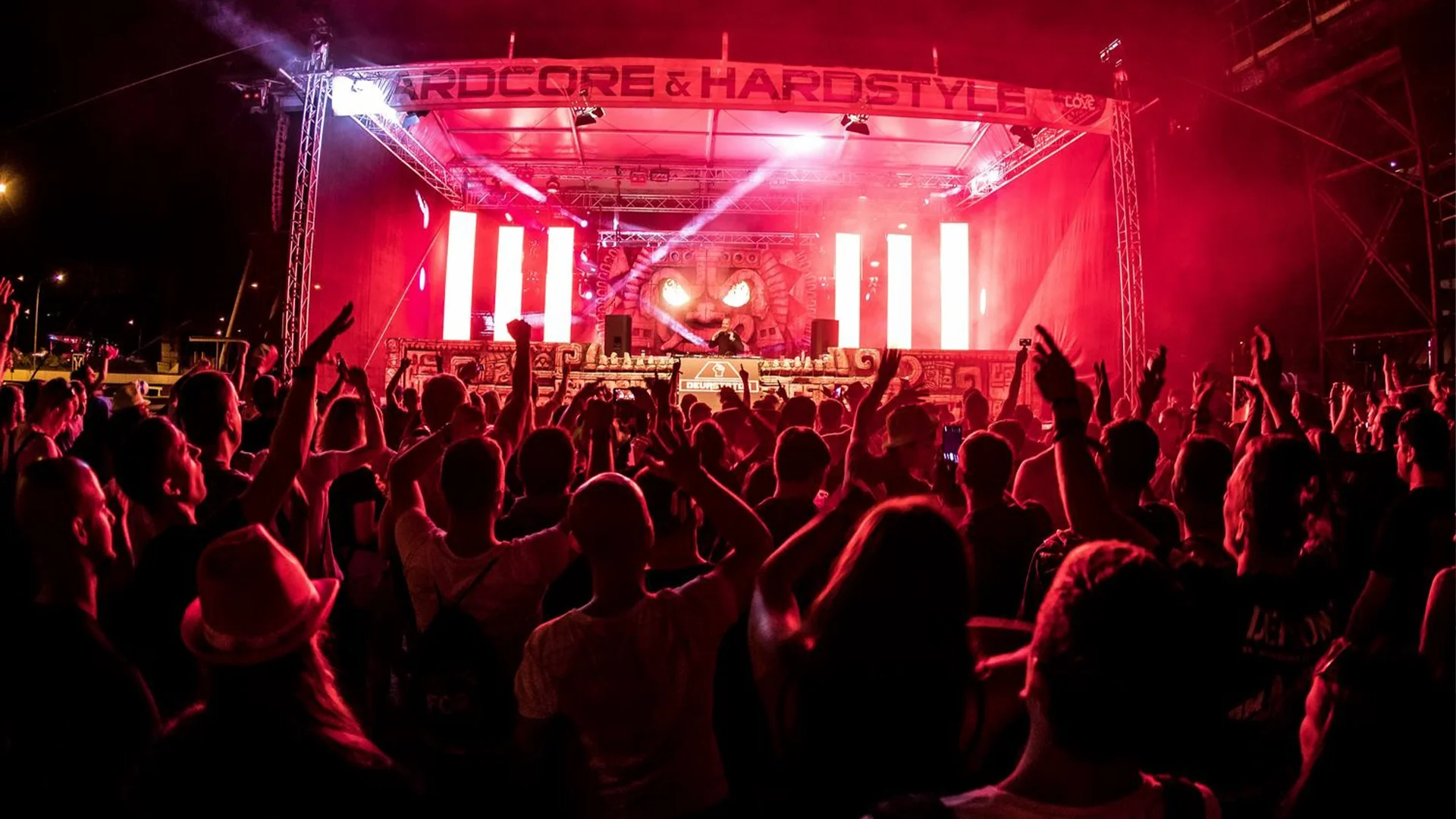
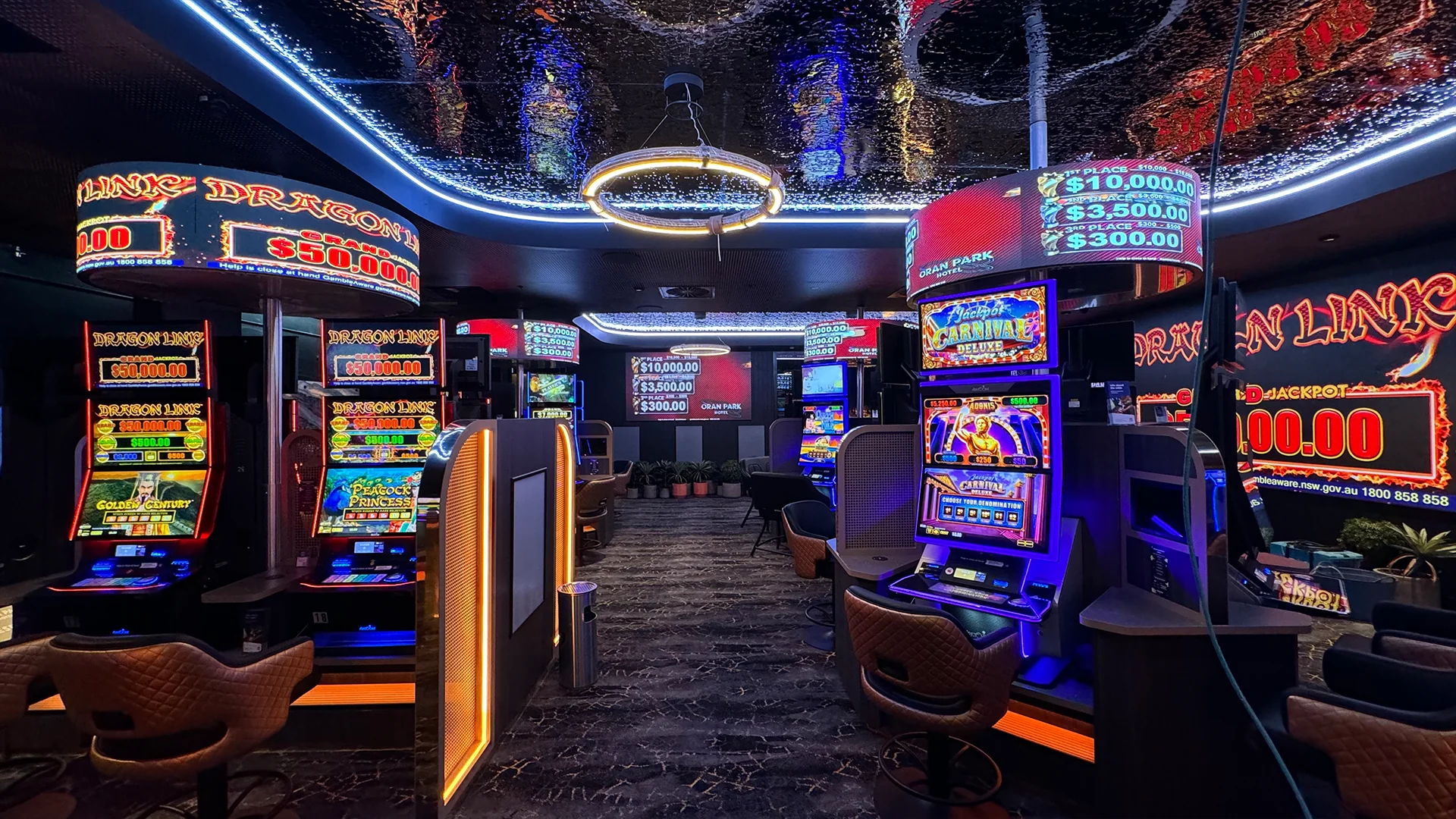
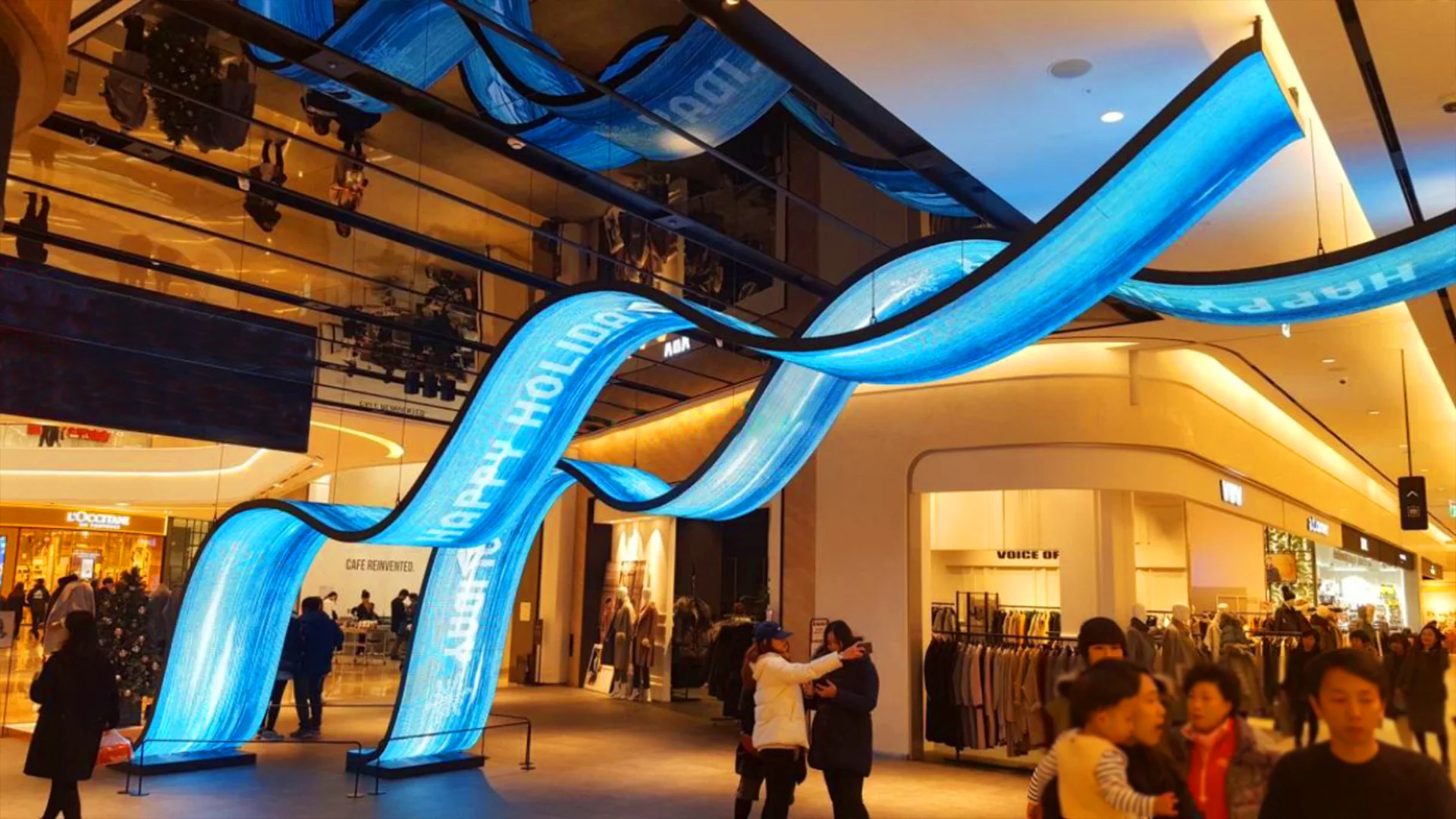
At LEDFUL, we support indoor and outdoor LED display projects across many applications, including outdoor advertising, commercial displays, rental and stage events, sports venues, churches, retail spaces, studios, creative installations, transparent LED screens, and floor LED displays.
For outdoor projects, brightness and weather protection are especially important. LEDFUL outdoor LED displays are designed for strong visibility in daylight environments, with high-brightness options and weather-resistant protection for long-term use. Depending on the project and product configuration, outdoor LED displays can support high brightness levels, IP-rated protection, wide viewing angles, and stable image performance.
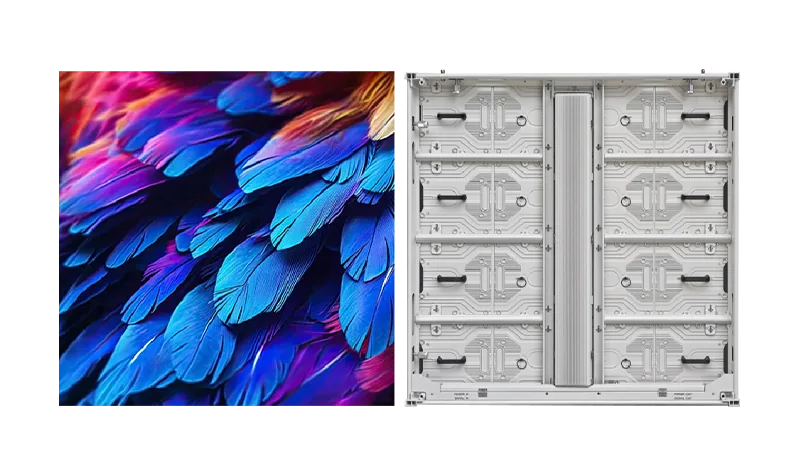
For energy-saving outdoor advertising and transportation-hub projects, LEDFUL’s FS PRO Series is one available option. It uses a common cathode architecture to help reduce power consumption and heat generation. The series also features IP66 dustproof and waterproof protection, seamless splicing, and a fully sealed cabinet design, making it suitable for large outdoor fixed installations.
Choosing the right LED display resolution is not about selecting 4K or 8K by default. The better approach is to start with the actual project conditions:
- How close will the audience stand to the screen?
- What type of content will be displayed?
- How large is the installation space?
- Will the screen be used indoors, outdoors, or for rental events?
- What budget range needs to be controlled?
Once these factors are clear, the LED display resolution can be matched with the right pixel pitch, screen size, cabinet layout, and control system. This helps avoid both under-specification and unnecessary over-investment.
LEDFUL has supported LED display projects across global markets, with experience in R&D, manufacturing, project delivery, and after-sales support. For contractors, distributors, event organizers, churches, shopping malls, sports venues, government projects, and commercial display buyers, our team can help evaluate the full display solution rather than only the pixel number.
For your tailored support, contact us here!